
Broken stones, ancient trails
PAVANE FOR A PACHAMAMA
FIRST MOVEMENT
Paucartambo
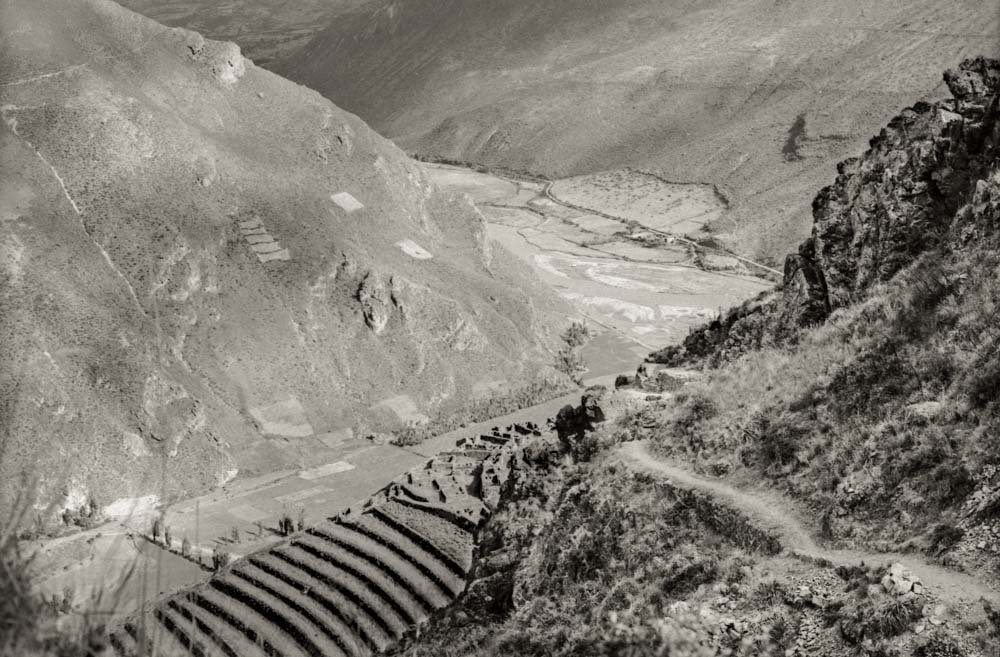
Capitán was tough and rather ornery. His curly fur a testament to the endurance these horses were known for, mountain ponies bred in the rarefied atmosphere of the high Andes. Unlike the paso finos, renown for their outward swinging leg action and luxuriously gentle ride, Capitán had a kidney-rattling gait. He also had the irritating habit of stopping suddenly from a gallop (especially when riding bareback) or dashing unexpectedly under low branches, tactics aimed at getting me off his back, but he was a hardy beast and well suited for the journey ahead. We were climbing easily, following the Chongo River, which now, during the dry season, was a mere rivulet rushing harmlessly to join the mighty Vilcanota River on the valley floor below. As we passed the last of the mud huts, a few children could be seen tending sheep on the ancient terraces that rose in tidy order to the silent ruins of P’isaq.
My partner Chip and I had been in the village for a few months, exiled after a year of living in Cuzco, during which time we had run a small business exporting ponchos, alpaca jumpers and fur bedspreads to boutiques in Europe and the US, where the exoticism of ethnic clothing was becoming fashionable. But the increasing number of backpackers on the Marrakech-Katmandu circuit arriving in town each day had tarnished its appeal, and I would often come home to find strangers sprawled out in the sitting room, having appropriated our flat as a convenient place to gather. Enquiring of my partner one day if these people were guests of his, he replied,
“I thought they were friends of yours!”
So when we learned of a house in P’isaq that was coming up for rent, we decided we’d had enough of city life and fled to the Sacred Valley in pursuit of new adventures. The Agrarian Reform following General Velasco’s military coup d’état four years earlier had significantly altered the countryside. Many haciendas, large estates that for centuries had operated with an often brutal feudal efficiency, were expropriated and the land redistributed into peasant cooperatives. Until then, the campesinos had been tenant workers, living on the land in small communities in exchange for the free labour they supplied the gamonal (owner). But the reform was experiencing growing pains. Many mestizo landowners preferred to see their properties destroyed before handing them over to the campesinos and some had left their haciendas in ruins. Moreover, having counted for years on a patrón to provide seed, fertiliser, tools and machinery, the campesinos now faced the task of keeping up production to feed an endemically undernourished population. The indians still remained amongst the poorest in the land, and most of the countryside lacked basic medical services, clean water supplies or electricity.
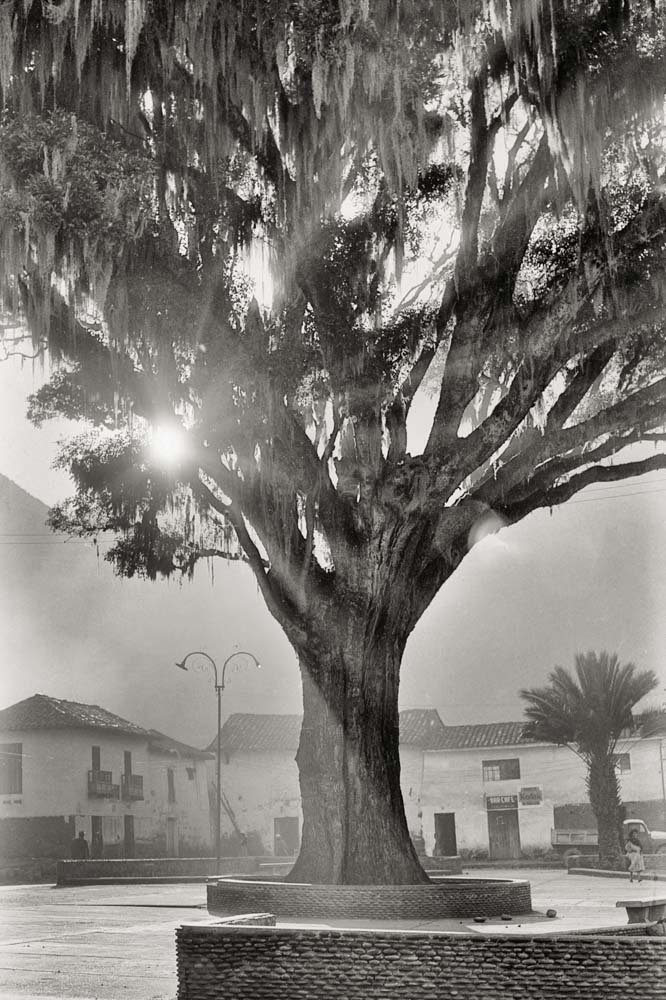
One of the most striking results of the reform was the disappearance of thoroughbred horses from the Andean landscape. Since the Conquest and the introduction of horses to Peru, indians had been forbidden to ride them, a privilege once permitted only to the Spanish and mestizo classes. The difficulty of the terrain made horses the preferred mode of travel, and the old landowners had prided themselves in maintaining a stable of fine animals. But with the Agrarian Reform the new owners regarded them as unnecessary luxuries and soon got rid of them.
The first thing we did after moving into the village was to buy a couple of horses. The options were limited however, and I had to settle for the recalcitrant Capitán. Chip fared better: he was able to buy a young paso fino stallion named Cariblanco from the Justice of the Peace-cum-blacksmith over in the next village. From our base in the Sacred Valley we planned to explore Inca ruins and villages far from the beaten path of the tourist brochures to which we knew only horses could give us access. We had read the accounts of explorers Gene Savoy and Hiram Bingham, countless archaeological and anthropological studies, as well as numerous colonial chronicles, and we were eager to set out.
However, Hugo Blanco and his pro-indigenous guerrilla group had been threatening the region’s stability for years, and as a result, detailed maps—not to mention topographic charts—had become unattainable. The military considered them tools of subversion and had pulled them from circulation. So, armed with a few hand drawn plans and the advice of friends and locals who knew the area, we left that morning, zigzagging up the trail towards Paucartambo, only two days’ ride away.
Nestled in a deep valley, Paucartambo was a small colonial town on the banks of the Mapacho River, serving as a gateway to two distinct worlds. Downriver, a road climbed over the mountains before descending toward the Madre de Dios Amazonian Reserve. Near the summit was Tres Cruces, a cliffside aerie where the Andes ended abruptly, giving way to a majestic view of an endless sea of green stretching all the way to the Atlantic. It was said that with a bit of luck and the right atmospheric conditions, a double sunrise could be seen rising over the misty expanse to the East. Lorries carrying timber often passed on this road on their way from the jungle to the sawmills of Cuzco. Upstream, in the opposite direction, the river led to a valley that climbed to the land of the Q’eros, a deeply mystical ethnic group of master weavers scattered in a few villages at the high elevations who were said to descend directly from the Incas.
By mid-afternoon, the Sacred Valley lay far below us and we were riding across the open puna. In the distance, the apus —the ancient mountain spirits of the Ausangate and the Salkantay, snow-capped peaks rising over 6,200 metres—seemed to follow. For several hours we had seen very few people other than llamas and the occasional thatch-roofed adobe farmsteads, in front of which, set out for the night, lay neat piles of small, blackened, freeze-dried potatoes known as chuños, a main ingredient of the Indigenous people’s diet. Quinoa and cañihua grew in the fields and, in the distance, campesinos could be seen gathered to thresh at the era, a donkey circling endlessly round a pile of barley, the villagers pitching it skyward, letting the breeze take the chaff while the grain dropped to the ground. These were timeless scenes. With Neolithic Age implements, tindians were repeating agricultural cycles that had changed little since the time of the Inca.
We rode on.
As the sun dropped toward the horizon, the temperature plunged and we made camp in a copse of eucalyptus, setting up our small tent and lighting the Primus stove for dinner. Pleased with how things had turned out so far, we talked late into the night about the various interpretations of the Conquest—those of Kauffman Doig, Prescott, Hemming, among others—as we planned our next expedition to Vilcabamba, the Inca’s final refuge, buried for centuries in jungle growth.
In the morning, with the horses fed and rested, we saddled up and forded a small river, following the steep trail carved into the mountainside that brought us that afternoon to an arched 18th century stone bridge spanning the Mapacho, or Paucartambo, River. We crossed and entered the Plaza de Armas, a three-sided square with four palm trees at its centre.
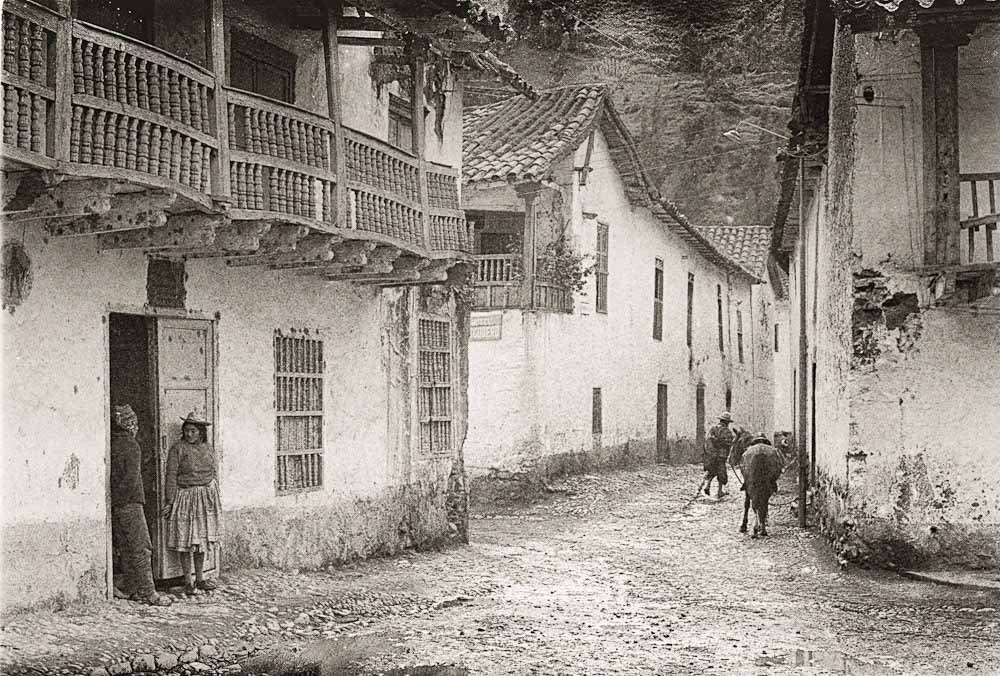
The town had the unkempt charm of forgotten glories. Sumptuous houses, now sadly decayed, spoke of the wealth and prestige of bygone times. Since the Colonial Era, Paucartambo had been a prosperous town, a major commercial hub for the coca, lumber, corn, wool and gold moving to and from Cuzco, and it was the provincial centre of a vast area dotted with enormous haciendas. But in recent decades it had seen a steady decline, as the mestizo population moved to Cuzco in search of better economic opportunities. Today very few people were on the streets and it had a somewhat melancholy look. We rode slowly through the empty town, marvelling at its colonial past, its white-washed houses and cobbled streets. Seeking a place to camp, we followed the river a few kilometres upstream, arriving finally at a eucalyptus grove near the river, where we pitched our tent next to a corn field.
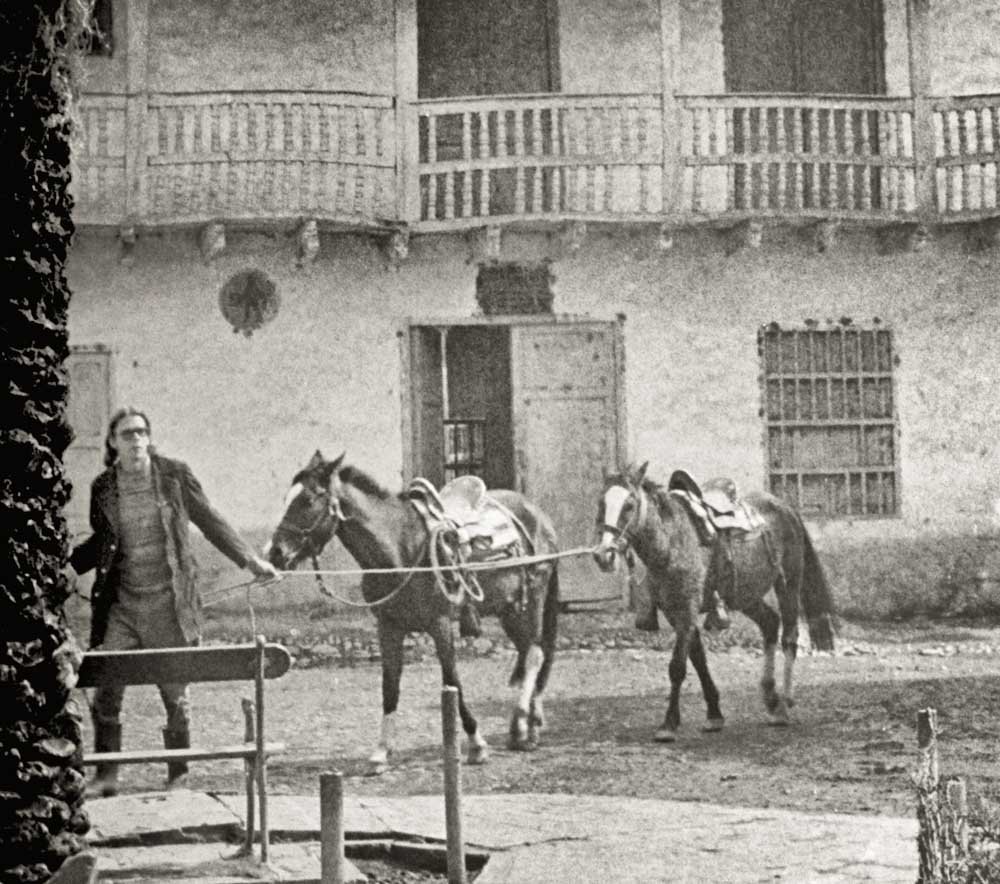
A grizzled old gringo expat whom we had met in Cuzco had married a local woman and her family owned an hacienda several kilometres up the Paucartambo Valley, where the Q’eros Valley begins. At his invitation, we planned to visit and possibly use their farm as a staging ground for future exploration. In the meantime, we spent the next few days roaming the countryside and getting a feel for the place.
One afternoon I was in the town, enjoying some beers and playing sapo with a few locals in the courtyard of a cantina. The game consists of pitching a coin into the maw of a bronze, opened-mouthed toad screwed to the top of a wooden box filled with little compartments. Coins that missed the mark would land in the holes cut into the surface and descend into the compartments below, where depending on how it landed, gave the player a number of points. A fellow against whom I was playing had for some time been casting covetous glances at my wristwatch. I slipped it off and showed him: it showed the date as well as the time and was wound solely by the movement of my wrist. He was most impressed.
During the course of our conversation he told me he had been a “horse fixer,” an ambulant trainer who travelled from hacienda to hacienda teaching horses to recover their paso fino gait. He explained how he would load a horse with an 80 kg sack of grain and make it walk in a stream, thus forcing it to lift its hooves as it stepped between the rocks.
“That kind of work doesn’t exist anymore, the haciendas are all gone now,” he rued, taking a sip from his beer.
“So what do you do now?” I asked.
“Not much. I have a herd of horses that I sell from time to time and do a little trading when I can. Are you interested in a horse?”
“How much do you want for a horse?” I replied, my interest piqued.
“I’ll trade you one for your wristwatch!”
I agreed to have a look at his herd.
“We’d better leave now if we want to catch the light,” he warned. “It’s five kilometres downriver, on the other side.”
Outside the cantina door his horse was tied up next to mine. We mounted and rode off on the dirt road toward Challabamba, the river flowing fast on our left, rushing its way to meet the Amazon. An hour later we arrived at a field near the water’s edge, where he dismounted and, pointing to the hill on the other side, said,
“There they are, see them?” In the deepening dusk, I could faintly make out a herd of horses grazing on the hillside.
“We’ve come this far, might as well have a look,” I thought, nosing my horse into the water, in search for a good place to ford the river. The water was swift but the bottom was solid and we reached the far shore having only wet our legs. The horse fixer moved up into the herd and lassoed a horse.
“This one! I’ll trade you this one for your watch!”
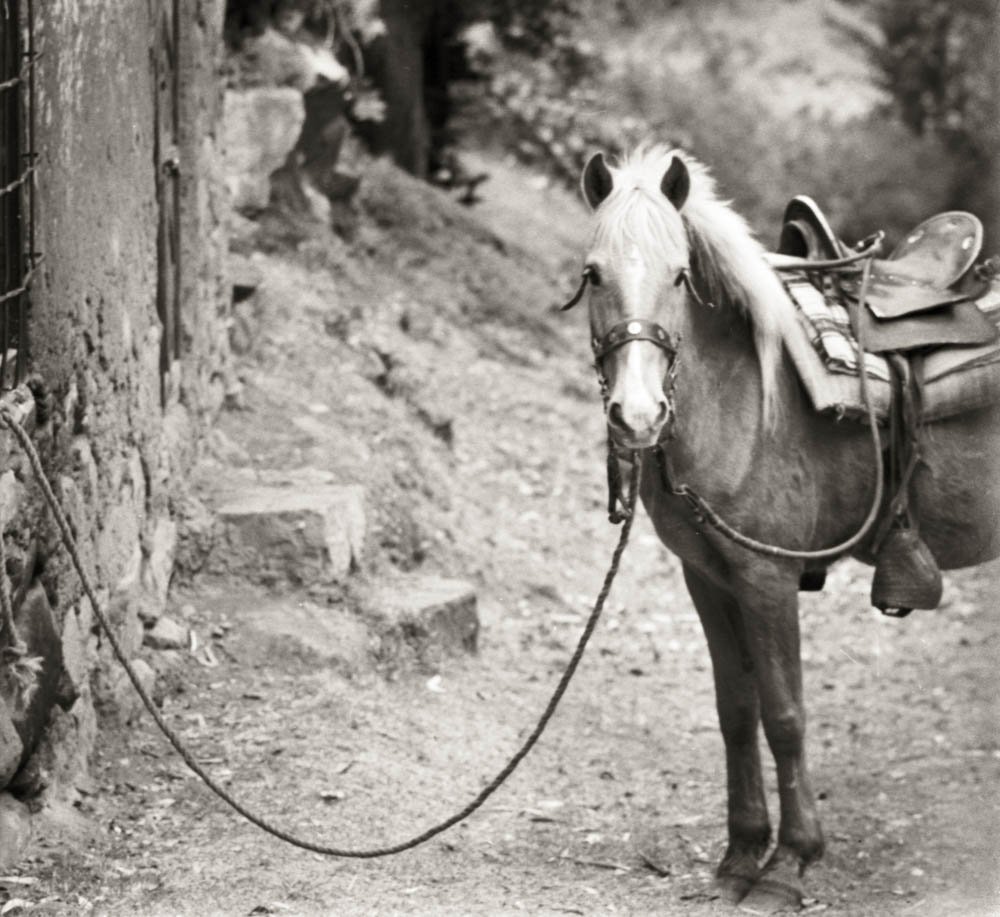
It was a palomino gelding, eight to ten years old, with a long white mane and tail. He had a good straight back, a gentle disposition and strong fetlocks. His teeth looked good but there wasn’t much more I could see in the dying light.
“You’ve got a deal!” I said, taking off my watch.
With the rope round his neck I led him down to the river’s edge and started to cross. This time, however, I miscalculated the ford and Capitán lost his footing, slipping into deep water. Suddenly swept away by the current, I slid off the saddle and grabbed hold of the horse’s mane as he swam to the other side. The palomino swam alongside, his rope lead trailing in the water. Several hundred metres downstream we finally touched bottom and made our way up the bank. I was soaked, my leather jacket weighed a tonne and I tried to shake off some of the water as I gathered the horses. The horse fixer then rode up, considerably drier. He’d found a better place to cross.
By now it was completely dark. We could barely see our noses in front of us as we rode, dripping wet, along the road back toward the town. Behind us, in the distance, I could see the headlights of a lorry trundling down the mountain en route to Cuzco with a load of lumber. The dirt road to Cuzco is only a single lane. Traffic is routed one-way on Mondays, Wednesdays and Fridays, the other way on Tuesdays, Thursdays and Saturdays; Sundays is a free-for-all. Looking over my shoulder, I noticed the lights getting closer. In the darkness we could see no place to duck into and allow the truck to pass; we could only hope to outrun it into town. Breaking from a canter to a gallop, the palomino kept tripping on the lead and had difficulty keeping up. So I let go, herding him along in front of us, hoping that he would keep to the road and not take off somewhere in the night. With the truck close on our heels we entered Paucartambo at a full gallop, the palomino running off on a parallel street. Moments later, the lorry thundered past on its way to the bridge. We had made it, but now I had to catch the horse and take him out to our campsite, where Chip waited, no doubt wondering what had become of me. Fortunately there were few people about and I was able to corner the horse in a dead end street, taking hold of the lead and leading him along to our place near the river.
A nice fire was burning at the campsite as I rode up. I tied up the horses and gave them some alfalfa before changing into dry clothes and joining my partner to relate the day’s events over a few shots of machachicuj’cha, a local sugar cane liquor. We celebrated. A new horse was a good thing, we agreed; we would now have a packhorse to carry our kit, significantly lightening the work of the saddle horses, loaded as they had been with sleeping bags, tent and assorted gear in addition to our saddlebags. I couldn’t wait to saddle up the palomino and see how he behaved. That night I decided to call him Q’orisumac, which in Quechua means something like lovely golden one. We laughed and smoked well into the night under a star-filled sky until, fully fed and lubricated, we settled into our sleeping bags.
The next morning we were roused from our tent by the loud clamour of Quechua voices. Crawling out, I saw the campsite surrounded by an incensed crowd of campesinos waving their fists at us and jabbering all at once. The horses had got loose in the night and had entered the cornfield, munching away to the distress of the farmers who now angrily demanded compensation. In my adrenalin-induced elation of the night before I had inadequately tied the horses, and now I could only accept full responsibility for my actions. One of the campesinos stepped forward as spokesman and, after much discussion, we settled on a price for the damage done. I handed over the money with profound apologies, but the scornful looks on their faces showed us we’d overstayed our welcome.
We broke camp and saddled the horses, loading Capitán with all our gear and fastening it tight with a cargo cinch. At the cantina in town, we sat over coffee and bread and discussed our next move. Should we continue up the valley and explore the Q’eros? Or should we head back to the Sacred Valley and recover, benefit from our experience and gather supplies for our next trip? We couldn’t decide. My foolish mistake and our encounter with the angry farmers had seriously diminished our funds, but we were so close, it would be a shame to go back now. Unable to decide, we tossed a coin: heads up the Q’eros Valley, tails we head back home.
The coin came up tails.
Once again, we crossed the stone bridge and continued up the trail toward the high country. Q’orisumac had a gentle mouth; he had an easy gait and, although not exceptionally lively, he responded well to the reins. He was also strong, showing no sign of tiring as we climbed the steep trail toward Soncco. Several hours later, with Colquepata in the distance across the river, we met a group of indians waiting by the side of the trail carrying bundles on their backs. Two men in ponchos and huaraches, accompanied by three women and several children stepped out in front of the horses.
“Aliñanchu wiracocha!” the man politely greeted us, taking off his hat and revealing the colourful chullo he wore underneath.
“Aliñami tai tai!” I replied, reining the horses to a halt.
“Where are you travelling to?” he enquired.
“To the Sacred Valley.”
“Can you take us?”
I explained that the horses were fully loaded and that we were sorry, but simply didn’t have room for them.
“Not a problem, wiracocha!” he replied. They only wanted to follow us. The land was full of bandits and, with our escort, they would feel much safer on their journey. Assenting, we continued on, followed for several hours by this family. They had no trouble keeping up with the horses’ leisurely pace and we soon learned that they were heading home from marketing in Paucartambo, loaded with fresh supplies. That afternoon, we arrived at a small village with a charming colonial church, covered in faded frescoes. We said goodbye to our friends, who continued on their journey, and spent several hours studying the church before settling down to sleep beneath the infinite canopy of stars on the high plain.
In the morning we found the trail that would lead us down from the puna through a narrow defile into Lamay and the Sacred Valley. We were hoping to stop in Lamay to visit Manuel Luna, a good friend whose family had once owned the Hacienda Chuquibambilla, since expropriated by the Agrarian Reform. He was finishing his studies in Agronomy at the University of Cuzco and lived on the hacienda with the campesinos. He was also extremely proud of a young colt he’d recently purchased, which he’d named Illapa, the Quechua word for thunder, and I was eager to show him Q’orisumac. But finding him away in Cuzco, we continued our way up the valley towards P’isaq, enjoying the mild weather. The corn harvest was in full swing and the valley was a pastoral idyll filled with wild flowers and birdsong, a very welcome relief after the harsh conditions of the altiplano.
Following a corn harvest, the fields were traditionally opened to communal pasture, and the locals would bring their animals to feast on the corn stubble, clover, grass and other weeds that had grown unimpeded for months. It was a common sight to see cows, sheep, goats and the occasional horse grazing in these harvested fields. So, after unloading our gear at the house, we led the horses to a large field outside of the village where they could eat to their hearts’ content and recover from the strenuous work of the journey. Letting them loose amongst the other animals, we returned home to unpack and take stock of what we’d learnt during these last few days.
Relaxing in our courtyard over a few beers, we were suddenly interrupted by a group of children who rushed in, yelling,
“Señor Micher! Señor Micher! Your horse has been gored!”
“What? Which one?” I cried, putting down my beer.
“The new one! Come quick!”
We ran out as fast as our legs would carry us. Standing in the middle of the field was Q’orisumac, teetering on wobbly legs. The other animals were scattered round, blind to what had happened. Often, during the course of these “open feedings,” when bulls as well as cows are let loose in an unsupervised field, issues of territory rise up and the animals fight for breeding rights. Q’orisumac had grazed too close to a rutting bull and had not got away in time. His docile manner had been his undoing. Running up to the horse, I was first surprised to see no blood on him, yet on closer inspection I noticed, just behind his right foreleg, a large wound on his chest in the shape of an H from which his breath emanated in sad fluttering sighs. The bull had gored him in the chest and pierced his lung, bits of flesh vibrating with each exhalation. This was bad indeed.
“Quick! Let’s try taking him over to the grove of trees, away from the sun and the other animals, and see what we can do!” I cried in a panic.
Grabbing a rope, I tied it round his neck and led him slowly to the shade, while we tried to figure out what to do. A veterinarian examiner lived in the village, working mostly with the dairy farms along the valley, and I ran to his house for help. But there was nobody there, so I dashed home and got some sheets, the cargo cinch, more rope and his hackamore, a bit-less bridle I figured I’d need to tie him up. I rushed back to the grove to find Q’orisumac, surrounded by a dozen boys, stoically enduring his misfortune. Up the Chongo Valley was a dairy farm. I was sure they would have the knowledge and experience I needed to save the horse, and I dashed off on foot to seek their help. But again, there was nobody home. I ran back to the trees to find the local policeman standing by.
“What do you think?” I asked him. “Can we save him?”
“He’s a goner for sure. We’ll have to put him down,” he replied, pulling out his pistol.
I suddenly remembered my grandmother telling me of the bullfights she’d seen when she first arrived in Spain. The horses in those days wore no protection and were routinely gored in the course of the fight. The mozos would quickly sew them up and send them out again to the ring, a memory that haunted her for years.
“No! Wait!” I cried. “I think we should try to cure him! Let’s sew him up and see where it goes!”
Chip rushed back to the house for fishing line and a curved sack-sewing needle and I asked one of the boys to run to the pharmacist’s for sulpha pills. While I waited for their return, I rigged the rope to cast the horse onto his side. This is a delicate manoeuvre, requiring several people to work in tandem. One has to hold the head while two others pull at the rope passed under his belly round the hocks of his back legs. Then, all pulling together, the horse’s hind legs fold and he settles down. A few minutes later, Chip returned with the needle and line and the boy ran up, an envelope full of pills in his hand. We cast the horse down and he lay on the grass, struggling to get up.
“Sit on him and keep him quiet!” I shouted to the boys, who instantly piled on the horse, sitting on his neck and haunches. Now immobilised, I could have a closer look at the wound. It was very ugly. Air continued to whistle out of it and it was not going to be easy sewing up that awkward H, with so many angles.
“Does anybody need to pee?” I asked.
Having read somewhere that urine is an excellent antiseptic, I thought that it would serve well as an emergency disinfectant. One of the boys raised his hand.
“Aim well,” I said.
Unbuttoning his fly, he proceeded to pee directly into Q’orisumac’s wound. Next, we found a large flat rock upon which we laid out the sulpha pills. With another rock, a smooth river one, we ground the pills to powder, gently placing it all back into the envelope. I then sprinkled some sulpha in the wound and threaded the needle in preparation to suture the wound. But it took considerable effort to pierce the skin; I was surprised at how tough the horse’s hide was. Chip took the needle from my shaking hands and with remarkable patience and determination joined the pieces of flesh together, sewing shut the gaping hole and leaving a tidy H, stitched together with fishing line. Sprinkling the rest of the sulpha powder onto the wound, I said, “Now let’s see if he gets up.” We untied him and gave him a little nudge, and slowly Q’orisumac rose to his feet. We then wrapped a bed sheet round his chest, secured the bandage with the cargo cinch, and placed the halter over his head before tying him to a tree.
The policeman said quietly, “The real test will be to see if he’s still on his feet tomorrow morning. If he’s still standing twentyfour hours later, he’ll make it. If he’s not, he’ll die.”
There wasn’t more we could do, so we walked slowly back to the house in a pensive gloom.
Early the next morning we were back in the trees to find Q’orisumac still on his feet. He would live! I was so excited at first that I didn’t notice his bridle and the rope he was tied to the tree with had been stolen in the night. Indians, on their way up the Chongo Valley, had taken them; they were simply too great a temptation to ignore.
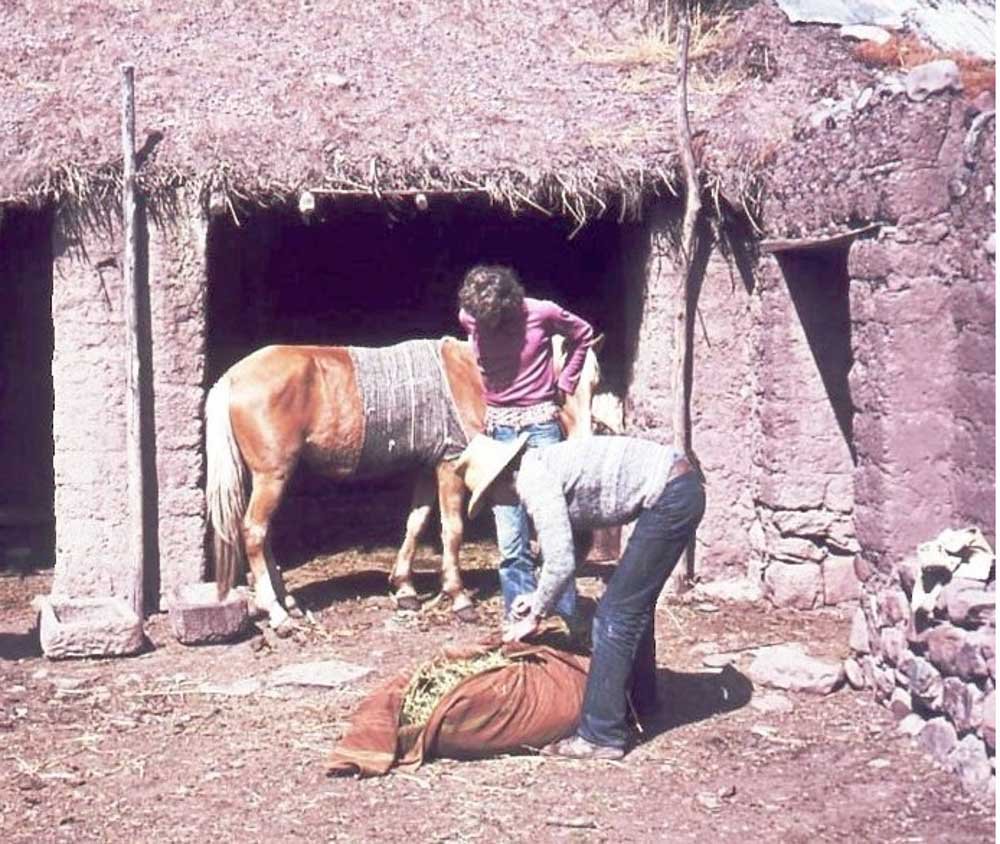
Photo credit: Jon Schahinger
Next door to us in the village lived Felix García and his wife, a gracious elderly couple who, with the snobbish pride of their Spanish ancestry, often spoke in a quaint and antiquated style. They owned a petrol-fired mill that occasionally ground the villagers’ wheat and over the months we’d become quite close. Across the street from their house they had a large corral where they kept a dilapidated old Peugeot 403 pickup. By mid-morning they had heard about the tragic accident and came knocking at our door, offering to keep Q’orisumac in their corral while he healed, where he’d be close at hand and away from the other animals. They also insisted on sending me a trusted curandera of old acquaintance who they felt could help cure the animal. I was grateful for their offer and brought the horse into the village, leading him into their corral, and laying out for him a bundle of forage.
Soon, an old woman and a young girl showed up at my door. She introduced herself as doña Encarna the curandera, and she spoke no Spanish, the young girl translating. Walking her over to the corral, I explained as best I could what had happened and what I had done thus far. She nodded and said she’d see what needed to be done. Talking gently to the horse, she unclasped the cinch, removing the sheet and bent down to inspect the wound. She gave a few sharp orders to the young girl, who dashed off. A short while later, the girl returned carrying small bunches of plants picked from the mountainside. Doña Encarna crushed the herbs into a green paste and applied the compress to the wound before wrapping it up again.
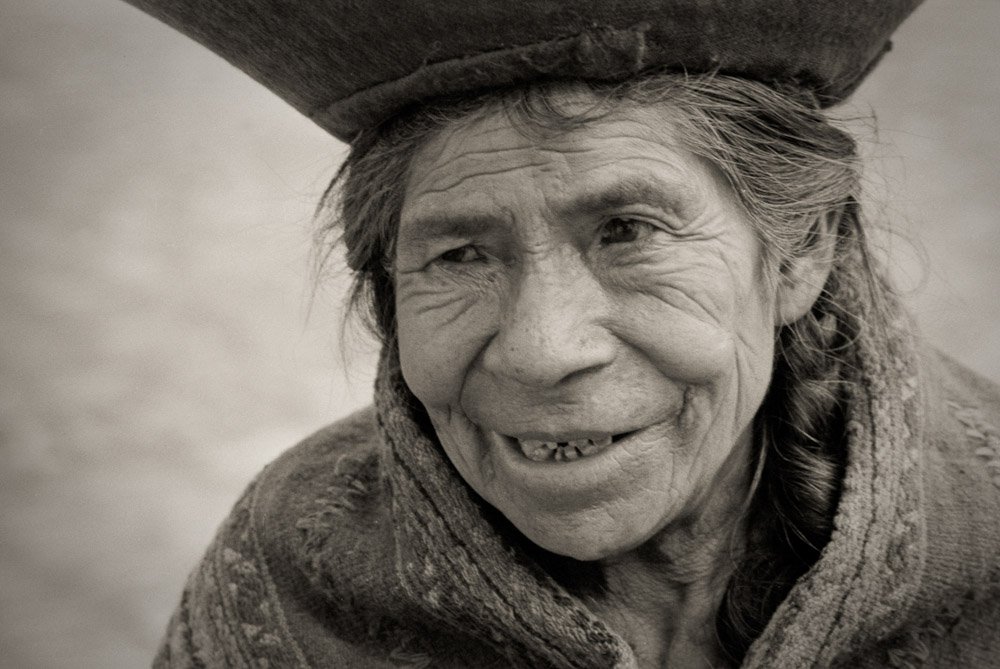
Day after day and with infinite patience, doña Encarna cleaned the wound, replacing the herbal compress with new herbs that she herself had plucked from the mountainside. Under her care Q’orisumac soon regained his appetite and looked well on his way to recovery. One day I was with her when she performed the cure. Unwrapping the sheet, we discovered that a section of the wound, where Chip had sewn one of the flaps, had come undone. The stitches had torn out, leaving an eight centimetre triangle of flesh, dangling helplessly and reeking of putrefaction. I was alarmed, but doña Encarna assured me that it was a good thing. With scissors, she delicately cut away the dying flesh, leaving a gaping hole in the side of the horse.
“This way, all the bad toxins can exit the body,” she explained. Q’orisumac had sometimes developed large ballooning sacs on his chest that from time to time she would puncture, releasing the gas. Now, with this clean hole in his side, she was confident there would be no more gas bubbles and the wound could heal nicely.
For three months doña Encarna treated that horse, during which time Chip fell in love with a pretty limeña and left town. I too, was preparing to move. On one of my horseback wanderings, I had found an abandoned centuries-old mill on several hectares with a large, well-irrigated pasture. Known as Urpihuaylla, meadow of the doves in Quechua, the mill nestled in a eucalyptus grove over a small stream, a kilometre above Taray, a village on the other side of the river.
It was an idyllic spot, the picture of pastoral perfection. However, before I made my move I needed to stop in and see my neighbours to thank them once again for their kindness. Most of all, I wanted to show my appreciation to doña Encarna, who for so long had patiently cared for the horse. She had shown me which herbs to use, where to find them, and how to apply them, knowledge that I have regrettably since forgotten, but for which I would be eternally grateful. Stepping into the García’s courtyard, I found them talking to doña Encarna, who announced with a smile that Q’orisumac was now cured, that I could take him with me to the mill. We crossed over to the corral, where she unwrapped the bandages, revealing hardly a trace of his terrible wound. The big ugly H Chip had stitched together had fused completely and only under close inspection could his scars be detected. But the section that had come undone and she had cut away was now a solid mass of scar tissue. Pink flesh showed where once had been fur.
“But this?” I enquired, pointing to his scar.
“Not to worry,” she replied with a laugh. “Simply rub lemon juice over it and you’ll soon see how his hair returns.”
Over the next months, I assiduously applied lemon juice to Q’orisumac’s scar. True to doña Encarna’s word, his hair began to grow over the bald spot and soon all trace of his encounter with the rutting bull had vanished.
SECOND MOVEMENT
Urpihuaylla
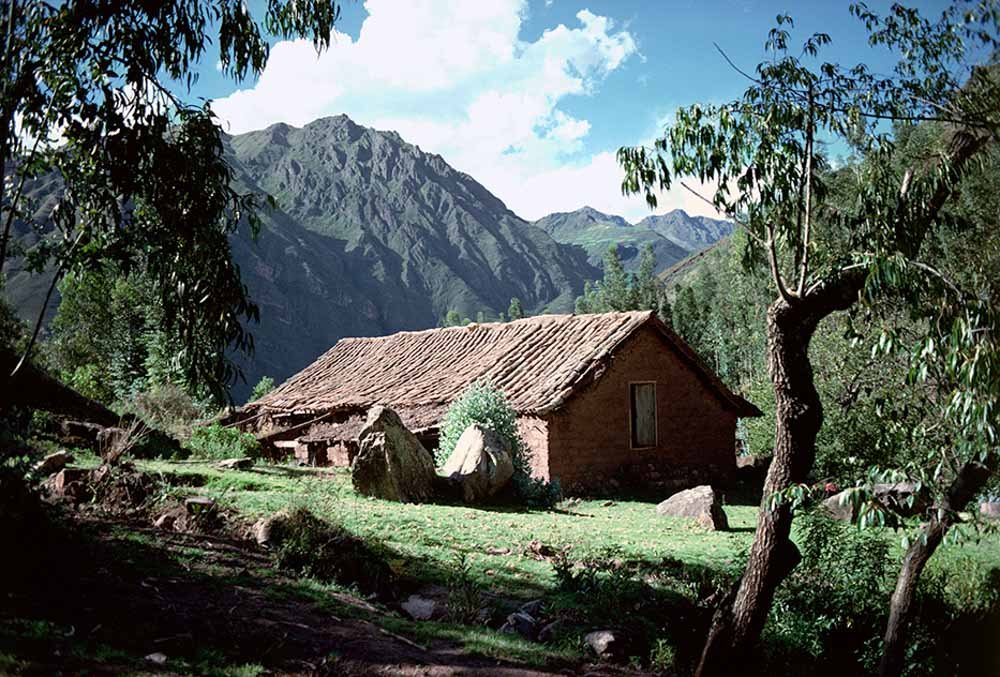
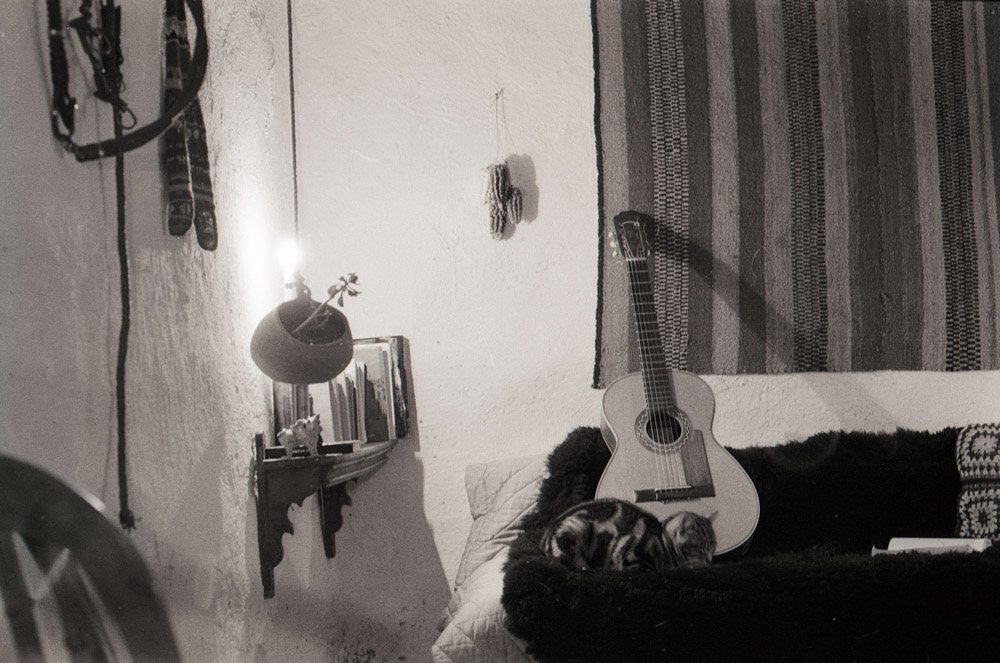
Transporting my bed, chairs, tables, kitchen equipment and sundry personal items to Urpihuaylla, I began to make the old mill habitable. The main room’s roof had collapsed and the machinery lay rusting inside, covered in dust. But a small, blackened kitchen and three other rooms were in decent shape, so I was able to move my things and set up house. The mill had no electricity or running water, but I had come prepared with several kerosene lamps, an ample supply of candles, and access to pristine drinking water from the stream that flowed just steps below the house.
Between the mill house and the kitchen was a corral where the horses could sleep, it only needed a gate. I had plans to grow oats and alfalfa in the field behind the house, but it had lay fallow for years and, before any planting could be done, I would need to reconstruct the irrigation ditch that passed behind the mill which was broken in places and covered by tree roots. Down in the village was a little shop where I could purchase candles, kerosene for the lamps and the Primus stove, canned tuna and other assorted food items. I soon got to know the majority of the villagers, who received me with warm hospitality, pleased as they were to sell me forage for the horses: alfalfa and chala, the Quechua word for cornstalks.
The work at the mill required professional help and I enquired around the village for someone who could advise me in managing the property. I was introduced to an elderly gentleman, named don Cornelio, who showed up the next morning with a proposition.
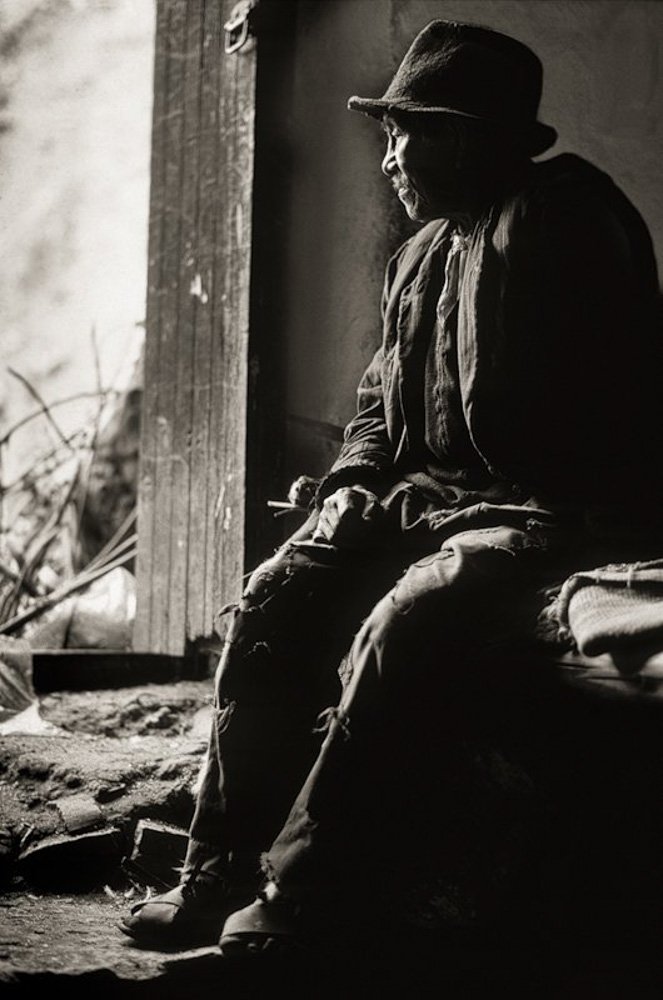
“On weekends I will sleep with my wife in the village, but during the week I can come and live with you here in Urpihuaylla and help you with the animals and the farm,” he proposed, asking for a small salary. In an old patched-up suit, wearing ojotas and a shapeless felt hat, he resembled a character straight out of Tolkien. He appeared quite old and I wondered if he would be up to the physical demands of the job.
“How old are you, don Cornelio?” I asked, concerned.
He thought for a while and replied, “How old do you think I am?”
“I’d say you’re sixty-five years old.”
After a pause, he said, “That’s right! I’m sixty-five, señor Micher. Sixty-five!”
Don Cornelio moved right in and together, we started to put the mill in order. He found labourers in the village to help with the ditch, hired a team of bulls to plough the field, advised me in all matters agricultural and showed me how to breakfast with trout. In the evenings we’d lay out some worm-baited fishing hooks in the stream, tying the lines to a branch from a bush on the bank and attaching to them a plastic bag. In the morning we’d invariably find one or two of those bags moving erratically from side to side, and all we needed to do was pull in the trout and fire up the stove. Sundays he’d take our surplus harvest of lettuce, chard or carrots to market in P’isaq, setting up his own stand. At mid-day I’d ride in to collect whatever he’d been able to earn, inviting him to lunch with the proceeds at the only restaurant in town.
Vampires, however, became a problem. The horses slept out on the pasture, tied to a long rope that would allow them to graze unimpeded, and they were happy. But in the mornings, I’d invariably find sores on their backs, or sometimes near the tail, that left their shoulders covered in long bloody trails. Vampire bats feed on blood, and their saliva contains an anaesthetic anti-coagulant that allows them to make repeated dives during the night and feed off their unsuspecting prey. I’d clean the wounds with antiseptic, but night after night the bats returned to the same sores and by morning, the horses were again covered in blood. I couldn’t ride them with these sores: the friction of the saddles only exacerbated them. I needed to find a solution. I designed “pyjamas” for each of the horses, buying some cloth and draping a large sheet over their backs which I tied round their neck and secured with a bit of line under their tail. They looked ridiculous, but I was hopeful. Safe from the vampires they’d heal in a week or two. In the morning, however, I’d inevitably find them grazing peacefully in the pasture with their “pyjamas” hanging like diapers under their bellies, blood streaming from their freshly reopened wounds.
This wouldn’t do.
Since bats use a kind of sonar to navigate, I decided to put the horses in the corral for the night, where they would be sheltered from the vampires. But the corral lacked a roof, so don Cornelio and I built a structure of poles and thatch that we fitted over the corral, tying bits of line weighed down with stones from the overhead beams. We now had an enclosed area with a roof over head from which hung dozens of bits of rope, designed to confuse the blind bats and allow the horses to safely sleep. The corral looked terrific. Confident this would solve the problem, I led the horses in for the night, proud of my ingenuity. They were a bit confused by all the hanging ropes but they settled in and I went to bed.
The screeching and neighing and kicking that emanated from the corral next door kept me awake half the night. Having a stallion with two geldings in close quarters was not going to work. I clearly didn’t need three horses; I’d have to sell one.
In P’isaq I had befriended Josko Vaz, a garrulous Czech who lived in the old Chongo Chico hacienda at the base of the P’isaq ruins, property of his Peruvian wife’s family. She lived in Lima, but he was committed to converting the hacienda into a hotel, and he steadfastly undertook renovations that went on for years. We had spent many an afternoon on his property drinking beer and sharing stories and I thought he would be the perfect candidate to take one of the horses off my hands. But with plenty of other problems of his own, Josko was reluctant to embrace another.
One day I met his young son, up from Lima on a school holiday, and I convinced Josko of the benefits his son would enjoy exploring the area on horseback, of the adventures that lay waiting. All he needed was a horse! My persistence weakened his resolve and I promptly sold him Capitán.
And so the months passed. Don Cornelio taught me many things, and my esteem and respect for him only grew with time. Without his help I would never have been able to manage the mill or leave it unattended. He had my absolute trust and I was grateful for his help. We became close friends.
My personal life had also changed. I was enjoying a certain success with the ladies, several of whom would often spend a few days at Urpihuaylla. Careful not to offend the villagers’ conservative morals, I would invariably introduce them as cousins, or nieces, or sisters, hoping thus to quell the rumour mill and ease whatever confusion the villagers might have about the solitary gringo living alone up in the mill. But I was now in a relationship with a young limeña called Rocío, who had left her husband in the capital for a more serene lifestyle in the Andes. Her husband had accepted the new arrangement and we had become friends; he would often drop by for a visit, bringing news from Lima and toys for their daughter, who would share her time between both parents, shuttling back and forth between Lima and the Sacred Valley.
I was growing restless though, eager to take off again, to ride up the mountain with the horses before the rains began in earnest. It had been months since my last trip, and the dry season was drawing to an end. I had been immersed in the history of the Incas and their conquest by the Spanish, and the more I learned, the stronger my determination grew to see for myself what I had only read about in books. So, one spring morning, I set out from the old mill at Urpihuaylla to embark on a journey to Vilcabamba that would last three weeks. My traveling companions would be Cariblanco, the Peruvian paso fino stallion, and the now fully recovered Q’orisumac, who would be carrying all the gear.
THIRD MOVEMENT
The Sacred Plain
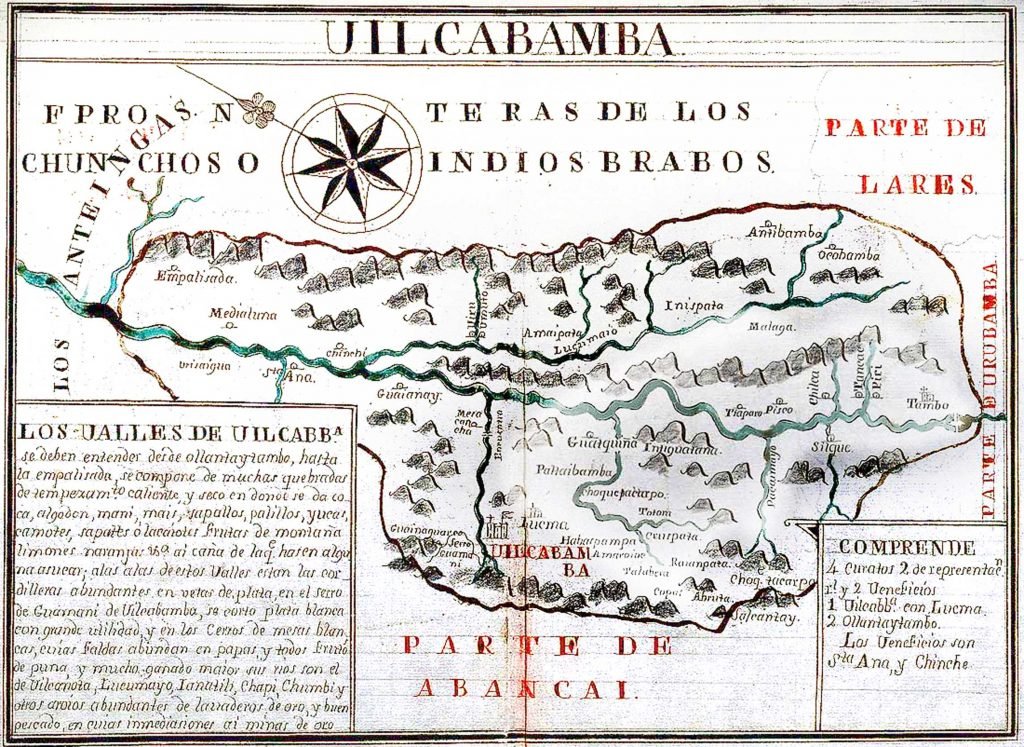
Hidden behind torrential river gorges and high mountain peaks lies the province of Vilcabamba, known in Quechua as Huillca Pampa, the ‘Sacred Plain’. It is a notoriously inaccessible place. Except for Chuquichaca, where a bridge spans the confluence of the Vilcabamba and Vilcanota Rivers, entry is only possible at a few cable crossings or suspended bridges. This sparsely populated province of some 4000 square kilometres is protected by massive natural boundaries on all sides: to the North, the Urubamba or Vilcanota River plunges headlong through steep, densely forested canyons, and its southern border is formed by the mighty Apurimac River (Big Speaker, in Quechua) and the 5000 to 6000 metre peaks that stretch from the Salkantay to the Marcacocha range.
For thirty-six years the Incas found sanctuary from the Spanish conquerors in the fastness of Vilcabamba, ruling over an independent kingdom in an uneasy truce that alternated between appeasement and rebellion. The Spanish conquerors had stripped the Inca of his gold and enslaved a large portion of his empire while other, recently subjugated tribes readily defected to the invaders.
Nevertheless, between 1536 and 1572, four monarchs managed to keep the ancient gods and old customs alive from their refuge in a country increasingly controlled by missionaries committed to converting idolatrous pagans. In 1571, a new viceroy arrived in Peru with the mandate to eliminate the “problematic” monarch, and the following year he sent his troops to take Vilcabamba. The Spaniards sacked the capital of Vitcos, but found that the Inca had fled. His trail led them into the jungle, where he was captured and taken in chains to Cuzco, subjected to a summary trial, and sentenced to death.
The Inca’s execution ended his line forever, yet in the ruins of Vitcos, the Inca Tupac Amaru’s last capital, and in Vilcabamba the Old, his final refuge, he left behind the traces of a valiant, if hopeless, stand against a merciless enemy. How had the Inca, with only a small group of followers, managed to survive against all odds, relentlessly pursued by the 16th century’s most powerful military machine? Was it the difficulty of the terrain that permitted the Incas to live unimpeded in isolation? Or was it a superior military strategy that kept the conquistadores from their door?
It was the crack of dawn and the two horses were ready to go. Q’orisumac’s load fit comfortably on his back. He was carrying all my gear: tent, sleeping bag, kerosene lamp, cooking materials and other personal effects, as well as fish hooks and spools of fishing line, mirrors and sewing implements, salt, and other items with which to barter with the locals. Cariblanco was saddled and had been snorting impatiently, eager to leave.
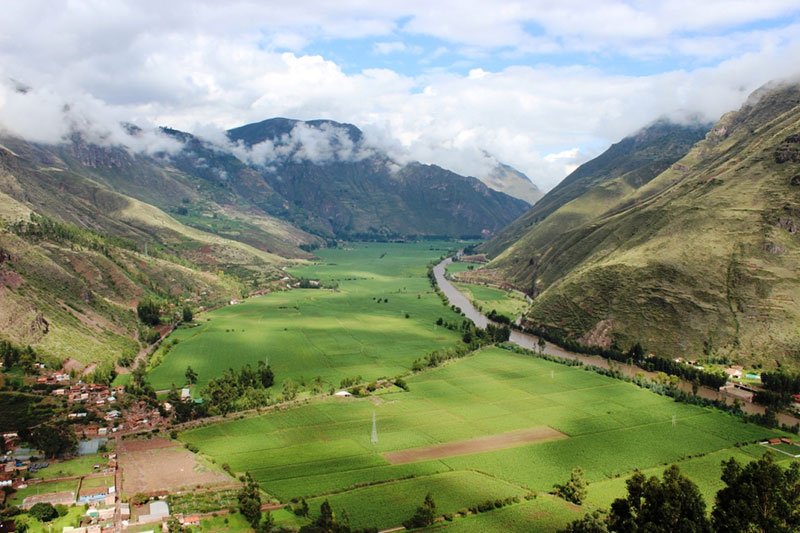
I mounted and crossed the stream below the mill, leading the packhorse through the trees to the village of Taray and out onto the Sacred Valley of the Incas, where the Vilcanota River wound its way downstream to feed the Amazon. There were few people about at that hour, but I observed some campesinos in their fields, tending neat rows of young corn in tidy plots beside the river. Smoke wafted from the scattered farmhouses as people prepared their breakfasts, and birdsong filled the air. Thick retama (broom) bushes lined the trail, and the sweet scent of their yellow flowers followed us down the valley.
Flanked by towering peaks, the fertile Sacred Valley of the Incas runs alongside the Vilcanota River (the Sacred River, or Huilcamayo in Quechua), which is known further downstream as the Urubamba. Stretching over a hundred kilometres, the valley is lined with vast Inca terraces and numerous archaeological sites—tangible evidence of the immense importance this region held during the Empire. Chosen for centuries as a favoured location for royal Inca estates and the rural residences of the nobility, its low elevation and mild climate made it an ideal setting for cultivating maize, a crop of great symbolic and social value to the Incas. From maize, they made chicha, a fermented drink that is still consumed in large quantities during the many ceremonial festivals of Quechua communities today.
Three leagues downstream lay the small town of Calca, the administrative capital of the Valley, and once the site of Manco Inca’s palace. In a broad plaza at the centre of town, I tied up the horses outside the Quinta Malagy, the only restaurant open. After a breakfast of coffee, fried eggs and toast, we continued downriver, arriving by late afternoon at the town of Urubamba, behind which, a trail led us through a gorge toward the snow-capped Nevado Chicón. We followed the path to Casa Chicón, an old farmhouse rented by half a dozen young Brazilian women I had met in Cuzco. I had accepted their persistent invitation to visit. However, finding most of them laid up with some kind of stomach flu, I spent the afternoon sipping their raspberry wine from rustic clay cups, half-listening to Consuelo’s complaints about the general state of things, my attention drifting to the screeching of thousands of green parakeets nesting in the trees. Large flocks of birds had come up from the lowlands to nest and raise their young in the valley, drawn by Urubamba’s spring-like climate and the noise they made at day’s end was deafening.
The horses slept in the courtyard and I enjoyed a restful night, so with promises to return I gave my fond farewells to the ladies, whose health seemed much improved, and rode into the charming colonial town of Urubamba. White-washed houses with Spanish tile roofs bordered a broad square shaded by numerous trees. Down a side street I found the market, where I tied up the horses to enjoyed a fruit juice at a vendor’s stand. After a light breakfast, we continued down the valley into the Yanahuara canyon, where Carl and Tina Bernstein, a pair of American anthropologists, had been living for many years. They greeted me on my arrival with cold beers and tamales, and while Tina prepared lunch, I told them about the journey I was undertaking, and we spent several hours poring over maps, discussing the trails, and comparing notes on the history of the Incas—a subject Carl knew a great deal about.
***
At their height, the Incas controlled a vast territory spanning the length of the Andes over much of northwestern South America. At the heart of an empire known as the Tahuantinsuyo (The Four Quarters) lay Cuzco, the military, religious and economic capital. Its ruler was called the Inca and he generally married one of his sisters or half-sisters, known as coyas. Power was passed from father to son, or brother to brother, generating a dynastic line of Inca royalty that lasted three hundred years.
Although the Incas had existed since the 12th century, it was only in the century before Pizarro’s arrival, during the reigns of Pachacutec and Inca Yupanqui, that they had greatly expanded the empire, adding through military conquest and peaceful assimilation an area that spread from Colombia to northern Chile. To enlarge the empire, the Inca first offered neighbouring leaders presents of luxury goods, extolling the benefits of joining his empire. As described by Howland Rowe, most accepted and acquiesced peacefully, since those that refused faced military conquest and execution.
“The old chiefs of the new district were kept on in office and […] their sons were taken as hostages to Cuzco to be taught the Inca system…and vacancies in the administration filled with local people or specialists brought in from older provinces… By reshuffling the population, older political units would be broken and it would be more difficult for the inhabitants of a province to plot revolt. When a new province was conquered, settlers were brought into it from some province which had been under Inca government long enough to know the system, and their place was filled with the most recalcitrant elements of the new province. These settlers were called mitimaes.”
Howland Rowe, John, Inca Culture at the Time of the Spanish Conquest, 1963
Despite an extensive nobility known by the Spaniards as orejones (Inca nobility characterised by the large ear plugs they wore.) and an influential religious class of priests, the Inca empire was primarily a military theocracy. Their principal deities were the creator Viracocha, the sun god Inti and other celestial bodies, animist beliefs that included the veneration of the Earth goddess Pachamama and the spirits of the nevados known as Apus. Considered a direct descendant of the sun, the Inca ruler enjoyed a divine status. The mummies of his ancestors were kept in sacred temples, protected by the mamaconas (consecrated women dedicated to the care of holy shrines), and brought out for ceremonial occasions. Variously described as utopian or socialist, their economy had neither markets nor currency. Peasants were required to work in agriculture with hand tools, filling granaries and deposits until a quota was met. These stockpiles were the state’s guarantee against famine. Projects that required many workers, such as serving in the military, working in gold mines, or building monuments, public buildings, bridges or roads used a system known as m’ita. The m’itayoc required every household to provide one person who could perform a set amount of labour for the government each year, over and above the farming requirements for the state.
The Incas had no written language. Instead, they relied on a sophisticated system of communication that consisted of quipus (knotted messages) delivered by chasquis (runners) over an extensive network of roads covering the entire length of the empire with convenient, fully provisioned rest stops, known as tambos, situated every eight leagues.
Although they had not discovered the arch, they were exceptional stone masons and engineers. Their fortresses and palaces were built with polygonal masonry of such precision that in the four centuries since the conquest the earthquakes that frequently rattle the area have done little to displace the perfectly fitted stones. Wheels have been found on pre-Columbian toys, but the Andes’ vertical orography precluded their use and they were not used for transportation. Loads over distances were carried by porters and llamas; they had no other beasts of burden.
***
After lunch I continued down the Sacred Valley towards Ollantaytambo, arriving at a narrow defile where the village lies protected under a formidable fortress. Once the palace of the Inca Pachacutec, it was subsequently fortified with ramparts built with cyclopean polygonal masonry, their stones perfectly arranged to form a massive perpendicular wall that rises up the mountainside. On the hillside above it rest ceremonial buildings, barracks and other structures as well as many more fortifications. Within the complex are the springs and courtyards where the Inca and his family once rested and I could well visualise Almagro’s dread, horrified as he must have been by the sight. It is an awesome structure designed to intimidate the most implacable opponent.
I was drawn to a quiet enclosure and decide to camp next to a place known as ‘Los baños de la ñusta’ (The baths of the Princess), where a gentle flow of water sprung from the living rock into a series of stone pools. The absolute silence was interrupted only by the soft murmur of water trickling through the sluices and I invoked the Inca princesses who bathed here and gave this sacred spot its name. Lost in thought, I recalled an old verse transcribed by Garcilaso in 1560:
In this place thou shalt sleep
Midnight I will come.
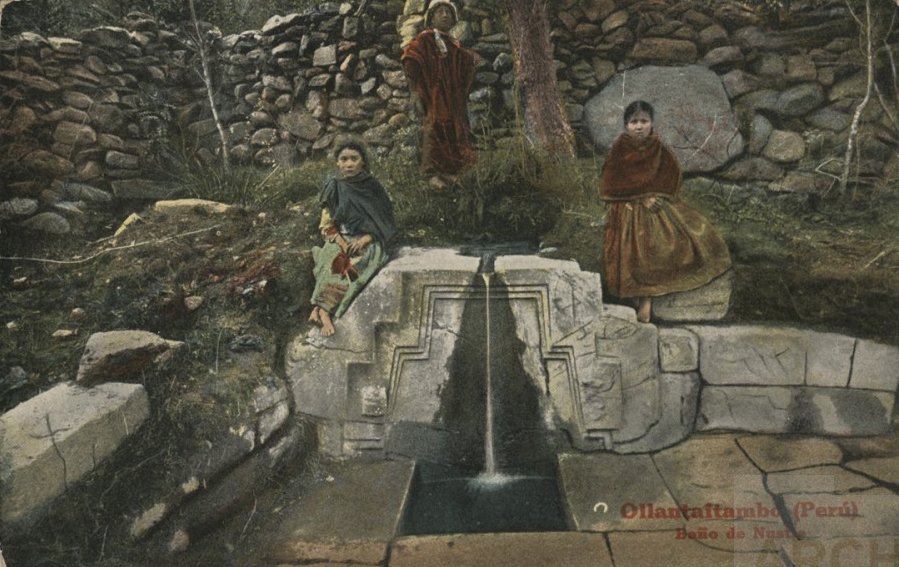
My reflections were interrupted by a hippie who suddenly appeared. He was a straggler from last month’s Kumbh Mela, the Hindu gathering held on the banks of the Vilcanota River that had brought together hundreds of devotees for a week of chanting and meditation. I recalled how, driven by curiosity, I had ridden out to the camp intending to take part in the festivities. However, when I saw that the organisers had laid out meticulously ordered rows of tents, I opted instead to camp in a more secluded spot where my horse could graze in peace, so I chose a solitary hill, far from the bustle, and set up my tent. However, my independence was not well received: the organisers insisted I move my tent in with the others in the rigidly structured “village” of canvas they had established. Sensing the Kumbh Mela wasn’t for me, I packed up camp and rode home, a decision fully validated the following week by the visit of three delightful young Venezuelan women who had also left the festival in search of a different kind of adventure. The hippie asked if he could sleep in my tent, and I agreed—though I spent the night regretting it, having to endure his endless litany of reproaches against smoking, eating meat, or wearing leather shoes.
Early next morning the hippie had gone his way and I was glad to be rid him. Last night, a guard showed up to inform me that camping there was prohibited. I offered him a drink of rum and assured him we’d be gone in the morning. He returned today apologising for any inconvenience caused last night and we spent a pleasant hour chatting while I struck camp and packed the horses.
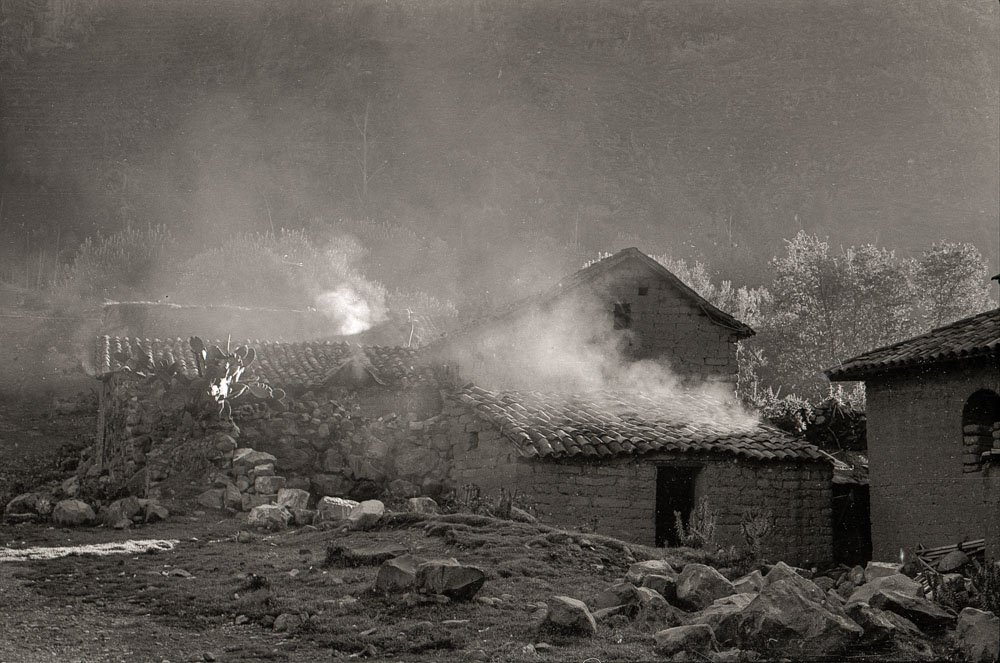
Hungry for breakfast, I rode into Ollantaytambo, the small town nestled at the foot of the fortress. In the slanting light a soft mist drifted over the town and very few people were seen about. The prosperity we saw in Urubamba was not evident here. The homes simple adobe constructions, their whitewash showing signs of prolonged neglect, and many of the roofs had broken tiles. Yet from the ruins of a vanished civilisation sprung new life. Much of the town was built over the remnants of Inca buildings and humble adobe houses rise from the heavy, perfectly fitted, polygonal Inca stones.
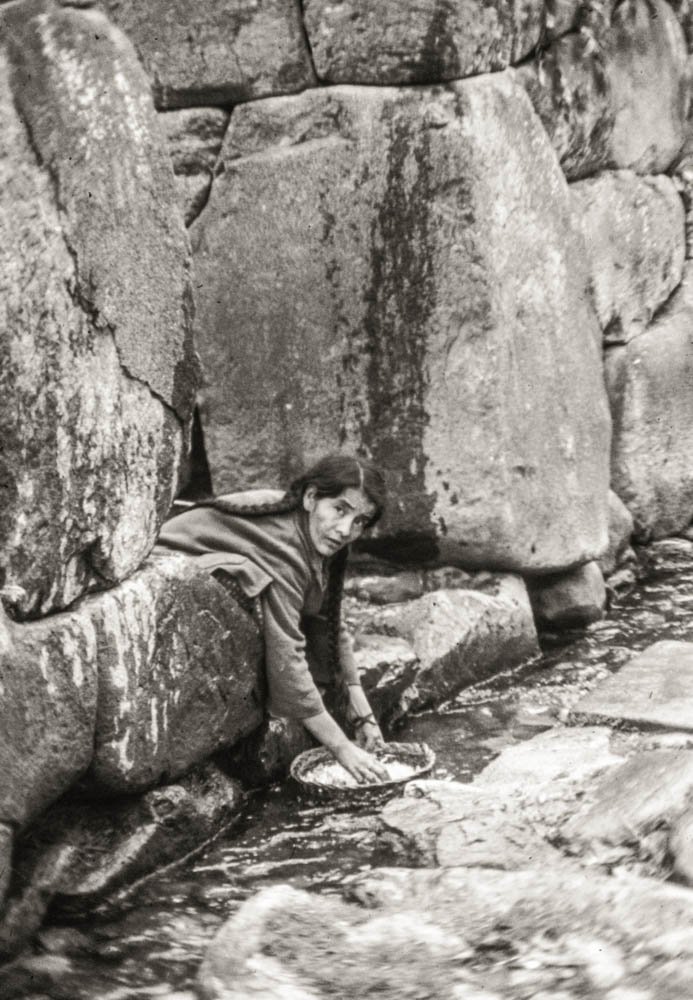
In a deserted street, a stone canal ran along the base of a wall, beside which a woman was quietly rinsing corn. I asked her where I could get horseshoes for Q’orisumac and she pointed the way to the village blacksmith, who, without delay, repaired them on the spot and charged me eight soles.
At the foot of a canyon farther down the valley is Huayrac Puncco (Doorway of the Wind), where we set up camp in a farmer’s field. The nevado Veronica towered overhead (known in Quechua as Apu Huacay Huilca, Lord of the Sacred Tears), reminding me that the next day we would climb the pass that would take us around this nearly 6,000-metre peak. It was a pastoral campsite, though true to its name, the wind screamed down the ravine, making it difficult to keep the Primus stove lit. Impurities in the kerosene had plugged the nozzle and extinguished the flame, which I cleared with my little needle-tool before trying to relight it again. This only caused the stove to burst into flames with plumes of sooty smoke, and I had to put it out and reheat the nozzle with a little alcohol in the priming dish. After several tries, I finally managed to prepare a decent lunch and spent the rest of the afternoon reading in the sun while the horses ate their fill of the tercio of alfalfa I had bought from the local farmer.
Under a clear sky the following morning, we rode out of Huayrac Puncco, down the valley—now called the Urubamba—to the small village of Tanccac. Behind it, a long, narrow canyon leading up to the Panticalle Pass would take us over the shoulder of the Veronica and down into the tropical lowlands. It was a scene of bucolic serenity; the narrow trail took us past scattered farmsteads, dotted with animals grazing quietly in the morning light. In places, the horseshoe trail was paved with finely cut stones, and I recalled that this had once been the Royal Inca Road to Vilcabamba. When Manco Inca fled Ollantaytambo with Orgóñez close on his heels, he had ordered the road broken up, hoping thus to hinder the horses’ progress. The remains were unmistakable: shattered stones lay strewn across the path, silent witnesses to the trail’s violent past.
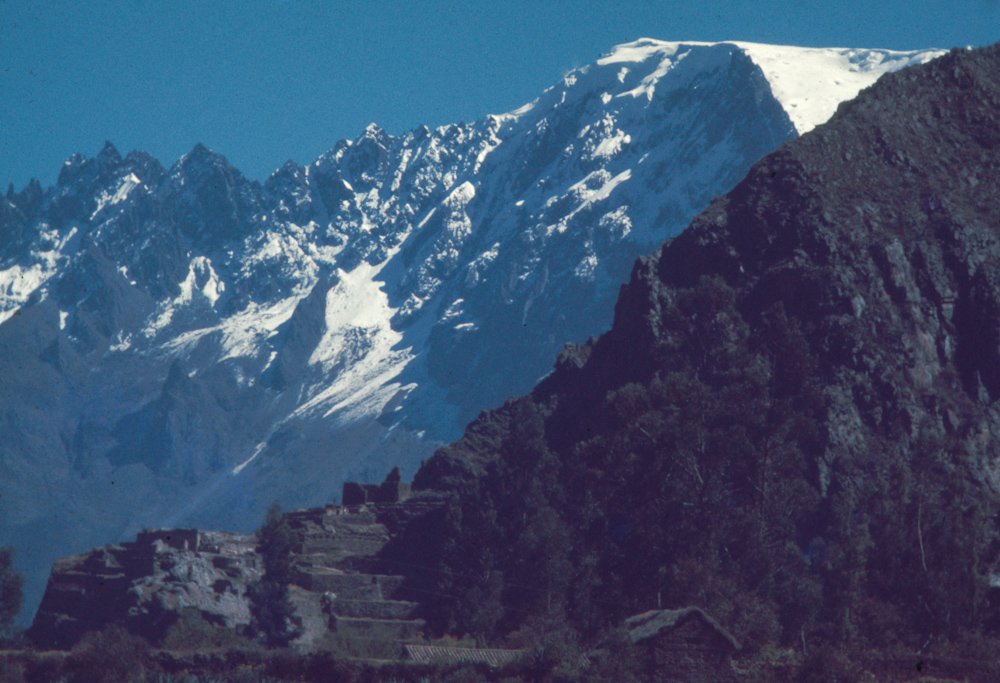
After three hours of steady ascent through the ravine, we came upon a cluster of ruins. Circular structures—perhaps ancient grain bins once used to provision the Inca army—stood above a series of concentric terraces. Atop a commanding outcrop sat a finely crafted stone building, its position offering a sweeping view of the valley below. Beside it loomed a large rock, oddly painted in streaks of blue and yellow. What could it have signified? The extensive terracing hinted at long-term occupation, perhaps even the remnants of a forgotten Inca palace—yet I found no mention of it in my notes.
On a narrow gorge near the summit is Piñas, a lonely community of high-altitude farmers, clustered houses of field stone, adobe and thatch. Leaving it behind, we followed the ruined Inca trail into the wind-swept puna, past the vegetation mark and up to the Panticalle Pass. The rain had turned to snow, and by the time we reached the pass we were soaked to the skin and chilled to the bone. Visibility had dropped to near zero, but we kept to the remnants of the Inca road, descending rapidly alongside the Lucumayo River—little more than a stream at that altitude.
After several hours, the clouds lifted, revealing a breathtaking panorama: snowcapped nevados rising in grandeur to our left. Down the valley lay Chachayoc, a small hamlet where a local farmer informed me that the trail along the Lucumayo Valley to Chaullay was impassable due to huaycos, landslides that had washed away the path. If I wished to continue, I would have to climb up to the road carved into the mountainside far above. Exhausted, I set up camp for the night at the foot of Veronica and released the horses to graze on the sparse ichu grass, silently praying for sun the next day so my soaked clothes could finally dry. My Quechua was rudimentary at best, and none of the villagers spoke Spanish; meaningful communication was limited to broken phrases and friendly gestures. Huddled in my tent beneath the mountain, I reviewed my notes by the flickering light of the kerosene lamp.
***
Pizarro’s arrival in Peru in 1532 coincided with the end of a bloody fratricidal war between two sons of the Inca Huayna Capac. Huascar was Huayna Capac’s heir, and he controlled Cuzco and the South while his rebellious half-brother Atahualpa ruled Quito and the North. Marching into Cajamarca with his small band of conquistadores, Pizarro immediately seized Atahualpa and held him for the ransom of a room filled with gold. For months, porters and trains of llamas from all over the empire arrived in Cajamarca with gold and silver torn from temple walls, which the Spaniards promptly melted into ingots. A few effigies and panels were kept from the furnaces to be sent home for the Emperor Charles V who, after expressing admiration for them, had the pieces cast into coins. Thus were many masterpieces of the Inca goldsmiths’ work forever lost.
From his captivity, Atahualpa summoned Huascar to his aid, only to have him killed on the road from Cuzco. A few months later, when the room was finally filled with treasure, Pizarro had Atahualpa garrotted, crowning Tupac Huallpa, another of Huayna Capac’s sons and Atahualpa’s half-brother, as puppet-king in his stead. Pizarro then split the Inca’s treasure with the recently arrived Diego de Almagro and led their army to Cuzco, the Inca capital of the Tahuantinsuyo. But Tupac Huallpa inexplicably died during their march and, upon arriving in Cuzco, Pizarro promptly crowned another of Huayna Capac’s sons, the young Manco Inca, bestowing upon him the royal fringe.
During the first years of the Spanish occupation relations with the Indigenous peoples remained relatively calm. Glad to be out from under the threat of death from his half-brother Huascar, Manco was a compliant collaborator. But two of Atahualpa’s stalwart generals, the recalcitrant Quisquis and Rumiñawi, rose up in fierce opposition against the invasion and rekindled the old hostilities between Huascar and Atahualpa. In response to this threat Almagro sent Hernando de Soto on campaign against the generals in Quito and Manco joined the expedition with a large native force. Together with the new conquistadores recently arrived in-country, they defeated the Quitans and unified the empire under Spanish dominion. Manco returned to Cuzco with the conquerors a strengthened monarch, free from the intrigues of pretenders and confident of the Spaniards’ loyalty.
The now quite rich conquistadors had been allotted all the Inca palaces in Cuzco. The large numbers of indians they’d received with their encomiendas provided them with a steady income and they were enjoying a life of luxury in the city. But tensions had grown between Pizarro and his partner Almagro, who was deeply resentful of the disproportionately small share of the Inca’s treasure he’d received in Cajamarca. The Emperor Charles V had decreed the Inca empire should be divided between the two, with Almagro receiving command of the South and Pizarro the North. Cuzco, however, lay geographically somewhere between the two, and both commanders laid claim to it, threatening a new civil war between the conquerors.
Almagro used his money to raise an army and decamped for Chile, confident that he would find even greater wealth in the South. Pizarro departed for the coast to found the colonial capital (which he called the City of Kings, later renaming it Lima), leaving Cuzco in the care of his younger brothers Hernando, Gonzalo and Juan. In his absence, the brothers established a dictatorship of corruption, brutality and intimidation. The steady stream of new conquistadors arriving each day in Cuzco were greedy for gold and, finding little treasure left to claim, they extorted the Inca through harassment and humiliation. Titu Cusi, Manco’s son, reported that in their demand for gold the Spaniards often spat and urinated on his father and, to pressure him further, the Pizarros had him imprisoned. Manco was appalled by this treatment of his royal person and disillusioned by the broken vows of those he had considered his friends. After several unsuccessful tries he managed to escape his confinement, fleeing to the Sacred Valley, where he retired with his generals to formulate a strategy from his palace in Calca.
With Pizarro away and Almagro off in Chile, Manco figured that retaking Cuzco would be an easy task, so he sent his general Villac Uma with 150,000 warriors to march upon the city, whose defence was under the command of Gonzalo Pizarro. Manco’s men laid siege to his old capital, setting fire to the thatch roofs of the city and engaging the terrified Spaniards in countless battles. A large host of Incan forces took the fortress of Sacsahuaman above the city and Juan, the youngest of the Pizarro brothers, led a desperate charge to retake it. During a skirmish the day before he had been hit in the jaw by a sling-hurled stone, and his face had become too swollen to wear a helmet. Spurring his horse into the fray, he was felled by a slingshot blow to the head, dying later that evening. His compatriots and their Cañari allies, however, were able to retake the fortress and put thousands of the Inca’s men to the sword.
But Manco’s revolt had taken hold across the country and Villac Uma and other Inca generals rallied native troops against the Spanish forces, killing many, including nearly all the Spaniards left in Jauja. From Lima, Pizarro sent out pleas to Spanish governors elsewhere in the Indies, asking for help in retaking Peru, and many came to his aid, sending hundreds of men and horses from Panama, Nicaragua and Mexico.
Meanwhile, a thoroughly shaken Almagro returned to take control of Cuzco in 1537, having found no gold in Chile. He had endured nearly two years of extreme hardships, crossed blistering deserts and ice-bound Andes only to suffer a humiliating defeat from the bellicose Mapuches, who had left his troops decimated and in rags. Upon hearing of the young Pizarros’ mistreatment of the Inca, he imprisoned them both. His next move was to block the arrival of Pizarro’s reinforcements from Lima who threatened to wrest away his tentative control of Cuzco. The two forces met on the plain of Abancay where, after a nearly bloodless battle, most of Pizarro’s men shifted their alliance to Almagro.
Now in full control of Cuzco, he led a large force down the Sacred Valley to negotiate a peace with Manco. He wrote to the Inca expressing his deep concern and regret for the treatment he’d received from the Spaniards and promised that the Pizarro brothers would be tried for their crimes. Almagro then invited the Inca to return to Cuzco, where he could live in safety. But Manco had heard rumours that Almagro’s true intent was to send him to Spain in chains and he was wary of the Spaniard’s motives. The death of some indians by Almagro’s men in Calca confirmed his suspicions and he soon realised that Almagro was as untrustworthy as Pizarro. He retreated to the ancient fortress of Ollantaytambo and prepared for war. The Spaniards followed with their cavalry and, with a large contingent of native troops hostile to the Inca, attacked the fortress. In the battle that followed the Inca altered the course of the river, flooding the invaders and driving the conquistadors from the Valley.
But it was a Pyrrhic victory. For the eight months that the siege of Cuzco lasted, Manco’s army had done little more than harass the 196 Spaniards (and their Cañari allies) left there to defend the city, and his inability to take the capital was a humiliating blow. Manco then realised that he would never be able to win back his lost empire. Despite his overwhelming superiority in numbers, his warriors’ primitive weapons of stone and bronze were no match for armoured men on horseback wielding steel swords and arquebuses. Moreover, mounted reinforcements were arriving each day from Spain, hungry for spoils. His only hope rested in retreating to the most inaccessible part of the Empire, where he hoped to live with his followers in peace, a fugitive Inca free from the harassment of the Spaniards.
And so did the Inca depart for Vilcabamba. In 1609 the chronicler Inca Garcilaso de la Vega wrote in his Comentarios Reales de los Incas:
“The Inca brought together all those of the royal blood he could find, men and women alike, and retired to the wild forest of the Antis to a place called Villcapampa where he lived in exile and solitude as one can imagine a dispossessed and disinherited prince would live…”
***
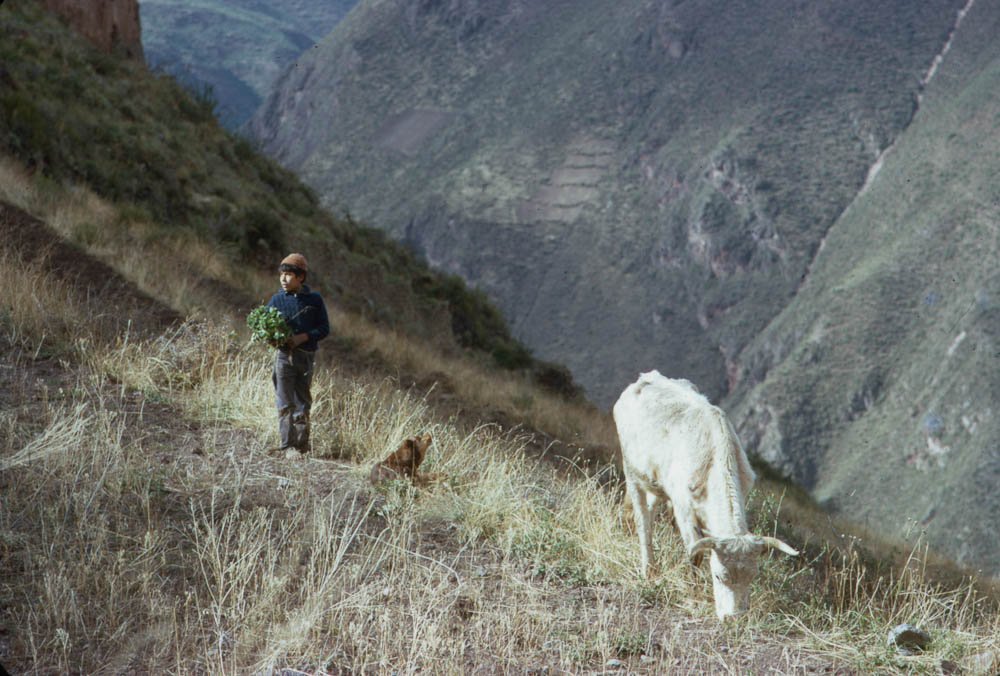
The sun had come out that morning, but the air remained bitterly cold. I gathered my wet clothes and hung them out to dry in the thin light. My boots, I noticed, were in terrible shape—the sole had torn loose and flopped uselessly with every step. I doubted they could be repaired. Knocking on the door of the village elder’s mud hut, I asked him in my halting Quechua about the route ahead. He told me it was a day’s ride down the valley to the tea plantations of Huyro, and two days to Chaullay, where the Vilcabamba River met the Urubamba. But he repeated the warning I’d heard the night before about the trail being impassable. Then he introduced me to a man who agreed to guide me to the path that led up to the road above. We settled on his fee: one mirror.
I waited half the morning for the guide to appear before accepting that he wasn’t coming—perhaps I should have offered him two mirrors. With my gear now dry, and the horses packed and ready, I studied the map and decided that Amaybamba might be a good place to rest. At this altitude, the vegetation was sparse, and I looked forward to reaching lower elevations where the horses could graze more easily. Dark clouds had begun to gather, threatening more rain. I broke camp and rode down the Lucumayo ravine, leaving the Panticalle Pass behind. Along the way, I encountered a series of structures built with fine ashlar masonry and sharply cut granite lintels—remarkably well preserved. They were clearly of Inca origin, though signs of recent use were evident.
Under pouring rain, I met a farmer tending his cow who confirmed that the recent huaycos had washed away the trail completely. Continuing downstream was impossible. The only option was to climb up to the road above. It was an excruciating ascent. The road clung to a bluff 500 meters above the river, and to reach it we had to follow a steep goat path winding between massive, overhanging rocks. The horses slipped and strained in the mud. I dismounted, letting them lead, gripping Cariblanco’s tail for balance. Q’orisumac’s load swung wildly, slamming against the rocks as he scrambled from one precarious foothold to the next and I heard things break. Water streamed down the trail in rivulets. One misstep could have sent us all tumbling into the ravine.
At the crest of the bluff, we reached a bog that sucked at the horses’ legs and swallowed my boots ankle-deep in mud. We pressed on, climbing over the mire until we reached another river—this one, fortunately, just a shallow stream that we forded with ease. A little farther up, gasping for breath, we finally reached the top.
Tentative rays of sunlight pierced the rainclouds as the mist slowly lifted, revealing a dirt road like a silver ribbon snaking down a valley that grew progressively greener the farther it descended. Tea and coca began to appear on the hillsides, vivid against the damp earth. After about four leagues, we arrived at the tea plantations of Alfamayo—a small town of hastily constructed houses that had the air of a frontier outpost. At the police checkpoint for coca transports bound for Cuzco I was summoned to present my papers. Next door, I met Señora Zamora, a kind neighbour who invited me into her home for a cup of tea. It was a welcome moment of rest and warmth, and a relief to be out of the rain.
As we descended into the valley, the vegetation grew increasingly abundant. For kilometres, the hillsides were blanketed in a dark green carpet of coca, tea, and cacao plants. In the late afternoon, we came across an abandoned house in the middle of a tea plantation. Behind it stretched a field of rich, knee-high pasture. I let the horses graze freely and moved my gear into the ruined house—a simple structure with walls of sticks, roughly daubed with mud in places, and a rusted corrugated tin roof. Under the eave, I listened to the steady drumming of rain on the roof and admired the luxurious abundance that surrounded us, grateful for the change after the harsh conditions of the puna.
The rain had fallen hard throughout the night, but the horses had fed well and the tin roof kept me dry. By morning, the skies cleared. I packed away my breakfast things, saddled up, and set out, feeling rested after a solid night’s sleep. A few kilometres down the road, on the southern bank of the Lucumayo, we reached the ruins of Inca Tambo. Modest in scale, they had likely served as a rest stop for the Inca and his entourage, or perhaps as a relay station for the chasquis, the empire’s messengers. Not much remained visible, though it seemed the site simply needed proper excavation.
The valley was now entirely cultivated in tea. We continued down the valley to Umasbamba, where we encountered a very desultory scene: the hacienda lay in ruins, destroyed after the Agrarian Reform, and nothing much remained. The exact number of haciendas destroyed during the reform is hard to quantify. Some hacendados, wealthy landowners embittered by the expropriation, preferred to see their homes go up in smoke rather than hand them over to the indigenous peasantry. Others had seen their estates ransacked by enraged campesinos seeking justice for real or perceived abuses, and in their fervour, they often left behind nothing but charred shells where once grand mansions had stood.
Further on, I learned we had passed the ruins of Guamán Marca, where the Inca Pachacutec was said to have built his palace. At the time, I hadn’t known about them and missed the opportunity to visit. Perhaps we could see them on the way back. By lunchtime, we reached Amaybamba, the heart of the tea cooperatives. It was a busy place, with people returning from the fields while others dried the leaves or packed sacks for market. The workers of the cooperative were friendly and invited me in for a beer. In the communal hall, we shared a meal, and I asked them about any nearby Inca ruins. Amaybamba was mentioned in the chronicles as an Inca town, and I was hoping to find traces of it. However, they knew of no ruins along the river; perhaps they lay further up the mountain.
There was a steady increase in signs of ‘civilisation’ the further down the valley we travelled. In this lush climate, few traces of Inca culture remained. I saw none of the colourful native costumes or the herds of llamas so common on the altiplano. Instead, there were houses, the occasional car, and more Spanish being spoken, with less Quechua heard. Gone, too, were the roofs of Spanish tile or thatch that had been common in the higher elevations.
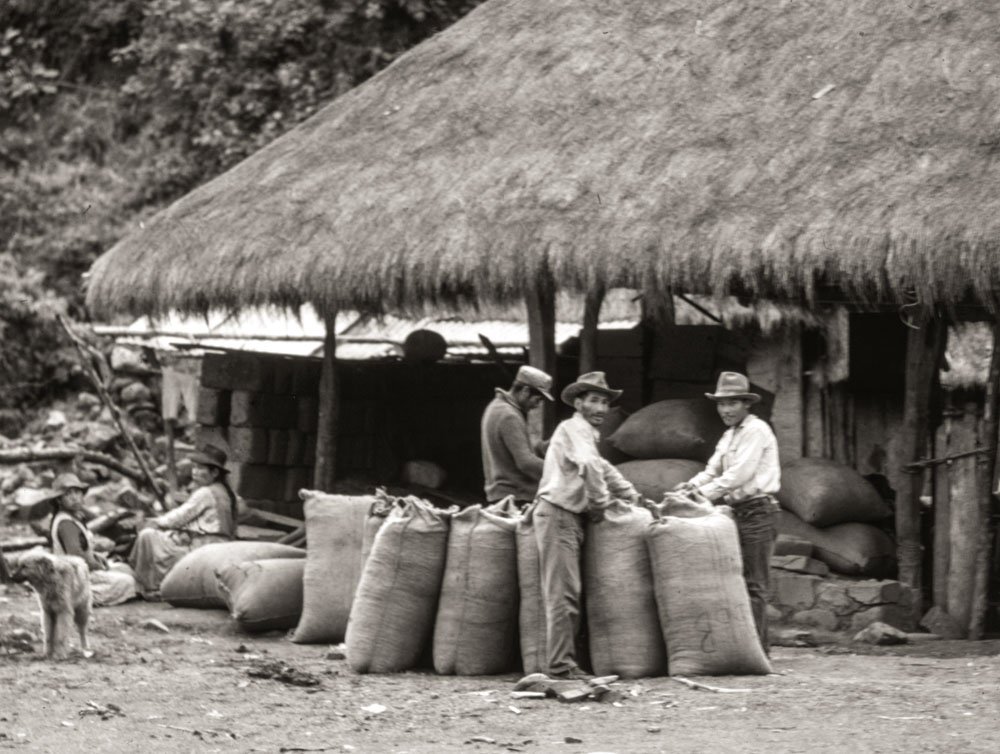
We arrived in the mid-afternoon at Huyro, the capital of Peru’s tea industry. All the houses had tin roofs, with walls made from cinder blocks or mud and wattle. As we entered the dusty shanty town, we were met by scores of children who ran behind the horses, playfully shouting, “Gringo! Gringo! Gringo jeringo, saca tu pingo para el domingo!”
At the edge of town, the new schoolhouse was under construction, and beside it was a field. I unsaddled Cariblanco and unpacked Q’orisumac’s load, stowing my gear in the half-built house and letting the horses graze in the thick pasture. Walking into town to buy supplies and make repairs, I noticed my boots were in terrible shape. After asking around for a cobbler, I found a man who sadly told me he thought there was no hope left for them. I asked about buying new shoes, and he directed me to a shop in town where I discovered that shoes in my size didn’t exist in Huyro. I also needed a chimney for my kerosene lamp, which had broken against a rock during yesterday’s steep climb, but there was no luck on that front either. Huyro was little more than an outpost, offering scant supplies.
At the small hotel in town I asked to take a shower. I was given a thin towel and shown into a row of dank and mildewed stalls. I must have been rank indeed, for they let me use the facilities at no charge! Feeling human and refreshed once again after the first shower in a week, I stepped out in search of a cantina where to enjoy a refreshing beer. All the pretty girls I had seen upon arrival seemed to have disappeared, but I found a dusty dive bar where they served me a cold Cuzqueña. It was late afternoon and the streets were empty. Some of the locals stop by the bar and join me for a few beers, regaling me with stories of Vilcabamba in the old days. Later, they took me on a tour of the Tea Factory. There was very little activity; the offices and warehouses sat empty at that time of day. In the evening I returned to the field by the schoolhouse and moved into an empty classroom, settling down for the night. I could hear the horses outside moving restlessly, bothered by the insects, while I sit at the window gazing in awe at the light show the fireflies were putting on in the night air. In the candlelight, I reviewed my notes.
***
After the conquest Vilcabamba emptied out. Many of the indigenous people who had accompanied the Inca had either been killed in battle or died from the diseases brought by the Spaniards, against which they had no immunities. The rest moved into Cuzco in search of the economic opportunities the Viceroyalty provided. In the 17th and 18th centuries the Viceroys opened Vilcabamba to gold and silver prospectors, and most of the arrivals were Portuguese colonists. After the mines ran dry Vilcabamba fell into oblivion and much of the area was again abandoned. In the newly independent Peru of the 1830s Vilcabamba was again settled by a new class of ‘Peruvians’ who, freed from the nepotistic encomienda system of land distribution, moved in to claim large swaths of land which they converted into haciendas. As the new masters, they cultivated coffee, sugar cane (from which they distilled aguardiente, a powerful alcohol locally known as machachicuj’cha or cañazo) and the coca leaf, all of which they transported to Cuzco on mule-back over precipitous trails.
Landless peasant families, descendants of the Portuguese miners who in the past had exploited the region’s silver mines returned to the region, drawn by the opportunities for work the haciendas provided. However, in order for these colonos to live and work in Vilcabamba, they were required to sign an agreement termed Las Condiciones. These conditions defined what was expected from each settler as payment to the landlord for the privilege of living on his land. They were required to work 20 days a month for the hacendado in the cane fields, the coffee plantations, or in the palla de coca, the coca leaf harvest. In addition, for every steer they butchered, the hind leg and hide went directly to the landlord, free of charge. They were not allowed to build adobe houses for themselves, but were obliged to live in mud and wattle houses called millica. Moreover, all colonos were forbidden to ride any animal (horse or mule) with a saddle, a privilege extended only to the hacendado and his family.
The modern colonisation of Vilcabamba had resurrected two Inca policies. Mitimaes, the forced resettlement of entire populations was put in place to fill vast tracts of empty land, and the m’ita was reinstated. It was a system of forced labour that obliged each colono to work for the landlord, much like the Indigenous peoples had been compelled to work on Spanish enterprises, providing the primary source of labour for the colonial exploitation of the silver mines of Potosí and the quicksilver mines of Huancavelica. The modern government of Peru had merely adopted these policies as its own, resulting in the disenfranchisement of many mestizo communities.
***
In the morning I woke to find Cariblanco badly bitten by vampire bats, a steady stream of blood running down his shoulder. The bats’ saliva contains an anaesthetic that numbs the victim and a protein, curiously named draculin, which inhibits coagulation. Once the initial bite is made, the bats return throughout the night to lap up the blood that flows freely from the unsuspecting animal. This was something I was familiar with, recalling the numerous occasions I’d had to deal with it back in Urpihuaylla. While infection (or rabies) is rarely a concern, my main worry was that the saddle, positioned on his withers, might worsen the wound. I applied antiseptic, saddled up, loaded Q’orisumac, and rode into Huyro for a breakfast of eggs, fruit juice, and tea.The sun had risen over the mountains, and the heat was already oppressive. We rode at a rapid pace, but we couldn’t escape the clouds of mosquitoes and black flies that tormented us with ferocious persistence. The humidity was palpable, thick like syrup, and my clothes clung to my skin, drenched in sweat. Plantations of coca, coffee, bananas, and oranges now covered the hillsides, but decent forage for the horses had become increasingly scarce.
Where the Lucumayo joins the Urubamba River lies the village of Santa María, a tiny stop on the train line from Cuzco to Quillabamba, the capital of the Concepción Valley. Much of Cuzco’s fruit, coffee, coca and cacao comes from this fertile valley and mule trains and lorries gathered there to meet the train. Growers from the area were lined up, patiently waiting to unload their produce, and I watched them work in silence. Half a league further on is the little village of Chaullay, where the Urubamba and Vilcabamba Rivers meet, and once again, I checked in with the police. My boots were now in tatters, and I doubted they would walk another proverbial mile. Leaving the horses to graze in poor pasture at the only feed in town (a place called La Entablada), I hobbled over to the road and picked up a ride on the back of a lorry to Quillabamba. It is a much larger town, where I hoped to find a greater selection of footwear. Half hour later, covered in dust, I hopped off the truck and made my way to the market, where I bought some overpriced trainers and tossed my old boots into the rubbish bin. After a decent lunch at one of the market stalls, I caught a ride back to Chaullay. That afternoon I loaded up the horses and crossed the Chuquichaca Bridge into Vilcabamba.
The Sacred Plain at last!
I had pitched my tent near the bridge, at the confluence of the Vilcabamba and Urubamba Rivers, and this morning a column of smoke rose from the still-wet hearth, a timid fire heating a black pot for the coffee water. At the riverbank, I watered and washed the horses. They bore signs of yet another rough night. The ever-present black flies and mosquitoes had denied them any rest, and both had fresh wounds from vampire bats. The bath did them good however, but unaccustomed as they were to these low altitudes, they seemed irritable and eager to move on to higher elevations, away from this oppressive climate.
We struck camp and followed the winding Vilcabamba River deeper into the interior. The sun was now scorching, and the humidity, along with the relentless swarms of flies and mosquitoes, made for great discomfort, despite all the repellent I had lathered on. We passed the impressive canyons of Mesacancha, where the trail had literally been carved from the living rock. It was easy to imagine how taxing it must have been for the conquistadors to penetrate this region, so jealously guarded by natural boundaries and fierce indigenous warriors. Steep, jagged walls rushed down to meet the torrential river below, and access was incredibly difficult in places. From time to time, we saw patches of coca, coffee, and bananas growing, but overall, the terrain remained harsh, with little thriving amidst the tall, stubborn weeds. We rode on, the silence broken only by the eternal murmur of the river and the squawking of birds flitting in the brush.
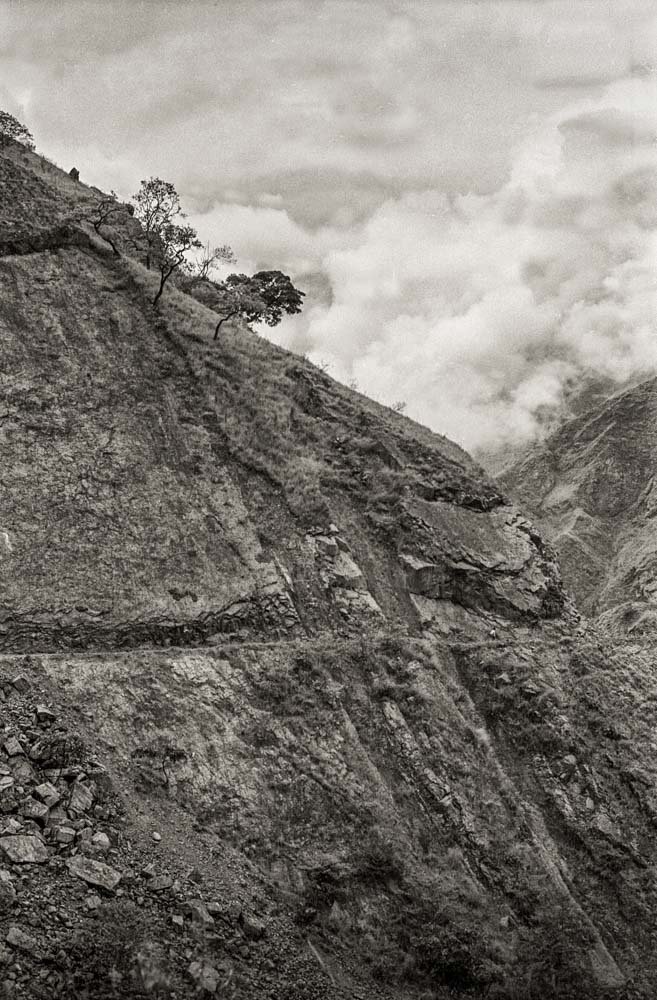
A narrow canyon led us, by day’s end, to an opening in the valley where a once-elegant house, now in ruins, sat perched on a hill. It was part of a centuries-old hacienda known as Paltaybamba. I was warmly greeted by the blind Rosendo Delgado, 74 years old, who had lived on the estate since 1918. Rosendo’s son, Mario, put the horses out to pasture, and I followed him into a house tucked beneath the old mansion. Inside, I met four men deep into a t’inca, the spirited celebration that traditionally follows the sale of livestock, complete with good machachicuj’cha and Cuzqueña beer. Two of them were Rosendo’s sons. Another was Rómulo Montes Hermosa, the Justice of the Peace of Incahuasi, and the fourth was the purchaser, a man named Moisés Taya Lazarate, who wistfully recounted the story of Paltaybamba and his years as a guerrilla, recalling the most exciting days of his life.
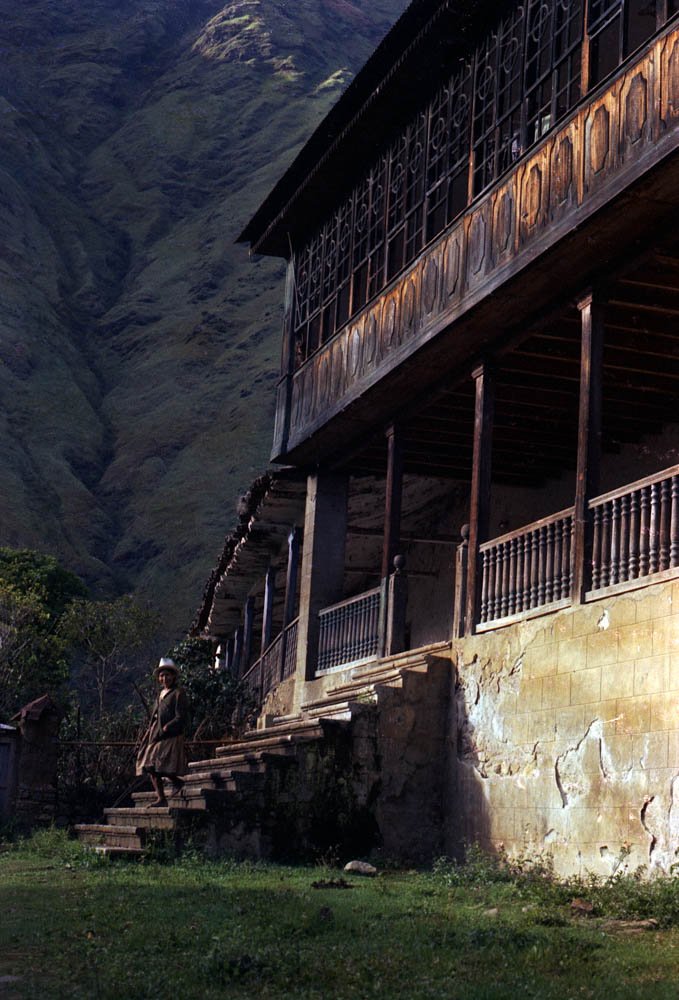
Years ago, the Paltaybamba hacienda held dominion over a vast area stretching from Chaullay to Tarqui, covering approximately ninety square kilometres. Its owner, José Sebastián Pancorbo, was a prominent figure in Leguía’s government (1919 – 1930), and his extensive estates controlled the production of coffee, coca and sugar cane throughout the district. Pancorbo was also deeply involved in the exploitation of rubber in the San Miguel Valley, and his methods of securing labourers were infamous for their cruelty. Hiram Bingham, during his 1911 expedition to Vilcabamba, witnessed the recruitment of porters for the venture and described the process as follows:
“When they [the recruiters] were so fortunate as to find the man of the house at home or working in his little chacra they greeted him pleasantly. When he came forward to shake hands, in the usual Indian manner, a silver dollar was unsuspectingly slipped into the palm of his right hand and he was informed that he had accepted pay for services which must now be performed. It seemed hard, but this was the only way in which it was possible to secure carriers.”
Bingham, Hiram, Explorations in the Highlands of Peru, 1912,
From his lonely outpost on the Congo River, the Irish journalist Roger Casement had witnessed similar abuses perpetrated on African natives by King Leopold’s men in 1904. The scathing indictment he delivered to the press four years later became instrumental in forcing the king to relinquish control over what had been his private estate. In 1911 Casement was sent to Peru, and his report to the British Parliament that year, denouncing the barbarous conditions under which the natives had to work, provoked such indignation that it did much to initiate the decline of the rubber industry in Peru. Yet until well into the 1930s, with the connivance of the Church, local authorities and government officials, Pancorbo continued his rubber-gathering enterprise in a system of peonage and forced labour that was tantamount to slavery.
The miserable conditions under which the colonos had to live lasted until just over a decade ago, Rosendo explained to me over beers. Syndicalism took off on a slow start here, largely due to a difference in temperament between the upper and lower Valley settlers. In the lower sections, where great orange groves grow, the people were passive and generally eager to work for the patrón. However, in the upper Valley, and especially the Chaupimayo Valley, the colonos were from the start quite militant, and these differences kept the syndicates from achieving any positive results. Those who wanted peace and who obeyed the Condiciones were called q’ello and were earmarked for cowardice by the more militant faction. Nevertheless, during syndicalism’s formative years a strict discipline was kept. Summoned to the call of the pututo (conch shell), the colonos would leave their fields and come running to the hastily assembled meetings.
The other large estate in Vilcabamba was the adjacent Hacienda Huadquiña, founded centuries earlier by the Jesuits as a sugarcane plantation. Since their expulsion from Peru in 1773 it had been in private hands and was now owned by the Romainville family. Since 1957, Hugo Blanco, an employee at the hacienda, had been organising the colonos into syndicates in defence of their rights, encouraging them to reject the Condiciones. Additionally, Blanco’s guerrillas fought fierce battles with the landlords of Vilcabamba and for several years, wreaked havoc in the Chaupimayo Valley. In 1962 his men took over the police post at Puquiura and killed a policeman, followed a few weeks later by two other deaths in the lower Vilcabamba ravine of Mesacancha.*
The Huadquiña hacienda, where Blanco had once worked, was expropriated from the Romainville family. It once measured 148,000 hectares (1,480 square kilometres!), but in 1974 the family owned only a few thousand hectares, used mostly for equestrian breeding and the exploitation of a few silver mines run by young Mario Romainville.
The oligarchs were well-connected and many had relatives in government, who sent in troops to put down the revolt, killing many colonos in the process. The uprising culminated later that year, when Blanco led the peasants of Paltaybamba in the overthrow of the hacienda, unleashing the traumatic events that would tear this valley apart. Blanco managed to escape in the fray that followed, only to be captured the following year near Quillabamba. He was tried for sedition and sentenced to 25 years at El Frontón, Peru’s infamous island prison off Callao. But Hugo Blanco’s guerrilla war had not been in vain. General Velasco Alvarado’s 1968 coup d’état initiated an Agrarian Reform that was to expropriate most of the large haciendas and redistribute them amongst the province’s colonos.
Rosendo recalled that day with vivid clarity.
“There were frightening disorders in those days,” he says. He had been living with his family in Paltaybamba since 1918, and that night, clutching his saddlebags, he managed to escape with the cooks to the trees above the house, where they watched, transfixed in horror, as nearly one hundred peasants armed with many angry tempers and a single .22 rifle stormed the Paltaybamba hacienda. Hernán Cisnaygo, Pancorbo’s son-in-law, was in charge of the estate. He was given five minutes to pack and leave. Upon asking who was responsible for the confrontation he was told by an angry peasant woman,
“Hurry up and hand over the keys! Are we such lazy people that we can stand around all day?”
Seven men escorted him to Chaullay. Moisés Taya Lazarte, the livestock buyer, put down his beer and told me he was one of the seven that day.
“We took him to the bridge on a bareback mule to make sure he arrived there alive—we didn’t want to get blamed for his death!”
After the ousting of the owners, Rosendo took possession of Paltaybamba. It was declared a ‘free territory’ and a feast was given in the mansion’s dining room. This was followed by a methodical looting and ransacking of the house. The furniture was then piled in a room and set on fire. Afterwards, all the animals were butchered. Now in control of the peasants, Paltaybamba continued to work its sugar plantations for some time, but the relative calm was shattered one morning when a massive police force rode up the valley. Cisnaygo had returned with the authorities, and Rosendo as well as nearly all the inhabitants of Vilcabamba were subsequently imprisoned or harassed. Cisnaygo then leased his recovered properties to Delgado, who worked them with his neighbours and family until 1968, when he turned them over to the Reforma Agraria. For the past six years Paltaybamba had been the property of the Community.
As the night wore on, our laughter grew louder and we grew steadily more inebriated. The chilling tales left my head reeling, and I drifted off under the open sky, the stars flickering above like silent witnesses.
At sunrise, the oppressive heat returned and I woke to a pounding headache, still groggy from the night before. The tip of my nose was bleeding, and my beard was crusted with dried blood. I discovered another cut on my toe. The vampire bats had fed on me during the night, and as I washed in the stream, I couldn’t help but wonder how the horses had fared.
The Delgado family insisted I remain as their guest, and I was grateful for the opportunity to rest.
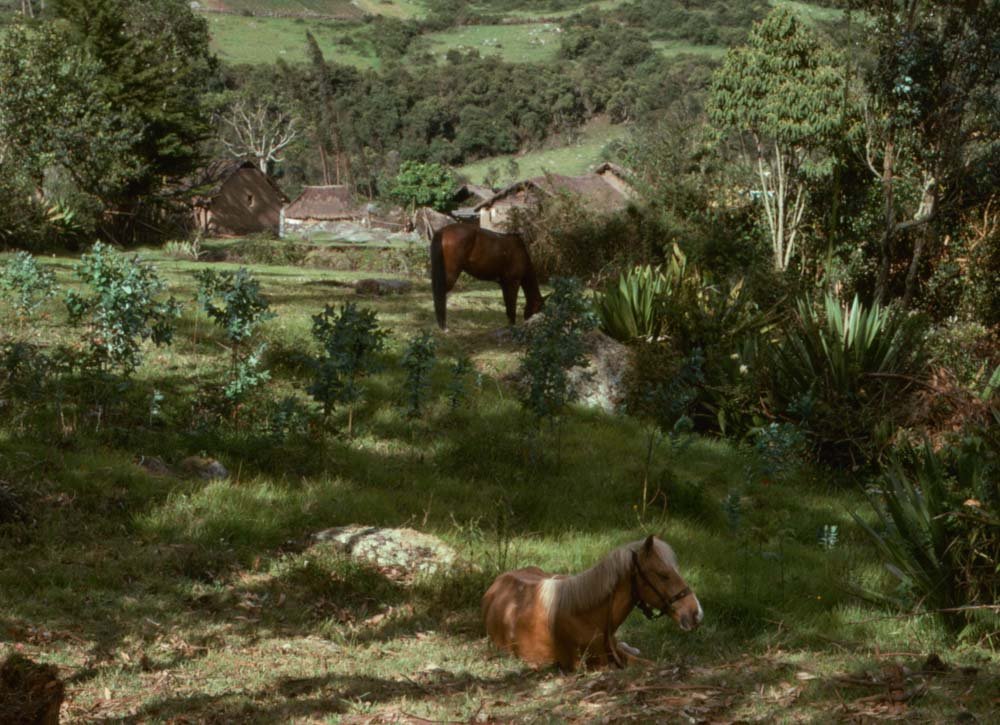
After a few days, I took leave of my gracious hosts and rode out on well-rested, noticeably plumper horses, bound for the upper valleys of Vilcabamba. Not far up the road, I discovered that they had secretly tucked two bottles of their own homemade machachicuj’cha into my saddlebags—a brew of remarkable quality and formidable strength. Hair of the dog, indeed, though best saved for a more fitting occasion.
As we made our way up the valley the air cooled, and by day’s end I chose to camp in a small clearing near Coyaochaca, the site of a battle fought on 1 June 1572 between the Inca’s forces and the Spaniards. What exactly transpired here? I turned to my notes for answers.
***
At his capital in Vitcos, Manco Inca lived in relative peace until July 1537, when Almagro sent Captain Rodrigo Orgóñez to capture the city. Manco escaped over the passes with a few followers while the Spaniards were distracted in the sack of the Vitcos. Although Vitcos sat on a high bluff, the ease with which the Spaniards had taken it showed Manco his city was clearly indefensible: he needed to find a new capital where the Spaniards couldn’t reach him. The Chachapoyas chief from the distant north had offered him asylum in the cloud-shrouded citadel of Kuélap, and Manco set out for the ancient city. But mistrusting the chief’s true motives, he changed course and withdrew instead into the remote depths of Vilcabamba, where he founded a new city in the torrid jungle. He was confident that the marshy terrain would hinder the passage of horses and discourage any Spanish pursuit.Orgóñez’s men had found Vitcos full of spoil and they took back many riches from the mamaconas (holy women) that lived there as well as several mummies of Manco’s ancestors. He kidnapped Manco’s son, Titu Cusi, and took him to the capital to be kept under the tutorship of a certain Oñate, a wealthy resident of Cuzco. He also kidnapped the Inca’s wife, his sister Ccori Occllo, whom he raped and took to his estate in Yucay, burning her at the stake along with the great general Villac Uma and many of Manco’s closest officers.
The death of his beloved Ccori Occllo struck Manco hard. In retaliation he launched his second insurrection, sending his captains against Spanish convoys travelling the length of the empire, and for several years they killed many conquistadores and their native supporters. Firmly resolved to put an end to this troublesome king, hoewver, the Spaniards in Cuzco crowned Manco’s half-brother Paullu Inca, a long-time Spanish ally who had converted to Catholicism, as the new Inca. With Paullu on the throne of the Tahuantinsuyo, their plan was to marginalise Manco and relegate him into the role of inconsequential provincial cacique.
Almagro had recently returned to Cuzco from his meeting with Pizarro a disappointed man. He and his men had arrived in Cajamarca too late to receive more than a nominal share in Atahualpa’s treasure and his Chilean expedition had not found the riches he had struggled so hard to obtain. Compared to Pizarro’s supporters, Almagro’s men were poor and bitterly resentful. His only hope lay in obtaining control of Cuzco, whose jurisdiction was only vaguely defined in the territorial divisions laid out by the Emperor Charles V. But negotiations for the control of Cuzco had not gone well and Almagro was now in a state of war with Pizarro. After their first encounter in Abancay their armies met again in April 1538 at Las Salinas, where Almagro was captured and taken prisoner to Cuzco. He was sentenced to death in a summary trial, garrotted in his cell and his corpse put on display in the Plaza de Armas. Orgóñez was also captured and executed along with Almagro.
Gonzalo Pizarro was sent the following year to capture the Inca and he easily took control of Vitcos. The Inca fled to Vilcabamba with Pizarro in close pursuit, but in May 1539 the Inca managed to defeat Pizarro’s army at Machu Pucará and he returned once again with his family to Vitcos.
After the death of Almagro, several of his followers, survivors of the Battle of Las Salinas were fearful of the Pizarro brothers’ inevitable revenge. Manco offered them refuge and for several years they lived in the palace of Vitcos under his protection. Antonio Bautista de Salazar, in his 1596 chronicle The Fall of Vilcabamba, describes Manco Inca’s end.
“When Don Diego Almagro was defeated near Cuzco in the battle they call Las Salinas, Captain Diego Méndez, with thirteen or fourteen soldiers, fled to Vilcabamba, where Manco Inca was. The Inca received and hosted them as soldiers of his friend the adelantado Don Diego de Almagro. They were with him for nearly three years and were well treated in every way. The Inca was very acculturated to Spanish ways, and he knew the games that the Spanish played, which included ninepins, dominoes, and chess. One day while he was playing with Captain Diego Méndez, they had a disagreement over the game, which some say was chess and others ninepins, such that in anger and with little thought and [even] less restraint, the guest said of the Inca and lord: “Look at the dog!” At this the Inca lifted his hand and slapped him. The captain then drew a dagger and stabbed the Inca from which wounds he later died. His captains and indians came seeking vengeance and tore that Diego Méndez to pieces, along with all the Spaniards who were with him in the province.”
Hemming disputes this version, arguing that the murder was premeditated. Méndez and his partners had received a note from the Pizarro brothers offering clemency in exchange for murdering the Inca. Under the pretext of a game of horseshoes, they planned to create a specious quarrel to justify his killing. But Manco was unwilling to play and sat on the sidelines as referee. In the spurious argument that followed Méndez drove his knife through Manco’s chest, ending thus the life of the last noble-born Inca to rebel against the Spanish invasion.
After Manco’s murder in 1544, his five year-old son Sayri Tupac, inherited the royal fringe. The Viceroy Hurtado then began a long series of negotiations with the young Inca’s regents in an effort to persuade Sayri Tupac to leave Vilcabamba and settle in Cuzco. The Inca eventually moved to Cuzco, married his sister Cusi Huarcay (with dispensation from the Pope) and settled in Yucay. His sudden death in 1561, however, heightened tensions between the Incas and the Spaniards, who were suspected of having poisoned him The royal fringe then passed to his half-brother Titu Cusi Yupanqui, who was living in Vilcabamba, having returned some years prior from Cuzco. The Spanish governor-general Castro wanted Titu Cusi to accept a Crown pension and abandon Vilcabamba for good, and he embarked on negotiations that continued for years.
The Augustinian friars Diego Ortiz and Marcos García had been living in Vilcabamba for several years on a mission to convert the indians. Friar Ortiz had befriended Titu Cusi and received permission to build a church at Vilcabamba, the first in the province. In 1568 Ortiz baptised the Inca, christening Titu Cusi with the name of Diego de Castro (a combination of the friar’s own name and the governor-general’s surname). During a religious celebration in 1571 however, Titu Cusi suddenly fell ill. Ortiz gave him some medicine but it was to no avail. The following morning the Inca was dead. The priest was blamed for his death and ordered to resuscitate him but, failing to bring Titu Cusi back to life, he was martyrised, dying finally near Marcanay, together with his translator, the mestizo Martín de Pando. He is buried under the altar of the church of Vilcabamba.
The royal fringe then passed to another of Manco’s sons, the shy 26 year-old Inca Tupac Amaru. In March of the following year the new viceroy Francisco de Toledo sent the Royal Emissary Atilano de Anaya to Chuquichaca with letters for the Inca. Distrustful of all Spanish intentions, Inca captains surprised Anaya in his bed and murdered him. His death, and those of the priests, incensed the new viceroy, who decided once and for all to exterminate the Inca, ordering the Governor Juan Álvarez to send a large military force to subdue him. In the expedition were knights of the Order of Calatrava, such as Martín Hurtado de Arbieto and the great-nephew of Saint Ignatius, founder of the Jesuit Order, Martín García de Loyola (who had married Beatriz Clara Coya, daughter of the Inca Sayri Tupac and heiress to vast estates in Yucay, on the Sacred Valley). The Spaniards crossed into Vilcabamba at Chuquichaca and worked their way up the valley encountering no obstacles until they arrived at Coyaochaca, where the Inca commanders had broken up the road and covered it with felled trees and thorns. Thinking the steep ravine an ideal place from which to eliminate the Spaniards, the Inca generals waited with their troops.
“The indians were in ambush in different places on the upper slope. Others were on the slope below with lances on which to catch those who fell; and in case any should elude their grasp, they had posted Indian archers on the far bank.When the Spaniards arrived, the indians attacked with much ferocity, and one Indian named Hualpa seized Loyola, who was leading a vanguard force of fifty men, in such a grip that the conquistador was unable to unsheathe his sword. The two fought on the edge of the precipice (Hualpa, trying to hurl the captain down the ravine) until an Indian servant of Loyola’s called Currillo drew Loyola’s sword from the scabbard and he struck a slashing blow at [Hualpa’s] legs so that he toppled, and followed this with another slash across the shoulders which opened them, so that he fell there dead.”
Hemming, John, The Conquest of the Incas, 1970, p. 428
The Spaniards responded with heavy fire from their arquebuses and, after two and a half hours, many brave Inca generals and their men lay dead. This final defeat marked the last battle between Incas and Spaniards.
My reading was interrupted by a farmer who approached the camp to ask if I could help him clear some brush from the mountainside behind his house. He was wearing a handkerchief over his face that barely concealed a half-eaten nose and a missing upper lip. This made communication difficult, as his ability to speak clearly was seriously impaired. I agreed and we got to work, hacking away with our machetes. He was a victim of the uta fly, an infection associated with leishmaniasis, locally called white leprosy, that is quite common in the lower slopes of the Andes. In advanced cases like his, the soft tissues of the face are eaten away, leaving the victim totally disfigured.
During the afternoon’s work we uncovered a bronze Inca axe-head buried in the brush. He let me keep it in exchange for a good measure of salt. It was a poignant reminder of the Inca’s valiant last stand.
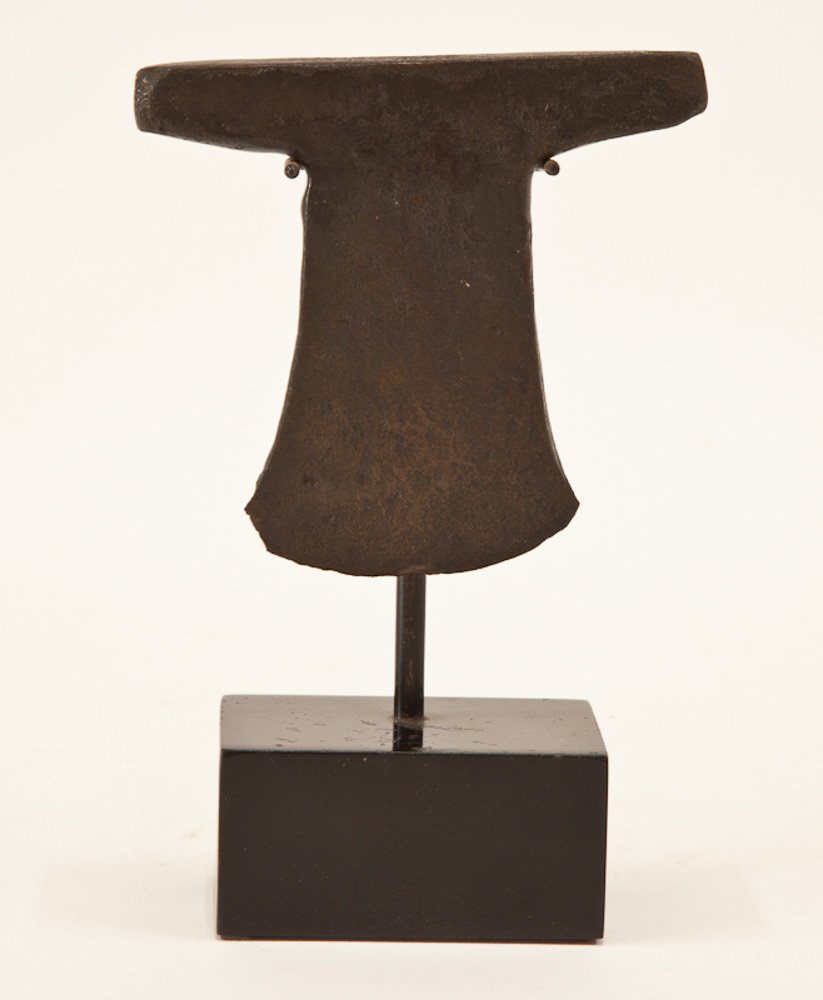
We had pitched camp on a green meadow with abundant forage. Though Cariblanco had spent much of the night neighing at a mare in the field below, I woke refreshed to the sound of birdsong in the clear, still air. After washing the breakfast dishes and packing away the Primus stove, I spotted a woman tending a pair of cows in a nearby pasture. She was happy to exchange some of my salt for sugar, though I still needed further provisions—more sugar, candles, and whatever foodstuffs I could find. I resolved to ride on to Puquiura the following day and see what was available.
That afternoon, a violent storm broke over us. Lightning split the sky, and thunder crashed with such force it felt as though the mountains themselves were collapsing. The horses grew agitated and restless. Huddled in my tent, I passed the hours poring over the chronicles and preparing my notes.
The next morning dawned clear and bright. A beautiful sunrise promised fine weather, and I set out in the crisp early air, hoping to locate some ruins I had heard about above Yupanqui. The trail to Vitcos led us through a valley that gradually opened into wide esplanades on both sides. Horses and mules grazed peacefully in the meadows. Unlike the Sacred Valley, there were no terraced slopes here—just wild scrub, coarse grass, and the occasional field left to pasture. Agriculture seemed sparse.
We arrived in Yupanqui at the very end of the road. A few houses and a small shop remained—once the road crew’s camp—where I was able to replenish my supplies and enjoy a breakfast of eggs. Seated at one of the tables was my old friend Rómulo Montes, with whom I had shared the t’inca back in Paltaybamba. He was returning to his home in Incahuasi, and we decided to ride on together—he on his mule, I on Cariblanco, with Q’orisumac in tow.
Further along the track, we caught up with a caravan of twenty or thirty mules, also bound for Incahuasi after delivering a load of coffee to the road’s end. I was struck by the size of the convoy and remarked to Rómulo that I hadn’t seen so many mules together in all my weeks on the road.
“That’s nothing,” Romulo tells me. “In the old days you would find mule trains ten times that size!”
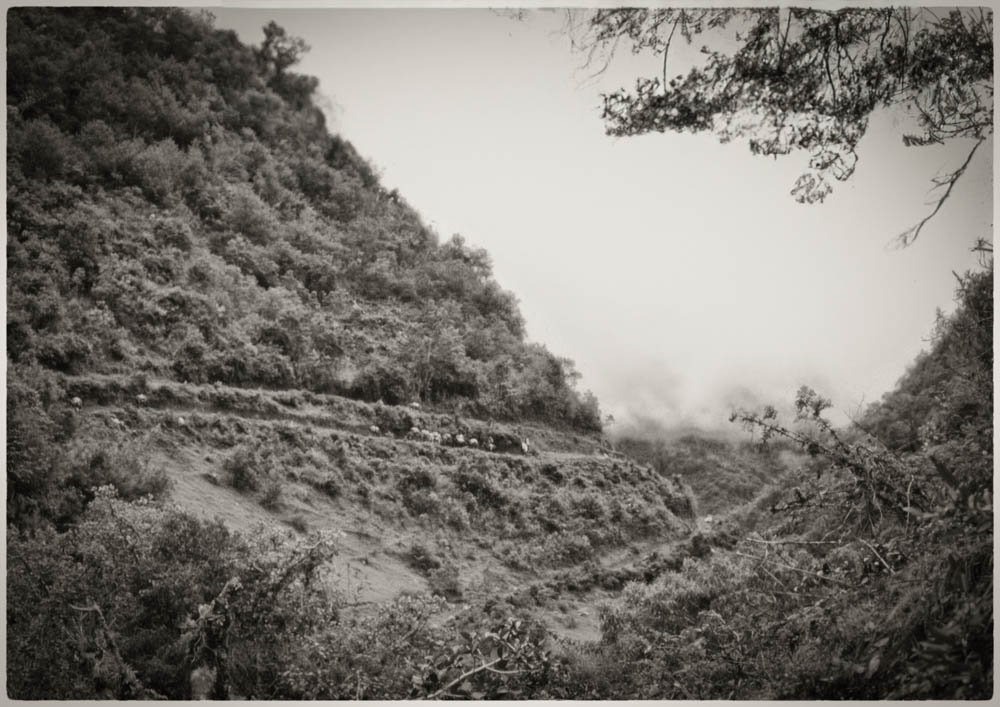
Piles of polished stones lay scattered along the trail—fragments of the ancient Inca Road, deliberately broken by Tupac Amaru’s generals in 1572 to hinder the Spanish advance. After another league, the charming village of Lucma came into view, nestled among towering peaks and lush green fields that called to mind the alpine meadows of Austria. Above the village stood the first Christian church of Vilcabamba, constructed by Friar Ortiz under the protection of the Inca Titu Cusi. Though modestly thatched, its vibrant frescoes hinted at a dignity and beauty that far exceeded its humble materials.
An hour later we reached Puquiura, where, as was now customary, I checked in with the local police. Following the usual formalities, Romulo and I were shown next door to the bodega. Outside, four or five horses were tied up, evoking the scene of some bygone Western. Inside, we met three gentlemen from Arma who, with unassuming courtesy, invited us to join them at their table. The beers flowed generously, and soon enough, bottles of home-distilled liquor were produced. Round after round was poured, until Romulo and I—barely able to see straight—somehow mounted our horses and pressed on, swaying gently in the saddle as we continued up the valley towards Huancacalle, where, we stopped for refreshments. As we stood at the bar, we were surprised to encounter one of the armeños from Puquiura, the very man with whom we had shared so many toasts just hours earlier. The inevitable rounds began anew, accompanied by hearty toasts and laughter.
At last, and with considerable effort, I extricated myself from the warm camaraderie of the gathering. Leading the horses, I crossed the river to visit the ruins of Ñusta Hispana—also known as Yurak Rumi, the White Stone of Chuquipalta—where the silence of history once more replaced the din of revelry. Yurak Rumi lay between two hills on a remote and lonely plain. Once the most revered oracle in the kingdom of Vilcabamba, the sacred temple now stood abandoned, visited only by wandering bands of horses. Strange shapes, carved into the great white boulder, resembled seats or niches, hinting at rituals long forgotten. Tumbled blocks and numerous carved rocks lie strewn in the field, emanating an eerie presence. On either side of the shrine, twin springs had over time created a vast marsh beneath it. Yet in Inca days, the temple clearly possessed an ingenious hydraulic system to control and divert the flow. Traces of stone canals still clung to the flanks of the boulder, and the faint outlines of a subterranean aqueduct could be discerned—almost certainly designed to carry excess water to the river far below. No contemporary descriptions of the shrine have survived, but its monumental scale is beyond dispute. The sheer mass of the rock and the expanse it dominates speak volumes, hinting at a site of deep ceremonial importance—one that once stood at the spiritual heart of a vanishing world.
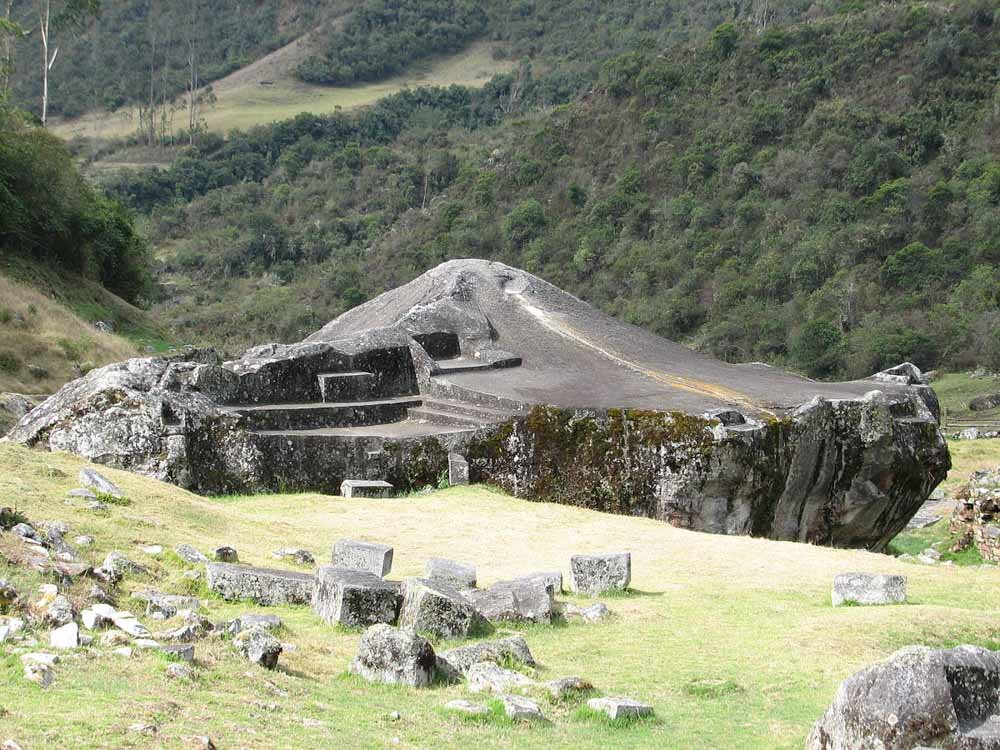
Fray Diego Ortiz’s plan was to convert all of Vilcabamba, confident that having baptised the Inca, the rest would soon follow. With Titu Cusi’s permission he had built a church in Vilcabamba but that wasn’t enough for the zealous missionary: he wanted to destroy all remaining vestiges of paganism. In 1571 he received news of the sacred shrine and marched to Yurak Rumi with a procession of coverts. Horrified by what he saw, he ordered the temple destroyed and set fire to all the buildings. The indians who witnessed the blaze were said to have issued a sad moan of dismay and tried to kill the priests. It was only through Titu Cusi’s intervention that they managed to escape to Cuzco, from where they returned the following year with chasubles and cloths of damask for the church.
Its beauty struck me deeply, yet there was a solemn, ghostly sense of pain and desolation that hung over this lonely place. I pitched my camp on a dry patch of grass beside the ruins and turned in for the night, laid low by Manco Inca’s Revenge—no doubt the result of an ill-advised mixture of beer and machachicuj’cha.
The following morning, Cariblanco and I descended the narrow valley below Yurak Rumi, coming upon extensive terracing, clearly of Inca origin, where sparse crop of potatoes had taken root. Herds of horses grazed amid the ruins, yet despite the pastoral charm, the silence was profound, and an air of quiet sorrow seemed to linger over the landscape.
***
For nine years, Manco Inca had lived in relative peace in Vitcos, a peace maintained by his successors—Sayri Tupac, Titu Cusi, and Tupac Amaru. But the Spaniards could not rest. As long as there were Indigenous peoples to subjugate, their conquest of the New World would remain incomplete. The presence of the Inca and the small group of followers who had sought refuge in Vilcabamba posed a persistent threat, and over the years, repeated attempts were made to uproot them from their sanctuary.
Following the battle of Coyaochaca, Hurtado de Arbieto and his army moved upriver, finding little opposition along the way. They marched into Vitcos, which they destroyed, carting off to Cuzco the mummies of the Incas Sayri Tupac and Titu Cusi as well as all the gold they could find. But their objective was to capture the Inca, and he was not in Vitcos. The steady desertion of indians to the Spanish (along with their wives and children) had been providing the conquistadores with intelligence of the Inca’s activities for some time. Learning that Tupac Amaru had fled over the mountain into the lowlands, Hurtado de Arbieto sent Captain Loyola with a select group of 20 soldiers in pursuit.
Hoping the Spaniards could not follow on their horses, given the difficulty of the terrain, the young Inca and his followers descended the marshy valleys into Manco’s old city of Vilcabamba the Old, known today as Espíritu Pampa (Plain of the Spirits). Lacking skilled masons or artisans, the houses of the city had been hastily erected and were of poor and rustic construction. There, Tupac Amaru hid in fear and discomfort, unaccustomed to the low altitude and the ever-present insects. He knew the Spaniards were on their way and would inevitably find him. Moreover, he was now in the land of the hostile Campa indians, a fiercely independent group that had long resisted the Inca conquest. Loyola and his men soon reached a settlement of Campas, where they learned that the Inca had fled downriver in a raft. Cutting down trees, they built rafts of their own and chased Tupac Amaru deep into the jungle, where they found him at last in a forest clearing, huddled over a small campfire, alone with his young pregnant wife. He was taken in chains to Cuzco, where he was summarily tried for treason against the king of Spain (including for crimes that occurred before his birth) and executed.
Thus ended the Tahuantinsuyo: the murder of Tupac Amaru in 1572 brought about the extinction of the largest empire in pre-Columbian America—and quite possibly the entire world of the sixteenth century.
***
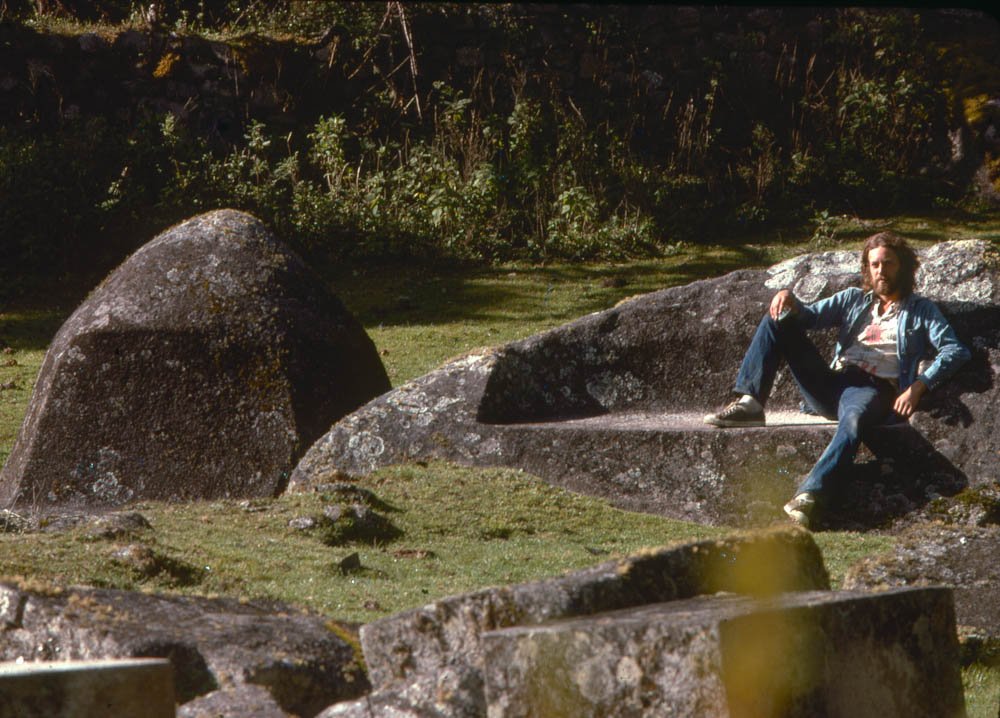
A closer inspection of the terraces revealed several monolithic stones, each with “seats” carved into them. Above, an open pampa stretched out, offering a view of Puquiura across the valley and Lucma further down. A trail leading up to Vilcabamba de San Francisco passed by Layancalla and continued on, the snow-capped nevados looming in the distance. At the summit, I found an esplanade flanked by structures built with well-defined Inca ashlar masonry. Despite the dense overgrowth of shrubs, vines, and trees, several trapezoidal portals, with perfectly cut lintels, emerged from the brush. I walked slowly through the vast network of streets and house foundations, recalling that this had once been Manco Inca’s capital of Vitcos.
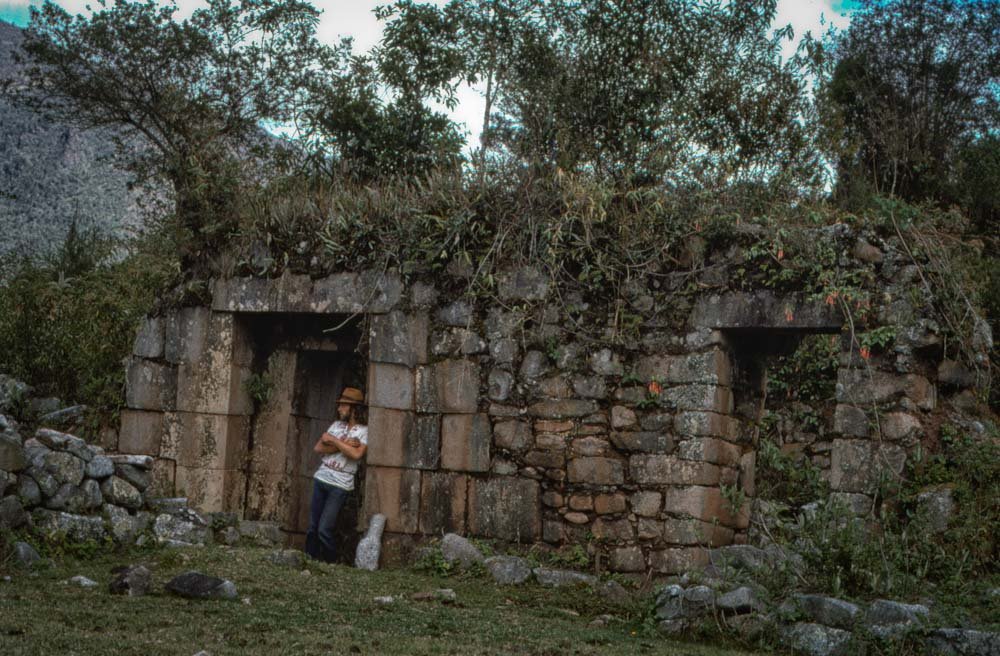
I spent a very wet night listening to the rain. Fortunately, the ditches I had dug around the tent funnelled the water away and kept it from accumulating underneath. Inside it was warm and damp, but nothing dried in this climate. I checked on the horses, pleased their vampire bat wounds had healed but noticed that Q’orisumac needed new shoes. That black-smith back in Ollantaytambo had done a poor job. I saddled up Cariblanco and rode into Puquiura and spent the afternoon exploring the ruins between Vitcos and Yurak Rumi, known locally as Andenpampa (terraced field). The original name obviously long forgotten, since Andenpampa is hispanicised Quechua. It consists of a vast area, closed off into canchas, or separate enclosures, that showed very fine ashlar masonry. Most of the fields had been given over to pasture, though a little corn was grown in some. I saw many large rock huacas, or funerary pyramids, with seats and huatanas, or ceremonial hitching posts for the sun, carved into them. There were also remains of large rooms with fine lintels and excellent masonry that held niches built into the walls, where mummies once likely rested. I also noticed several marked doorways with seats carved alongside, as if entrances to confessionals or toll gates, and sensed this spot must have been on the road from the capital of Vitcos to the shrine of Yurak Rumi. Perhaps they were vocational stops along the way.
Back at the camp I built a very large bonfire with huge logs. It was very pleasant and helped keep the mosquitoes at bay. In the dying light I read Manco Inca’s farewell speech to his people as he stood in Ollantaytambo preparing his departure for Vilcabamba and I was profoundly moved.
“My dearly beloved sons and brothers: … I beg you not to feel pity, my desire is not to cause pain because I love you like my children. Many times have I told you of the way those people have penetrated our land under the pretext that they were children of our God Huiraccocha, they whose clothes and customs were so different from ours … I brought them to my country and to my people and, in return, they did terrible things to us, dispossessed me of my own land.”
The crowd exclaimed, “Do not leave us! We will accompany you!”
The Inca replied, “Sons: Do not feel pity. I will return or will send you messages. I further recommend that you do not believe a word those bearded men say, because they lie… I order that you always keep your spirits high…when they try to take away your lands, endeavour to defend them, even if it means your life.
… Beware that these men cheat, they do not do what they say… if they truly were sons of the God Huiraccocha, they would not have done what they have done, since Huiraccocha has the power to flatten mountains, make the springs flow, raise mountains where there were none, and he causes no one any harm. Instead, these men have caused us so much harm at every turn, taking our farms, our women, sons, daughters, fields, our meals… all by strength or treachery.
People who do so much evil cannot be called Viracochas, but Supay (Devil).”
Luis A. Pardo, El Imperio de Vilcabamba, Cuzco, 1972
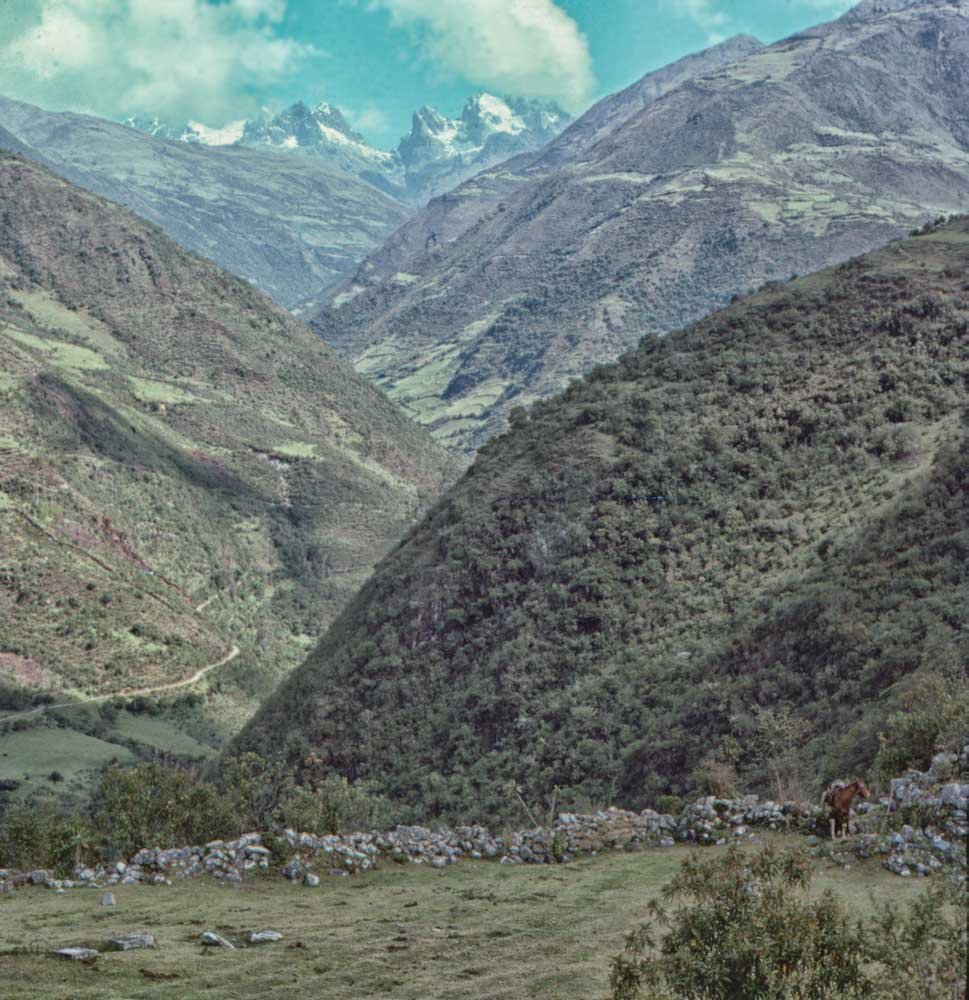
Cariblanco looked a bit piqued that morning – the weather seemed to have dampened his spirits. Once again, it had rained all night, and now it was pouring in buckets. I sat huddled in my tent, unsure of where to go next. One option was to head up to Arma and Incahuasi, cross the Apurimac, and return home via Cuzco. Another was to follow Manco’s trail up to Vilcabamba de San Francisco, then down to the lower valleys of Espíritu Pampa, and returning home by retracing my steps. I decided to wait until the rain cleared before making up my mind.
The relentless downpour continued without any sign of letting up, so I eventually broke camp in the pouring rain and headed across the river to Huancacalle, where I knocked on Julio Cobos’ door. Cobos was the current owner of Espíritu Pampa (home to the ruins of the lost city of the Incas, Vilcabamba the Old), and he had accompanied Gene Savoy on his journey of discovery ten years earlier.
He invited me in and told me the story of Saavedra, the original owner of Espíritu Pampa. According to Cobos, Saavedra had owed Pancorbo, the owner of the Hacienda Paltaybamba, a debt of twenty soles that he was unable to pay. Since Pancorbo controlled all of the Vilcabamba Valley, Saavedra had nowhere to hide. With Pancorbo’s ruthless reputation for violence, his only option was to leave Vilcabamba entirely, beyond Pancorbo’s reach. So, one morning, Saavedra set off over the mountain, travelling as far as Pampaconas and descending deeper into the jungle until, at last, he arrived at the ruins of Espíritu Pampa, which he claimed as his own. Fearful of Pancorbo’s far-reaching influence, he lived for years in isolation, carving out a meagre existence in that distant outpost while earning an undeserved reputation for xenophobia. Apparently, Saavedra’s reputation came from Pancorbo himself. Hiram Bingham claimed that Pancorbo had tried to discourage him from going to Vilcabamba, warning him of the savages and the perils he would face if he went. Bingham went anyway and stayed with Saavedra and his family during the 1915 Yale Vilcabamba Expedition. He spoke very highly of Saavedra’s warmth and hospitality.
Fascinated by this story, I informed him of my plan to travel to Espíritu Pampa and visit the ruins of Vilcabamba the Old. I asked if he had any recommendations or could perhaps help me draw up a map with directions.
“In this weather, you’ll never make it. The trail is very difficult, and your horses will get mired in the bog. You should wait until after the rains,” he replied.
I traded him spools of fishing line for beer and eggs and sat down for a plate of papas a la huancaína. After lunch, I headed on to Yupanca, losing some gear along the way, including the last of Q’orisumac’s horseshoe nails. In Yupanca, I met up with Victor Ricaldes, who owned property outside the village with plenty of pasture. I accepted his offer to camp there and rode over to set up my tent, letting the horses loose in the tall grass.
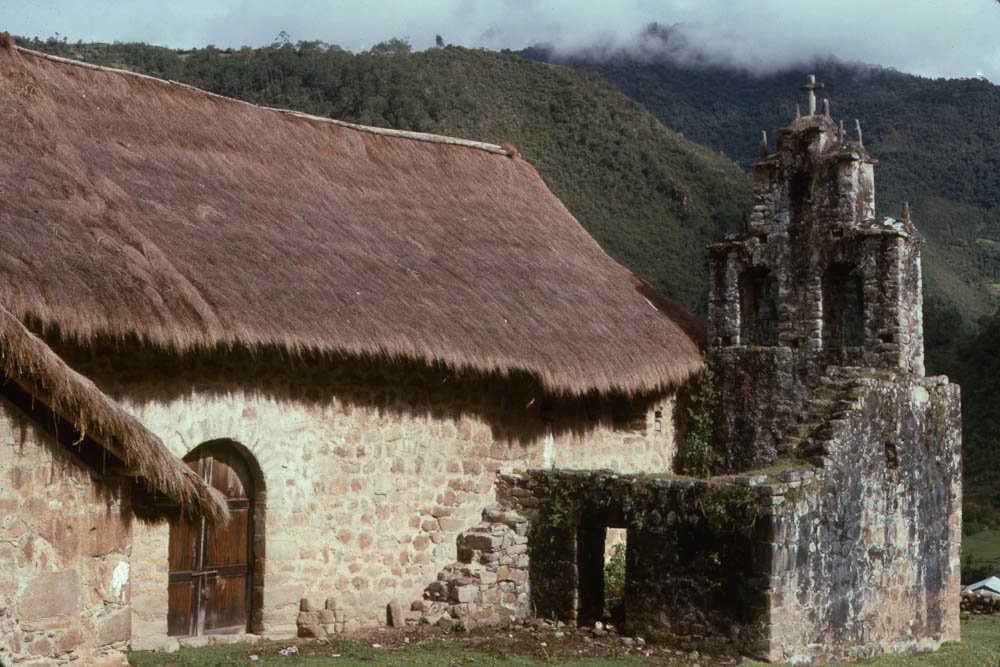
The following morning, I rode up to Lucma for another look at the ancient church. Gazing at the fading frescoes, I was convinced that this was the site of Vilcabamba’s first church, built by García and Ortiz over an Inca platform. Riding on, I found a ravine above Lucma that led to a meadow, from which a trail wound up to the ruins of Inca Huarcana and Idma Coya. A farmer tending his cattle told me the legend behind the two ruins: Inca Huarcana referred to the place from where the Inca used his huarca (sling) to hurl a rock at his escaping coya. Idma Coya was the spot where the rock hit the princess. It was a perfectly preserved two-storey prison, complete with stone rings.
“It only needs a roof!” he told me.
In the afternoon, my host, Victor, and I shared a few beers at the cantina in Yupanca. Later, I went down to the river to wash. The icy water offered great relief from the insect bites that covered my body. In my tent, in the dark, I thought about Manco Inca and Tupac Amaru. How lonely they must have felt, unaccustomed to the heat and the insects, pursued over this same terrain by merciless conquistadores. A deep depression crept over me like a shadow.
A few days later, I crawled out of my tent to find Victor standing there, like a bad conscience. I knew the time had come to leave Yupanca—my landlord had made it clear—, but I was torn between heading home or taking the road to Pampaconas and onward to Espíritu Pampa. Both places were equally tantalising, but Cobos had insisted that the trail to Espíritu Pampa was impassable in these conditions. Still, the rain showed no signs of abating, and the horses had been displaying signs of fatigue. So, after breakfast, I tossed a coin: heads for Urpihuaylla, tails for Pampaconas.
Heads it was.
I saddled up, loaded the packhorse, and set off down the Vilcabamba Valley towards Chaullay. We moved steadily, reaching Paltaybamba by 14:00, where we stopped at the house of señora Bocángel. She kindly offered me lunch and introduced me to her friend Leopoldo, a colono who seemed to enjoy a certain prestige in the area.
It occurred to me that the most efficient way home might be to load the horses onto the cargo train running from Quillabamba to Cuzco. We could disembark at Ollantaytambo and spare ourselves the arduous climb over the Panticalle Pass. Over a few beers, I managed to convince Leopoldo to use his supposed local clout to get us space on the tren de carga from Santa María to Ollantaytambo.
“No problem, compadre,” he said confidently. “The station chief is my pata, my mate!”
This sounded promising. By 18:30, with two thoroughly exhausted horses, I reached the bridge at Chuquichaca and crossed into Chaullay. Half a league on, at the Santa María station, I discovered that the last train to Cuzco had already departed at 16:00—not at 20:00, as Leopoldo had claimed.
Disheartened, I moved into a shack near the station and turned the poor horses loose to forage for whatever they could find. Despite my weariness, I spent the evening singing songs with a dozen cheerful local children—delightful company that lifted my spirits considerably. Relentlessly bitten by insects, I lay awake that night, listening to the constant drumming of the rain on the tin roof, grateful for the shelter it offered and comforted by the thought that tomorrow we would be on our way home.
At first light I found the Jefe de estación at his desk busy swatting flies, dark rings of sweat under each armpit. He informed me that transporting horses on the train would be entirely out of the question until the following week. Moreover, he quoted me an outrageous fee for the “service” and I was left with the sinking realisation that Leopoldo’s supposed influence had been vastly overstated.
A carefree Leopoldo then sauntered into the station, and I couldn’t help but recall how yesterday he’d drawn knowing looks and eye-rolls rom the locals. Perhaps he’d been joking all along—or simply indulging my naive optimism—but I was beginning to suspect that he was every bit as mad as people had warned me.
“To hell with that,” I muttered, and hiked over to Chaullay, hoping to find a driver with an empty truck willing to take us over the pass for a reasonable fee. I waited around the truck depot in the pouring rain for twenty minutes, but no one was headed in my direction.
“To hell with that,” I said again, and returned to Santa María. I saddled the horses and we set off up the Lucumayo Valley at a steady pace. At Huayopata we stopped for breakfast. A young girl from Taray was serving coffee; she recognised me from home and, in that moment, I felt a sharp pang of nostalgia—an ache for familiarity after so many weeks on the road.
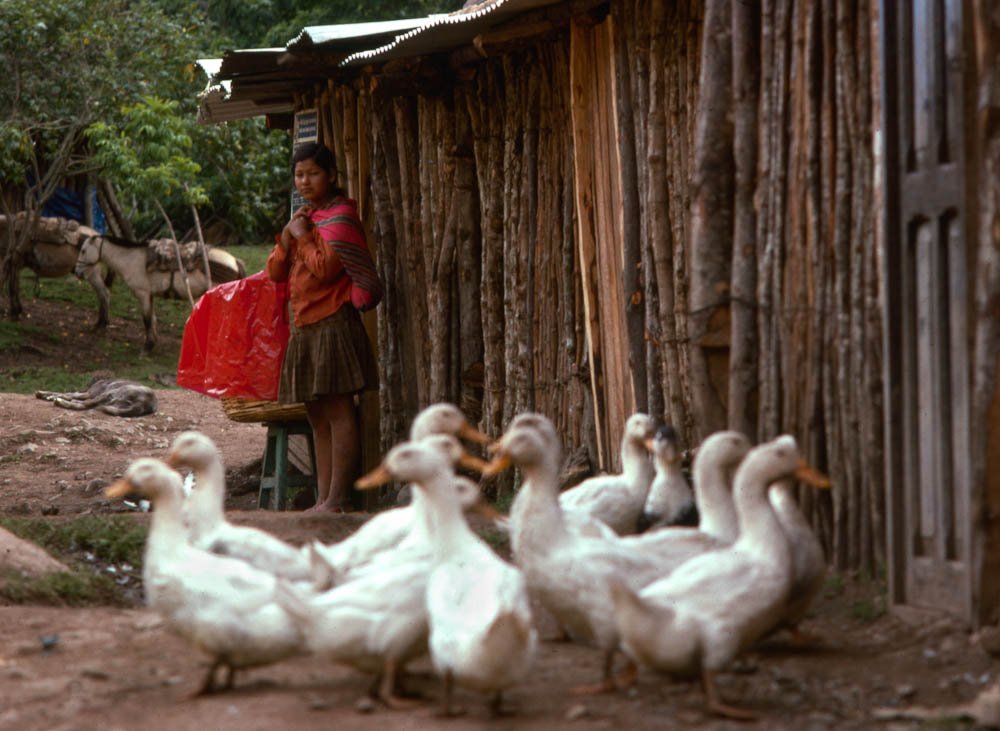
We continued on to Incatambo, where a kind man served me soup and tea. I climbed the spur at the edge of the ravine for another look at the ruin—a single house built in fine masonry, much like Yanamancha. A little below it I spotted the remains of more buildings, but the persistent rain deterred me from exploring further. Its modest scale suggested it had served as a rest stop along the Inca Road, perhaps a haven for the chasquis, those tireless runners who carried quipus across the vast empire.
Further up the valley, we reached Huamanpata—“hill of the hawk”—the old, abandoned farm near Alfamayo where we had paused on our way down. I let the horses loose in the knee-deep grass, and they grazed happily, clearly remembering the place. I marvelled at their memory and intuition. Throughout the journey, they had shown a calm intelligence and a loyalty that never ceased to amaze me. Truly, they were extraordinary animals.
We decided to rest here another day before crossing the pass to Tanccac and on to Huayracc Puncco. The horses had travelled no fewer than twenty-six leagues in just two days—twelve from Santa María to Alfamayo and at least fourteen from the end of the road to Chaullay, a journey approaching 150 kilometres. We were all exhausted, and I hoped that if they didn’t overgraze, a two-day rest would serve the animals well.
This morning they looked content and well-fed, though Q’orisumac was speckled with insect bites—or so I hoped. There had been grim talk that all livestock brought here eventually perished, and an unease crept over me as I glanced at the dense, overhanging clouds. Still, they parted around midday, and I spent the morning washing my clothes in the stream and basking in the rare leisure of a day with no riding. That afternoon, I rode up to Alfamayo for a churrasco montado (fried egg over steak) and a beer, returning later to camp to lose myself in Hemming’s Conquest of the Incas, hoping to shake the brooding melancholy that had followed me since Yurak Rumi.
In the evening, a violent storm broke over the pass, battering the tent with rain and wind. I lay awake, listening anxiously and praying for clear skies come morning.
And the gods answered. At dawn, the mountains glistened under a brilliant blue sky, the snow-capped Veronica standing radiant above the valley like a watchful sentinel. Grateful for the weather, I broke camp and packed the horses, riding once more to Alfamayo for breakfast. There, Mr and Mrs Zamora, whom I’d met on the descent weeks earlier, welcomed me warmly and served up generous portions of lechón with tamales and steaming coffee. We chatted for a while, admiring the sparkling nevados in the morning sun—a moment of peace before the long road home.
Several hours into the climb, I reckoned we were now above the region where the huaycos had occurred. We left the main road and took the old Inca Road that followed the course of the Lucumayo River. Though steep and slick with rain, the trail offered a more direct route to the pass, avoiding the long, winding curves of the vehicular road that led up through San Luis and over the ridge.
By mid-afternoon we reached Canchayoc, a modest scattering of homes clinging to the mountainside. A farmer greeted me warmly—he remembered us from our descent three weeks earlier—and we shared a bottle of beer in the shade of his porch. He was visibly pleased by my attempt to speak Quechua, and with a conspiratorial grin, he brought out a dusty bottle of port wine, clearly reserved for special moments. It was foul beyond belief, but I drank a little out of courtesy. When I asked him about the path to the pass, he gave a cheerful wave of the hand and said,
“Pura pampa, ¡fácil no más!”—all flat, easy going.
Emboldened by this promise of simplicity, I remounted and we pressed on, crossing a wooden bridge over the Lucumayo and heading into the narrowing ravine that led to the Panticalle Pass. What lay ahead was a relentless climb up sheer puna slopes. There was no real path anymore—just sparse ichu grass and rock—and the horses strained to find their footing in the thinning air. The farmer’s optimism now seemed like a cruel joke; the ascent was brutally steep, and after hours of heaving effort, I noticed we were still a long way from the pass. I now understood the meaning of ‘crestfallen.’
A dense mist rose suddenly from the valley floor, swallowing the landscape and reducing visibility to nothing. We climbed on into this white void, surrounded by nothing but the whistle of the wind through the ichu and the laboured breath of the horses. Then, as if summoned by our need for reassurance, a solitary apacheta appeared through the mist—an ancient cairn of stones, offerings to the Pachamama and the Apus by generations of travellers. I dismounted and added my own stone to the sacred pile, grateful beyond words to see it. It was the mark of the true pass.
We had made it.
We began our descent in the fading light, down towards Tanccac and the Sacred Valley, through a landscape that became ever more beautiful with each step. The towering nevados, now tinged a dull gold in the last light of day, seemed to accompany us down the mountainside like silent sentinels. The air grew warmer, and the colours softer, as we passed the remnants of ancient Inca civilisation—terraces clinging to the slopes, crumbling stone houses, and the skeletons of old grain bins standing vigil over forgotten fields.
By the time we reached the hamlet of Piñas, the sun had fully slipped behind the mountains and the first stars were flickering into view. Twelve solid hours of riding and hiking had tired me and the horses were showing signs of fatigue. A local family of Quechua villagers, warm and smiling, offered me a place for the night and I gratefully accepted. I tied up the horses outside, thinking that perhaps I’ll finally learn whether they take off their numerous layers of clothing for the night!
I entered the adobe house. There were no windows; light could enter only through the corrugated tin door which was usually kept closed. The interior’s mud walls were heavily sooted from smoke and it took me several minutes to adjust to the gloom of the solitary candle burning inside. At one end of the room was the hearth-kitchen. It lacked a chimney: the wood-fire smoke escaped as best it could through the thatched roof. Surrounding the hearth, a few benches were set beneath a pair of shelves fixed to the wall. On one of them rested a portrait of Saint Martin de Porras, with a biscuit carefully placed in front, as an offering. On the other shelf, an old battery-powered transistor radio sat in silence. On the opposite side of the room stood a bed, covered with blankets, sack cloths and several sheepskins. Leaning against the bedpost was an old and well-worn primitive foot plough, known as a chaquitaclla, and from a hook in the wall hung an unlit kerosene lamp. Beneath a heap of piled-up sacks, two children slept on the floor, surrounded by hens and their chicks. Dirty guinea pigs scampered over the dirt floor, scrounging for food with the cat and the dog.
Two couples shared a room and a half in the darkness, along with an elderly woman and a mixed group of children. None of them spoke Spanish, but they were all affectionate and hospitable. I offered them all the potatoes, onions, and rice I had brought with me and invited everyone to share my tin of Nescafé. The joy they showed while drinking it made me suspect they had never tasted it before. Afterwards we settled in for the night, huddled together beneath our cloaks.
The ladies slept in all their garments, I noticed.
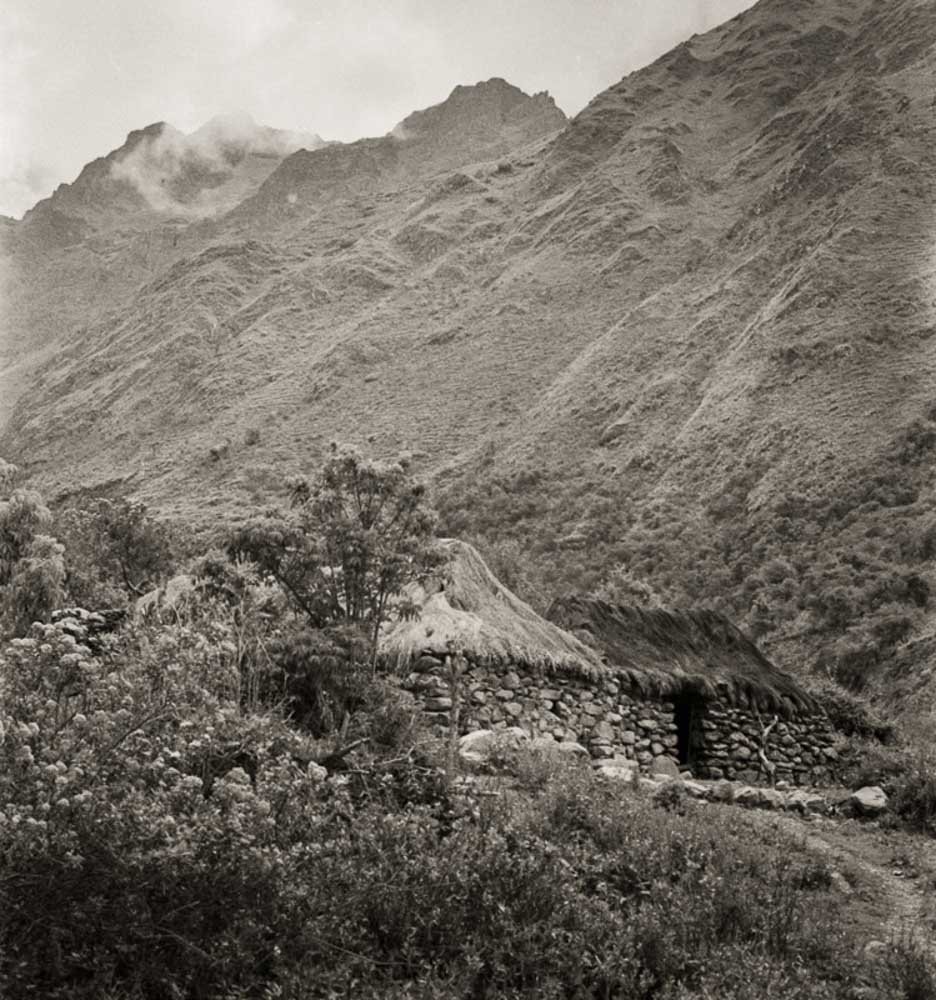
I woke at the crack of dawn and saddled the horses. We followed the trail down to Huayracc Puncco, where I was warmly received by the owner who remembered my previous visit. He asked me in for coffee and gave the horses alfalfa and chala. After a pleasant chat I rode on to Ollantaytambo and took a room at the inn with corral space for the horses. The innkeeper sold me a tercio of alfalfa and I took the horses to the blacksmith, who gave them both shiny new shoes.
That evening I met up with my old friend Blas, a Spanish Jesuit who ran an NGO. He had set up a weaving cooperative in the puna, with whom we had worked back when we ran our export company in Cuzco, and he also ran a school for illiterate mothers. Over the years we had enjoyed long philosophical conversations, and this time he wanted to involve me in some metaphysical discussion about Truth and Realisation. But I was lost for words. After so many days of solitude with so little human interaction, my ability to articulate coherent thoughts seemed to have atrophied, as if the accumulated weight of so much history had somehow transformed me, making everything else seem irrelevant.
Our conversation then drifted to the consequences of the Conquest. It was easy to judge the it in moral terms. The Spanish conquistadors were, without doubt, brutal in their treatment of the Incas. However, it was worth remembering that the Incas had also expanded their empire using tactics that could only be described as ruthless. In 1532, when Pizarro arrived in Cajamarca, barely forty years had passed since King Boabdil handed over the keys of Granada to the Catholic Monarchs, bringing an end to the Reconquista—a seven century-long crusade to drive the Moors from the Iberian Peninsula. That same year, Christopher Columbus had opened the gates to the exploration —and exploitation— of a world beyond the Atlantic. Driven by the spirit of conquest and the adrenaline of victory, many hidalgos, forged in war and impoverished after years of fighting, saw in the New World a once-in-a-lifetime opportunity to gain wealth and status. The promise of land and treasure was within reach of anyone who could afford the voyage. Adding to this was the enthusiastic support of an Emperor in urgent need of resources to fund his costly wars during the European Counter-Reformation, along with the fervent backing of a Catholic Church eager to evangelize distant pagans. Together, they offered these men a spiritual pretext to plunder and justify their actions as part of God’s work.
It should be noted that neither Pizarro in Peru, nor Cortés in Mexico, would have achieved what they did without the invaluable assistance of the recently subjugated tribes eager to rid themselves of one harsh master in exchange for another. Their support not only bolstered the ranks of the invaders with additional fighters, but also provided the Spanish commanders with crucial intelligence about political organisation, palace intrigues, and the movements of native troops.
The Conquest, therefore, can only be understood through a Darwinian lens: the inevitable result of a natural evolution in which the strong displace the weak. Unfortunately, morality plays no part in that equation. If we observe History from a dialectical perspective, we find that empires, throughout the centuries, have risen through conquest, only to later collapse under the weight of corruption, incompetence, and the loss of cultural cohesion, thereby feeding new invaders hungry to establish their own dominion. The tragic deaths of Atahualpa, Manco Inca, Sayri Tupac, Titu Cusi, and Tupac Amaru were simply the last dominoes to fall at the end of the game. Their killers, Pizarro and Almagro, also met violent deaths, and the colonial era they initiated transformed the Andean peoples forever.
But the spirit of the Incas lives on in the silent citadels that lie in ruins on the mountainsides, in the Quechua language still spoken by millions and in the ceremonies to the Pachamama celebrated across the vast Andean region. Their descendants mixed with the Spanish to form the mestizo culture that live on the Sacred Plain, farming and mining as they’ve done for centuries. With these and other thoughts circling my mind, I returned to my room and settled in for the night. How very luxurious it felt to sleep between sheets again! Tomorrow, Urubamba!
Rising early, the next morning I made my way to the Pension Bahía, where I found Blas and his partner Andrés sitting down to a breakfast of eggs and toast. They informed me that later that morning they would be driving their pickup to P’isaq, and I asked if they could take Q’orisumac’s cargo to Taray. With a second horse freed from its pack, I could easily cover the 60 kilometres to Urpihuaylla in a single day, switching horses whenever one grew tired. They readily agreed, and after breakfast, we loaded Q’orisumac’s pack onto the truck.
I watched them drive off and saddled up Cariblanco for the long ride home.
FOURTH MOVEMENT
Return to Paucartambo
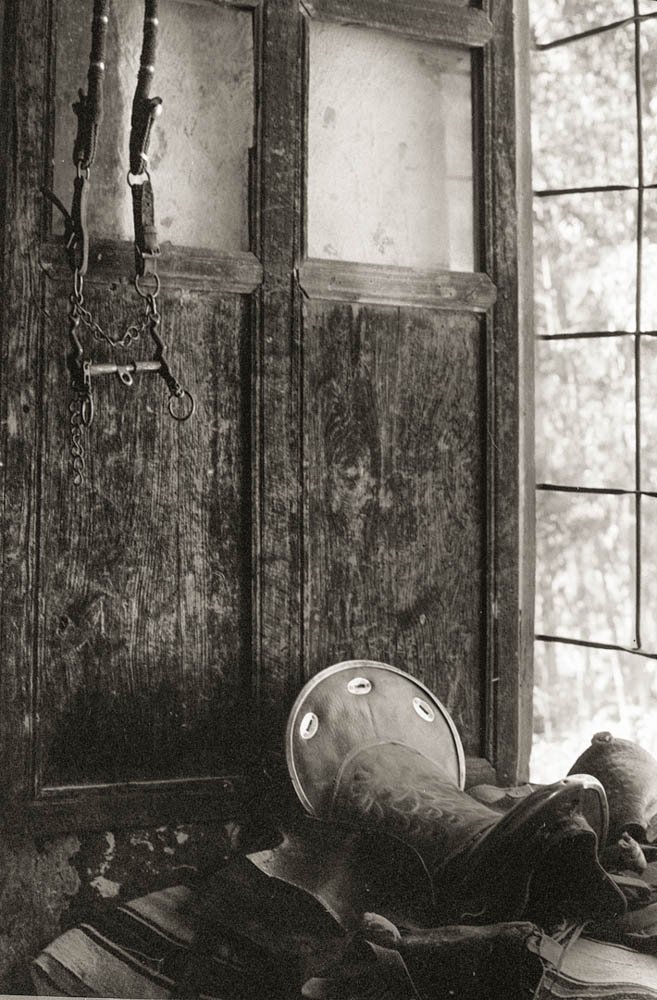
The following year I returned from a trip to Brazil having succeeded in selling some photographs and an article or two to magazine publishers in Rio. Arriving in Cuzco with money in my pocket itching to burn, my first thought was to get a new saddle. I found a beautiful one with matching saddlebags that I purchased on the spot from the saddle maker. I had heard of some horses for sale on the Pampa de Anta, and next morning got a ride on a truck to pick one out of the herd. An hour later we stood before a large corral filled with neighing horses. I bought a tall bay gelding named Polizón and saddled him up, heading out over open country to Moray, then winding down to Urubamba on the Sacred Valley and home, a simple two-day trip. Don Cornelio was pleased to see me and admired our new horse. Urpihuaylla looked good, don Cornelio had taken good care of it in my absence; the fields were well tended, the horses healthy and it was great to be home.
Despite the mill’s isolation and my rare visits to Cuzco, I was able to maintain an active social life, and friends often stopped by to visit, enjoying the bucolic charm and healthy lifestyle of the place. The abundant festivals in the Valley were a joy to watch (or partake in) and I was occasionally asked to lend horses to the authorities on business up the mountain (a coroner for a death) or for festivities in the village, where horse-races were often held.
One afternoon I was sitting on the front lawn, enjoying a pot of tea with friends, when don Cornelio walked up. My visitors were city people, up from the capital on holiday, and I had been telling them of all the things he’d helped me with, lauding his skills and ancient knowledge. They were amazed at the old man’s robust vigour and dexterity for his age.
“How old are you, don Cornelio?” one of them asked.
“I’m sixty-five! Isn’t that right, señor Micher?” he replied with enthusiasm, glancing in my direction for confirmation. Since it had been several years since I’d asked him the same question, it was clear don Cornelio had arrived at an age he was happy with.
Across the river, a gringo had moved in. A self-proclaimed “Arkansas River Rat,” Pepe Cabrón was an interesting character. Very secretive about his past, I never learnt his real name. Could he have been a CIA agent, the first suspicion to cross everybody’s mind upon meeting a solitary gringo? Who knows, but he was extremely affable and we had grown close. He had rented a tiny hut in a field near P’isaq and had taken to farming, grew his own food and, scurrying under the kitchen table, he kept cuys, or guinea pigs, a staple in Quechuan cuisine, that he would prepare into sumptuous meals.
Again, not needing three horses, I sold him Q’orisumac.
I had been telling him about Paucartambo, lauding its colonial charm and the mysteries of the Q’eros villages, and he readily agreed to join me on my next trip. He had a strong horse in Q’orisumac, and with his uniquely dark sense of humour I figured he would make for a convivial companion. Having settled on a date for departure, I set upon organising everything we’d need for the journey and preparing the mill for a long absence. Perhaps this time we could finally meet the Q’eros!
Rocío was enthusiastic about my trip and was helpful in my preparations. “What will you do while I’m gone?” I asked her.
“I’ll stay here with don Cornelio and work on the garden, plant some flowers perhaps, and catch up on my reading! Don’t worry about us, we’ll be just fine!”
Just the picture of connubial bliss, thought I.
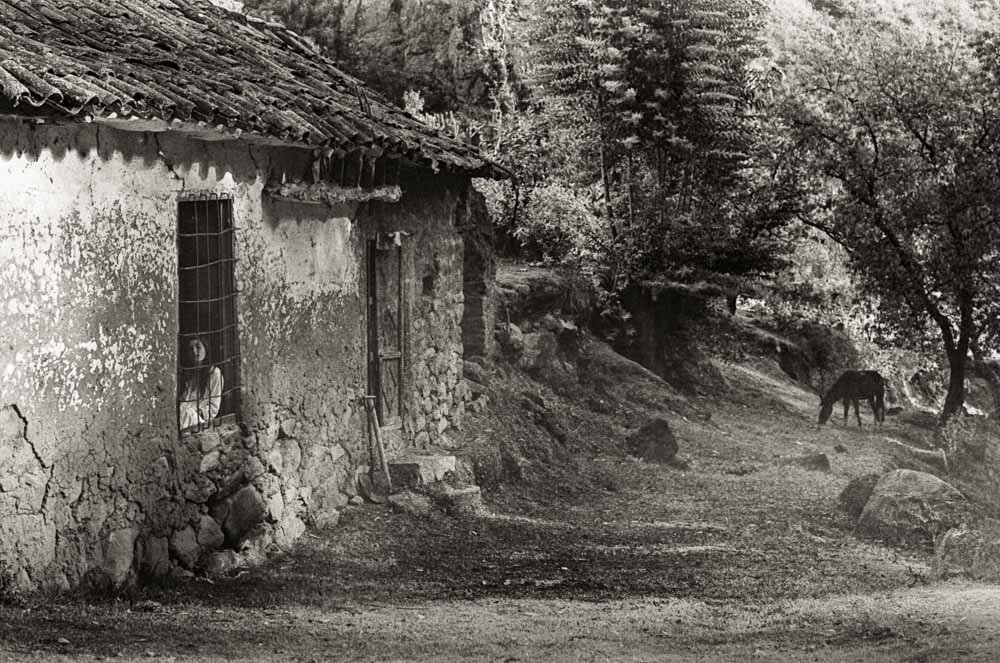
Dawn caught us riding up the Chongo Valley in the footsteps of the journey I’d taken three years before, and we climbed to the puna in good spirits, I on Polizón and Pepe Cabrón on Q’orisumac. Some months ago, on a trip to Cuzco, I had met José Quispe, a very cordial fellow who lived in the Paucartambo Valley. Upon hearing of my interest in the area, he invited me to his farm near the river, insisting I drop by if I ever found myself there. So, two days later we crossed the Carlos III bridge, the marvellous 18th century stone arch spanning the Paucartambo River and rode into town. Since it was late afternoon, we decided to make directly for the Quispe farm, seven kilometres upstream, where we could camp and rest the horses. The farmhouse was by the side of the road and, behind it, a steep incline dropped onto a wide field at the river’s edge, dotted with a few eucalyptus trees. José was away on business, but his wife Engracia was extremely gracious, apologising for her husband’s absence. We asked her permission to camp on the field below and she immediately consented, saying, “Anything you need at all, please let me know!”
It was a lovely camp: flat, green and lush with ample shade. Forage was available nearby and there was plenty of pasture for the horses. The river roared beside us, ice cold, as it wound its way to the Amazon from the lofty snowy peaks. Under a million stars, we cooked a nice dinner on the fire, glad to be on our way and pleased at how things had come together thus far.
In the morning, I rose and walked to the river’s edge to wash before making breakfast. Turning back, I noticed that Polizón was favouring his foreleg. He couldn’t put is hoof down; the slightest step a terrible pain. I examined his hoof but found no stone or encrusted object. The pain was in his fetlock, at the joint. He must have stepped wrong crossing a stream on the way here, perhaps catching his hoof on a rock and, pulling up, had sprained something. He seemed fine yesterday, but after cooling down in the night the pain had set in, and now he was incapable of taking a single step.
In a situation like this there isn’t much one can do, except give the horse time to heal. I talked it over with Pepe Cabrón who agreed we had no option but to postpone our trip until the horse mended. We were looking at two weeks of rest before we could continue on. I knocked on señora Engracia’s door and informed her of our predicament.
No problem!”, she said. “You can stay there as long as you need to. My husband will be back soon and I’m sure he can help you.”
Pepe was fine with the idea of camping out for two weeks on the side of the river. He would find plenty to do, and besides, he was looking forward to seeing the fiesta for the Virgen del Carmen, which was coming soon, and for which Paucartambo was renown.
I, on the other hand, was thinking of Rocío back in Urpihuaylla. Her daughter had returned to Lima with her dad and she was alone at the mill. It occurred to me that I might spend these next two weeks in her company, shoring up her determination to live the rural life. She was, after all, a city girl, and I feared that she would soon grow weary of a solitary life with don Cornelio. The next day, I caught a ride on a truck leaving for Cuzco and, late that afternoon, walked up the trail to the mill. Seeing me cross the little log bridge over the stream, don Cornelio greeted me, “Hola señor Micher! What are you doing back so soon?” I explained that the horse had gone lame and that I thought I’d spend his recovery time here, working on projects around the mill.
I looked round. Not a trace of Rocío; the place was empty. “Where’s the señora?” I asked.
“Ay, señor Micher! The day after you left she took off with some gringo in his camper!”
So much for connubial bliss.
Taking a bus back to Cuzco, I spent the next day polling the usual haunts and learned that Rocío had been seen with a Costa Rican who was travelling the continent in his VW camper. I’d never met the fellow, nor even heard of him, so the news came as a complete surprise. I was told that they had taken off for Paucartambo, intending to catch the sunrise at Tres Cruces.
Juan Flores and his mother Rosa lived in a splendid flat overlooking the Plaza de Armas, and they would often put me up during my visits to Cuzco. He worked for Cervecería La Cuzqueña, the local brewery, and it was his job to drive around the country contacting growers and buying their barley for the brewery. That evening, over dinner in their dining room, I shared with them my tale of woe.
“It just so happens that tomorrow I have to drive over to Paucartambo to check up on the harvests and I would be happy to take you. We can stop over in Tres Cruces and see what is really going on with your, ahem, ‘girlfriend’,” he said.
Early the next morning we took off in his 4×4, the dirt road to Paucartambo open that day to traffic flowing north. Hours later, we crossed the stone bridge into town and continued downstream and up the road to Madre de Dios. At the top of the pass we found the turnoff, arriving at the lookout after dark. Perched on the edge of the mountain is a small lodge, built for the comfort of visitors, who in inclement weather can take refuge whilst waiting for the sunrise. As we pulled up we could see a VW camper parked next to the lodge and several people gathered round the small clearing, playing a guitar and passing around bottles of beer. A party was in full swing and I put on my best face as we stepped out of the car. There was good cheer all round and our arrival was greeted with toasts and expressions of amazement and words of serendipity. I had yet to receive an explanation from Rocío, but I thought it wiser to wait until morning, joining the merry making as best I could.
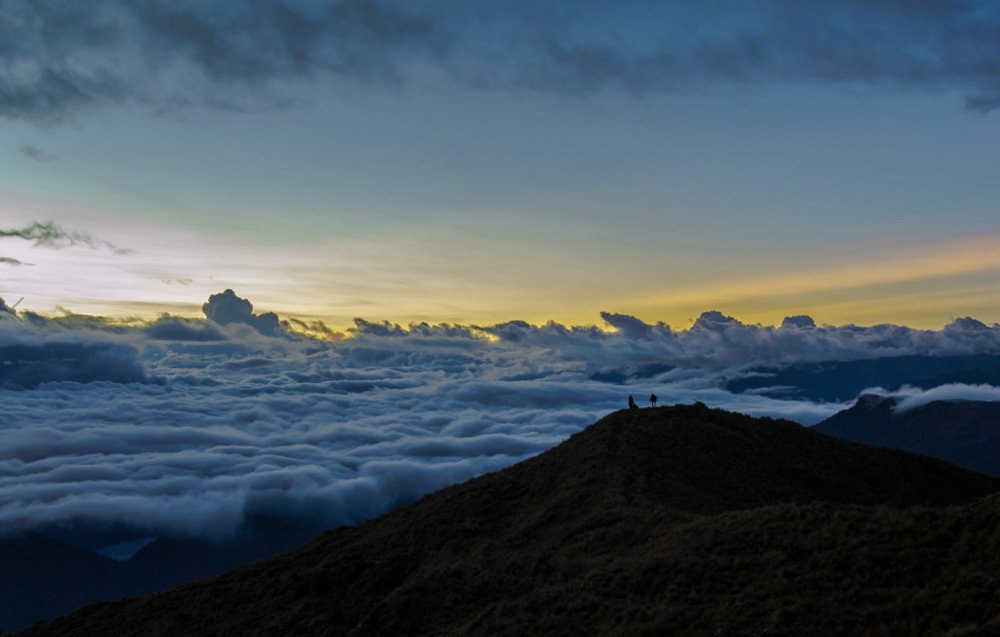
Heavy clouds scudded overhead and it was evident that tomorrow no sun would be visible rising from the East. Catching the famous sunrise from Tres Cruces is an iffy proposition in the best of times, but with the dry season soon coming to a close, our chances of seeing it tonight were practically nil. Tres Cruces sits at a spot where the Andes open to an endless expanse of jungle, and the views are formidable. Most often though, the rising humidity covers the rainforest, shielding it with a thick canopy of clouds, visible only as a lumpy sea of white, stretching to infinity.
With that in mind, I suggested to the group that we move the party to our campsite. Pepe Cabrón was there, our horses were there, and it was situated in a beautiful spot, in a meadow next to the river, with plenty of room for the cars to get down to. There was no point in staying at Tres Cruces, where it was getting colder by the minute, and we would be sure to be disappointed in the morning, when the clouds would hide any view of the sunrise. Everyone agreed and we all climbed into our respective vehicles, making our way back down the mountain to Paucartambo and on to our campsite beyond.
From the farm house on the road a small dirt track wound down to the meadow, and our two vehicles carefully made their way to the campsite. As we approached, we could see the tent, a fire and the horses grazing nearby. We parked and Pepe Cabrón rose to greet us, always ready for a party, happy for the company. With fresh beers in hand, everyone piled out, settling round the camp fire, glowing cheerfully in the night. The Costa Rican pulled out his guitar and strummed a few bars of tunes everyone knew and soon the festivities were again in full swing.
The mood was suddenly altered when Rocío began to complain of pains in her belly. Informing me she could no longer stay at the camp, she insisted I take her up to the house, where she could rest and recover. Unwilling as I was to further impose upon our hostess’ hospitality, I proposed that she retire to the tent instead, confident she’d feel better in the morning. But she was adamant, claiming women’s troubles and assuring me that it was an emergency.
“OK, let’s go. I’ll walk you up and introduce you,” I proffered.
“It hurts too much,” she whined, “I can’t walk, you must drive me!”
I looked over to the Costa Rican and asked him if he’d drive her up to the house, but he demurred. “Take the VW yourself, if you don’t mind. I don’t think I can drive, but I’ll come along too,” he said. I climbed into the camper and started up the engine. With audible moans, Rocío climbed in back, followed by the Costa Rican, who nestled cozily at her side. “Go ahead and take her up,” he said, leaving the side door open and wrapping her in his poncho. The headlights revealed a very narrow track leading up to the house and I gingerly put the car into gear.
I had owned a prior version of this camper, one with split side windows that slid fore and aft and double front windscreens. This one was newer: it had regular side windows that rolled down and a single, curved windscreen, but it handled pretty much the same. Both were notoriously underpowered and the car had difficulty negotiating the tight curves of the switchback as we climbed. At each curve, I had to let the car roll back a bit to gather enough speed and make it around the next bend. After a few curves, as I was positioning the car for the next one, the Costa Rican commented, “I can see you know how to drive this car—”
Before I could reply, I felt the rear wheel give. I had gone too close to the edge and the loose dirt of the track gave way. The car rolled over and we started to tumble toward the river, tossed about head over heels like dice in a cup. The windscreen popped out. And then it was dark. And wet. We were in the river, underwater. With the windscreen gone, the cold water gushed in, unimpeded. Yet somehow there remained a pocket of air and I could breathe. Over and over, I dove and groped in the scrambled mess, trying to find my passengers. Nothing. I gasped for air and dove again, I couldn’t find them.
Suddenly, a strong hand gripped my arm and pulled me from the car. I emerged to see our companions standing at the river’s edge, backlit by the 4×4 that had been pulled over to the shore, its headlights lighting the river.
“Are you all right?” Pepe yelled into my ear, jolting me out of my stupor.
“Yeah, I’m fine!” I replied, “How is everyone else?”
Rocío and the Costa Rican sat disconsolately on the bank, wrapped in ponchos. He had been knocked out of the car in the tumble, landing on rocks and hurting his chest; she’d been pulled from the river some minutes before, unhurt. I had no idea how long I’d been there, in the car, scrabbling for them in the dark before Pepe Cabrón pulled me out, but turning back, I could see the van upside down in the middle of the river, wheels in the air, its headlights casting lonely twin beacons upon a furious torrent.
It was an eerie and desolate sight.
Dripping water, I stood on the shore in a daze, wondering what had happened, stunned by how a single split second could alter our lives forever. Rocío and the Costa Rican were now moaning audibly and we loaded them into the 4×4 for the ride up the hill to the farm, where a startled señora Engracia received us with hot tea, putting us up for the night under blankets on the dining room floor. We slipped out of our wet clothes and lay shivering under the covers, waiting for the dawn.
At first light, I dressed and walked down to the meadow. The Costa Rican had complained all through the night and, fearing he was seriously hurt, I suggested to Juan that he drive them both to Cuzco in his 4×4, where they could receive proper medical attention; I’d stay behind and look after the car. He immediately agreed and took off, picking them up in the farmhouse before driving away.
I looked at the wreck. In the dim light, the headlights were still on, though shining feebly. The camper lay half submerged, a maelstrom of flotsam swirling within; pieces of clothing, papers and parts of the interior visible through the rear window. Dark clouds threatened above and I worried that a strong downpour upriver could take the car and all its contents downstream in a flash flood. It was imperative that we try to save what we could before it was gone forever. Pepe Cabrón and I spent the morning emptying out the car, entering the waist-high water, grabbing what we could and depositing it to dry on the meadow. Soon the field was covered with hundreds of slides, books, clothing and other items, spread across its entire width, laid out like market wares for the natives who were now descending the Valley on their way to the Fiesta de la Virgen del Carmen.
In an ironic twist of fate the Q’eros were coming to us! Dozens of colourfully dressed indians were coming down along the river bank on their way toward the town. Up on the road, I could see more of them, carrying bundles, children and musical instruments. The Fiesta of Paucartambo had started that day and half the Q’eros seemed to have emptied out onto the Valley. Realising that if left on the field, the Costa Rican’s possessions would soon end up in the Indian’s bundles, we began to gather them into piles, searching for some way to bag them or box them until I could get them to safety.
The next order of business was to get the car out of the river. Across the bridge from Paucartambo, a kilometre or so up the switchback road that leads to Cuzco, sat a Caterpillar bulldozer, permanently on standby, ready to clear the road of its frequent huaycos, landslides that often blocked all transit and which were common during the rainy season. If only I could get the bulldozer over here, we could pull the car onto dry land and work on getting it to Cuzco for repairs.
I saddled up Polizón, whose leg appeared to have healed, and rode off to town. Pepe Cabrón stayed behind to watch over the Costa Rican’s belongings. Tying up outside the Ayuntamiento, I met with the mayor, explaining to him our dilemma and our urgent need of assistance; we needed the Caterpillar before the rains began in earnest.
“It’ll be tough to find the driver, what with the Fiesta getting started and all,” he replied. “You might check his house. He lives down the road.”
The Caterpillar driver listened to my story and agreed to drive over the following morning. But he warned he would only give me an hour of his time; the possibility of rain required he stay close to his post on the road.
“And get some chain! You’ll need chain to pull it out!” he yelled as I rode off.
Relieved to have settled with the bulldozer driver, I now needed to find some chain for tomorrow. The town was filling up with revellers down from the mountains and groups of men and women could be seen gathered round a jar of chicha or passing around bottles of beer. From the depths of a cantina, a charango could be heard strumming accompaniment to a huayno while a quena imitated its mournful intonations. Everyone I spoke to stared back at me with eyes glazed, uncomprehending my broken Quechua. Someone finally directed me to a large house in town hidden behind a tall wall with an imposing gate. I stood before the gate and knocked. Nothing. After repeated knockings, the gate opened and I was shown in to meet the owner, don Felipe Calderón. Again, I explained my situation and he replied that yes, he had plenty of chain and would be glad to lend it to us, offering to drive it out to the farm in his pickup truck tomorrow morning. Pointing to the large courtyard, I then asked him if I could store the Costa Rican’s belongings with him, scattered as they were back there on the meadow, at the mercy of thieves and the weather.
“By all means, compadre!” he replied, “We’ll load them up in the pickup truck tomorrow and I’ll bring them back with me. They’ll be safe here.”
I rode back to camp, satisfied that everything was in order. The bulldozer would arrive tomorrow morning, the chains would be delivered, the Costa Rican’s belongings placed in storage… Pepe Cabrón and I spent the afternoon tidying up; tomorrow would be a big day.
Early next morning I sat in señora Engracia’s kitchen over a cup of coffee, cuys scampering at our feet. We were waiting for the pickup truck to deliver the chains. The bulldozer driver had assured us he’d be here by nine and we still had a few minutes to go. But we had no chains. If the driver arrived and found us unprepared, he’d turn round and then it might be impossible to get him back. I was getting anxious.
“I’m going into town to see about those chains. If the driver gets here while I’m gone, feed him breakfast. A long breakfast! Just don’t let him leave until I get back!” I implored, my foot on the stirrup as I swung onto the saddle.
At the approach of town, I found the road crowded with long rows of people filing into Paucartambo for the Fiesta. “Paso! Paso!” I called out, threading my way through the teeming multitude. Movement had virtually ground to a halt.
The clock was ticking, I needed to get by!
Gently as I could, I spurred the horse through, trying to get around a group of people, when suddenly, a man grabbed my reins, screaming in Quechua. What had happened? I couldn’t understand a word he was saying. Dismounting, I saw a young boy sitting on the ground, holding his foot and crying with heartbreaking sobs. Polizón had tread on his foot as we passed, and now his irate father was demanding justice. I knelt down and felt the boy’s foot. To my relief, nothing appeared broken, no skin was ruptured and no particular movement increased his pain or his crying. It was only a simple bruise. Rising to my feet, I dug into my pocket and found a 50 sol note which I presented to the father with both hands. The boy stopped crying and the man grudgingly accepted the money, slipping it into his bundle. I jumped back on the horse and continued my way into town, heading for don Felipe’s house.
This time the gate to his courtyard was open and, tying the horse outside, I entered to find the entire family sitting down for breakfast. Many relatives had arrived from Cuzco for the Fiesta that day, and they were deep into their meal, enjoying the conviviality of a family reunion. Humbly apologising for the interruption, I explained the urgency of the matter: we needed to get the chains out to the farm before the driver arrived with his Caterpillar. He was already on his way and if the chains weren’t there, he’d turn round and go back and we’d lose our only chance to save the car.
“Tranquilo, compadre! As soon as I finish breakfast, I’ll bring them out.”
Resigned to the fact that there was little more I could do in town, I mounted and headed back, hoping to stall the driver until the chains arrived. Halfway to the farm I first heard and then saw the Caterpillar up ahead, rolling up the road on its tread under a cloud of exhaust. I needed to get past him, but the horse kept shying and I couldn’t find a way of getting round him on the narrow road. Finally, a little clearing opened up on the left and we sprinted over the top, leaving the Caterpillar behind and galloping ahead to the farm.
Señora Engracia was in her kitchen when I arrived. I explained that the driver would arrive in a few minutes and we’d better get the coffee on.
“Everything’s prepared, don’t you worry!” she smiled, putting out some plates. Her husband was still away. What an ordeal we’d put her through! I doubted he had this in mind when he invited me to visit, all those months ago in Cuzco.
The Caterpillar then drove up and the driver hopped off. We offered him breakfast and he sat down at the table, beaming at the spread of food laid out before him. Keeping a nervous eye on the road, I tried to engage him in idle chat. But the driver was in no hurry, responding to my polite queries with laconic grunts and monosyllables while calmly lathering butter onto pieces of toast.
Finally, we heard the pickup truck drive up the road. The chains had arrived!
Wiping his mouth, the driver rose from the table and stepped outside. Standing quietly, his hand shielding the sun, he gazed down the hill at the river, where the car rested pitifully in the water. The rest of us followed his orders and unloaded the chains, piling them into the bulldozer’s shovel. Without a word, he climbed into his cab, and started up the Caterpillar. Then he began working on the trail that led down to the meadow. With a barely perceptible movement of his hands, he operated the controls, driving forward and back, widening the path until he had carved a reasonable facsimile of a road all the way down to the river. Admiring his insouciance, I watched amazed as he then drove his rig into the river and proceeded to remove every rock and boulder that lay around the car, pushing them away to clear a soft, sandy area between the car and the shore. Having prepared the ground to his satisfaction, he rigged the chains to the car and attached them to the Caterpillar. In a few short manoeuvres, he had righted the camper back on its wheels. He then repositioned the chains and slowly towed the car out of the river, up the embankment and on to the road he had carved, zigzagging up to the farm house. Out of the hill opposite the house he carved a sort of platform, carefully placing the car in such a way that it sat parked next to the road, facing out, a metre high.
On closer examination, we could see that in the tumble, the van had lost its square. Viewed from behind, a cross-cut of the vehicle showed it was no longer a rectangle, but a parallelogram. The upper section seemed to lean over to the left, over the wheels, and the doors didn’t close properly. I’d have to find a mechanic in Cuzco who could fix it, but first, the Caterpillar driver was eager to leave and I paid him off with many thanks. We then loaded the assorted jumble of belongings and the chains on to the pickup and don Felipe drove off, assuring me they’d be safe in his courtyard until I could recover them. Tomorrow, with the outgoing traffic, I would catch a ride back to Cuzco and find a truck to deliver the car to a mechanic.
Hopping off the truck in Cuzco the next day, my first stop was to the hospital. Rocío was not around, but I found the Costa Rican, swaddled in bed, lost in a deep funk. He had broken several ribs and was under observation, but otherwise he seemed fine. I comforted him as best I could, telling him we had salvaged his belongings and had pulled the car from the river and that I’d see to it his car was repaired. Next, I arranged for a mechanic to receive the car, telling him where to bill me, and located a suitable lorry, whose driver agreed to deliver the van to the shop. He could leave for Paucartambo in the morning, when the traffic was open in that direction. We settled on a price and arranged to meet the next day; we’d go back for the car together.
My last stop was to the Plaza de Armas. I needed to visit Juan Flores and thank him for his help and support. I hadn’t seen him since the accident and wanted very much to express my gratitude. He was away, but his mother Rosa received me with open arms and put me up for the night. She was a lively widow with a sharp wit and I had always appreciated her sense of humour. That evening I shared warm meal in her pleasant company and enjoyed the first hot shower I’d taken in many days.
In the morning, I met the driver and we drove off to Paucartambo. This was my third truck trip on this road but, for once, I was sitting in the cab. On my previous trips, I had sat in the back, sharing the bed with sheep and assorted sacks of grain while breathing in enormous amounts of dust. By comparison, this was the lap of luxury! We drove straight to the Quispe farmhouse where, with great skill, the driver manoeuvred the camper from its position by the road onto the bed of his truck. With the camper safely lashed down, he headed back to Paucartambo to seek lodgings for the night and enjoy the festivities that were now in full swing. Tomorrow he would stop at don Felipe’s house to pick up the Costa Rican’s belongings and take the whole lot back to the mechanic in Cuzco.
In town early the next day I took the driver to the Calderón house and helped him load the salvaged gear that lay piled in the courtyard. After seeing him off I said goodbye to don Felipe, who generously refused any payment and, promising to visit again soon, I rode out to the river’s edge.
Sitting quietly on Polizón, I watched the lorry cross the old stone bridge, the VW camper boxed in the back, riding alone like a forlorn animal. The truck began its climb up the switchback and the whine of its engine echoed off the mountainside as it passed the Caterpillar, parked silently on the side of the road.
CODA
A few days later, Pepe Cabrón and I rode down the mountain and entered the Sacred Valley. There didn’t seem to be much to say. For two days we had ridden mostly in silence, each lost in his own thoughts. We had said fond farewells to señora Engracia, thanking her generosity and apologising for all the inconvenience we had caused. She was extremely gracious, assuring us we had been no trouble at all, and invited us to return another time, when her husband was sure to be home. With all the activity, we had missed the much vaunted celebrations, the dancers and the music for which Paucartambo is renown, but we were glad to be coming home.
Riding up to Urpihuaylla, the mill had never looked better. As we crossed the stream, Cariblanco neighed his welcome, looking healthy and well fed. Don Cornelio had taken good care of the property, the alfalfa in the field sporting bright purple flowers. I brushed and fed Polizón and sat down with don Cornelio to catch up on recent events.
It felt as if nothing had occurred since I last was here, as if time had continued its inexorable passage, oblivious to the petty disasters that befall us. I reflected on the events of these past weeks, the odd alignment of personalities that had meshed into calamity. Was there some kind of cosmic order to the Universe? Or was it fate with its karmic consequences what had brought us three together, Rocío, the Costa Rican and me? Was my driving of his car over the hill and into the river a kind of poetic justice for his taking off with my girlfriend? Was the guilt I felt for wrecking his car what had compelled me to take on the very expensive task of salvaging it? The whole episode had seriously depleted my resources and I had had to scramble to cover the damages. Furthermore, whilst in Cuzco, I had learnt he was the scion of a very wealthy Costa Rican family who could easily have borne the costs. And he was probably fully insured, but at the time I hadn’t given it any thought. No matter: I felt I’d done what I had to, and could now could put the whole affair to rest.
During the next few months I contemplated returning to Brazil, recalling the interest that the Carioca publishers had expressed in my work. Perhaps I could sell some photographs or an article or two and thus replenish my diminished resources. And it was during one of these meditations that, one morning, I saw a colourfully dressed couple cross the log bridge over the stream and stride up to the mill.
“Are you the owner?” they asked. “We’ve heard you have horses and we’re looking to buy!”
I hadn’t considered it, but it sparked my curiosity. “What do you want them for?” I enquired.
They explained that they were Colombians and were planning to ride the old Inca Trail all the way back to Colombia. They weren’t offering cash, but had a handful of pre-Columbian bead necklaces they could offer in exchange, assuring me they were worth far more than the horses. I didn’t know anything about pre-Columbian beads or their market value, but perhaps this was the catalyst I needed to move on to the next phase, the nudge I required to make that trip to Brazil. We agreed on a deal and, holding five necklaces in my hand, I watched Polizón and Cariblanco ride off through the trees.
It would be a couple of months before I returned from Brazil to resume my life in the Sacred Valley. I bought a beautiful stallion, a dappled grey paso fino, named Almondir, who in time, was to become the finest of my horses and a true friend.
I never saw the Costa Rican again. Rocío returned to Lima and it was years later before our paths would cross, once during Carnaval in Bahia and later, in San Francisco. The old fire had gone out and would never be reignited.
The necklaces, I gave away over the years.
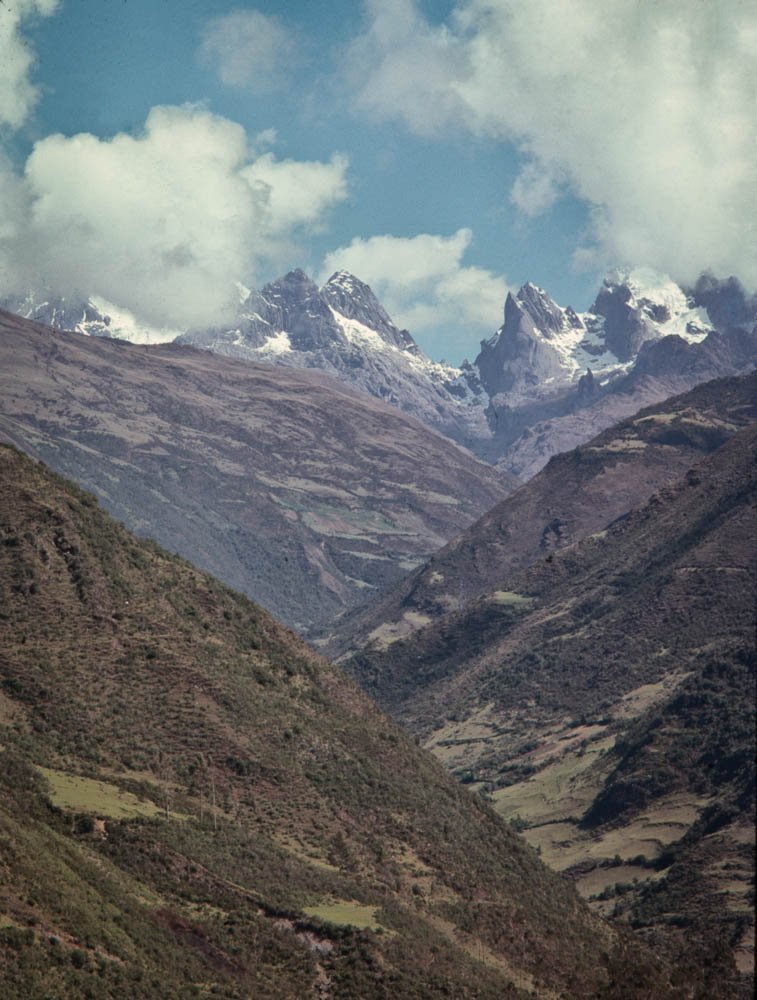
EPILOGUE
In 1974, Vilcabamba had seen relatively few people from the outside. At that time I had been living in Peru for a couple of years, avidly studying archaeology and the history of the Incas. My readings had taken me through the contemporary chronicles of Cieza de León, Guamán Poma de Ayala and Inca Garcilaso de la Vega to the nineteenth-century writings of Sir Clements Markham and William Prescott. Prescott’s 1847 book was brilliant, but he was blind and had never left his native Massachusetts. I was eager to read more recent studies though, and turned to Kaufmann Doig’s Manual of Peruvian Archaeology and John Rowe’s insightful book on Inca culture in the Handbook of South American Indians.
Then I read about the explorers. Hiram Bingham famously visited it in 1911 on a well-financed expedition to search for the lost city of the Incas, finding, quite fortuitously, the hidden city of Machu Picchu, crown jewel of Peru’s tourist industry. He then made his way into the marshy lowlands of Espíritu Pampa, but in the overgrown stones he found little to convince him it was the Vilcabamba the Old. In 1964 Espíritu Pampa was again visited, this time by the explorer Gene Savoy, who is justifiably credited with having identified Espíritu Pampa as Vilcabamba the Old, the last capital of the Inca.
Reading about Hiram Bingham’s expedition and Gene Savoy’s journeys to Vilcabamba certainly piqued my interest, but it was John Hemming’s excellent 1970 history of the Conquest of the Incas, which brought the players in the conquest’s final act to life in such compelling detail, that finally spurred me to travel to the area. Only ten years had elapsed since Savoy’s expedition and, given the rapid changes overtaking the country, I knew I had to see Vilcabamba now, before it was gone forever.
Regrettably, I set out too late in the year, at a time when the summer rains begin and the weather makes travel difficult. Yet the three weeks I spent there gave me a taste of a lifestyle that was quickly disappearing. Mule trains still carried produce to market along narrow trails; farming implements and methods remained unchanged since the time of the Inca; highways for vehicular traffic had yet to be constructed, and mass tourism and low-cost airlines had not yet changed the face of cities. Most importantly, I returned from the Sacred Plain warmed by the enduring memory of people of easy grace and warm hospitality who welcomed me into their homes and left me with the fondest recollections of a beautiful place, lost in time.
Vilcabamba has predictably seen great changes in the intervening years. It once took me a week to travel from Taray to Chuquichaca. Now a taxi takes tourists all the way from Cuzco to Vitcos for $28 in 6 hours! Trekking companies now offer tours to all the Inca sites in Vilcabamba, complete with porters and prepared meals. The snow-bound pass I climbed twice now has a highway offering tourists views of spectacular scenery (all posted on Pinterest) and the Lucumayo River is transited by kayakers. There’s even an agency that takes cyclists to the top of the pass for them to coast all the way down to Chaullay, and the Sacred Valley is filled with resorts and fashionable B&Bs. All these changes I have gleaned from Google. Still, unable to slow the inexorable progress of time, I can only be grateful for the chance I got, so many years ago, to visit a place where time once stood still.
ROUTE TAKEN
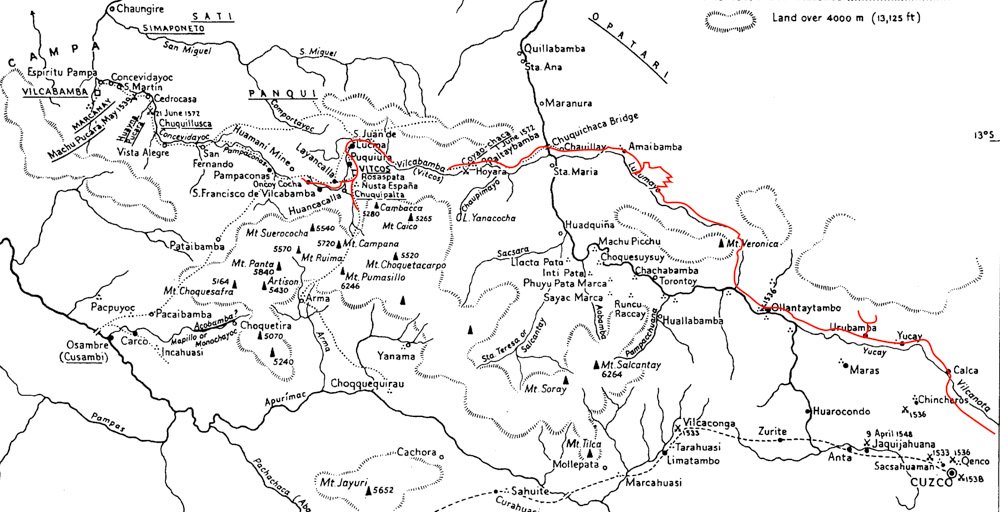
The three-week journey to Vilcabamba and back from Urpihuaylla (Taray) covered an estimated 500 kilometres. The climate varied, from the subtropical Sacred Valley (2900 masl) to the high altitude Panticalle Pass (4321 masl), to the tropical ceja de selva of Chaullay (1200 masl). Vitcos and Yurak Rumi lie at an elevation of 2764 masl.
Map and timeline excerpted from John Hemming’s book, “The Conquest of the Incas”, Harcourt Brace Joavanovich, Inc., New York, 1970
CHRONOLOGY OF THE CONQUEST
16 November 1532: Pizarro captures Atahualpa in Cajamarca;
17 June – 16 July 1533: Cajamarca: Distribution of silver and of gold;
26 July 1533: Execution of Atahualpa;
15 November 1533: Pizarro enters Cuzco;
December 1533: Coronation of Manco Inca;
6 January 1535: Foundation of City of Kings (Lima) by Pizarro;
12 June 1535: Agreement between Pizarro and Almagro;
3 July 1535: Almagro leaves for Chile;
Oct – Nov 1535: Manco Inca attempts to flee but is imprisoned;
6 May 1536: Manco’s forces attack and set fire to the city;
Late May 1536: Juan Pizarro killed during recapture of Sacsahuaman;
18 April 1537: Almagro seizes Cuzco from Hernando Pizarro;
mid-July 1537: Rodrigo Ordóñez pursues Manco to Vitcos;
26 April 1538: Battle of Las Salinas: Hernando Pizarro defeats Almagro;
8 July 1538: Hernando Pizarro executes Almagro;
April – July 1539: Vilcabamba invaded by Gonzalo Pizarro; Battle of Chuquillusca;
26 July 1541: Francisco Pizarro murdered by Almagrist supporters;
Mid-1544: Manco Inca murdered by Diego Méndez and renegades;
July – August 1548: Negotiations between Gasca and Sayri Tupac’s regents;
7 October 1557: Sayri Tupac leaves Vilcabamba after months of negotiations;
1561: Death of Sayri Tupac in Yucay; Titu Cusi crowned in Vilcabamba;
9 July 1567: Titu Cusi performs act of submission to Spain in Vilcabamba;
August 1568: Titu Cusi baptised at Huarancalla;
Jan – Feb 1570: Friars García and Ortiz visit Vilcabamba;
March 1570: Friars burn Chuquipalta (Yurak Rumi); García expelled;
c. May 1571: Death of Titu Cusi, accession of Tupac Amaru;
March 1572: Inca captains kill envoy Atilano de Anaya;
14 April 1572: Viceroy Toledo declares war on Vilcabamba;
1 June 1572: Battle of Coyaochaca;
24 June 1572: Vilcabamba City occupied by Hurtado de Arbieto;
24 September 1572: Tupac Amaru executed in Cuzco.
© All rights reserved
Text and photography, unless otherwise noted, by Michael Dunev